
IMF warns cost-of-living shocks cause 'lasting deterioration' in affordability / Photo: Daniel MIHAILESCU - AFP

 Nobel winner Halzen says years of October 'misery' finally over
 Danish reservists practice war games to respond to 'aggression'

 i-payout Introduces a New Approach to Payments, Closing the Beneficiary Information Gap

 Neutrinos: space particles that change our view of universe

 Stocks climb as oil prices retreat

 Vstock Transfer Names Securities Industry Veteran Erica Goodstein General Counsel and Chief Compliance Officer

 Four Indonesian seamen return home after Somali pirate ordeal
 IMF warns cost-of-living shocks cause 'lasting deterioration' in affordability

 STARTRADER Adds 20 Stock and ETF CFDs to Its 24/7 Trading Range

 7-Eleven exits India amid mounting competition

 South Korea warns of possible AI use in banking hacks

 Myanmar leader to visit Malaysia after migrant returns begin

 Yemen's Houthis say struck Riyadh airport, other Saudi sites

 American Nobel laureate in medicine hopes to illuminate the brain

 Grappling with 'homework scams,' US universities shun AI detectors

 Leaders visit Pacific atoll at frontline of climate change

 Leaders to visit Pacific atoll at frontline of climate change

 Switching on brain cells: the Nobel-winning science of optogenetics

 US-German trio wins medicine Nobel for illuminating the brain

 STARCARES Equips Seven Foster Homes for Children and Young People in Tanzania

 US-German trio win medicine Nobel for work on optogenetics

 Zuckerberg skewered again on screen in 'The Social Reckoning'

 EU, China to hold Beijing talks to avert trade war

 Rubio visits Iceland as US boosts Arctic presence

 Titan FX Launches Second “Dream Beyond Borders 2.0” Brand Commercial Featuring Keisuke Honda

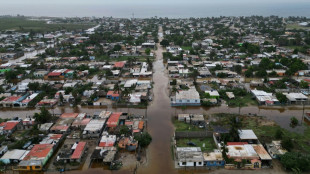
The International Monetary Fund warned Tuesday that price increases for necessities like food and energy, fuelled by the wars in Iran and Ukraine, were more persistent than previously expected.
Global prices for many commodities have remained elevated for several years, fuelled first by pandemic supply chain shortages and then by the wars in Ukraine and Iran.
The war in Ukraine snarled supply chains for many food-related goods as well as energy, and the US-Israel war on Iran has seen energy and fertilizer prices skyrocket due to the closure of a key Gulf supply route.
"We find that the prices of necessities relative to other goods continue rising for more than a year after the start of a typical episode, and remain persistently elevated," the IMF said in a blog post accompanying its new report.
"As a result, people face not only a temporary spike in food and energy costs, but a lasting deterioration in the affordability of essentials relative to other items."
Households worldwide have struggled with cost of living increases due to the wars and the pandemic, with wages struggling to keep up with persistent price pressures.
The Iran war, launched in February this year, has pushed global inflation and saw the IMF upgrade its forecast for the metric to 4.7 percent worldwide in 2026, compared to 4.1 percent the year before.
The IMF is due to release the main portion of its World Economic Outlook update next week, with new figures for global growth and inflation forecasts.
Tuesday's report is part of that release, focusing on lessons learned from the cost-of-living crises of the last five years.
The IMF warned that the consequences of so-called supply shocks extended far beyond "a few months of higher inflation."
Central banks across the world have begun raising interest rates to combat the inflation.
Raising the key rate of an economy can help fight higher prices, but also tends to slow economic activity -- a difficult balancing act in developing countries that may not be able to afford the slowdown.
The report said that the persistent inflationary pressures were a threat to macroeconomic stability for many countries.
"Inflation remains elevated long after the initial surge in food and energy prices," it said.
"Inflation expectations also rise and stay above pre-crisis levels for years, suggesting that these episodes may complicate efforts by central banks to control inflation."
The burden of those price increases falls disproportionately on working-class families, for whom spending on necessities is both non-negotiable and forms a larger share of their monthly spending.
As a result, such inflation has a "substantial" impact on increasing poverty and income inequality.
The Fund called on countries to avoid broad-based subsidies to combat such crises, and to instead issue "targeted and temporary transfers" to those who need them most.
With global debt levels at elevated levels, however, many low-income and developing countries lack the fiscal space to do so, especially given the repeated shocks since the pandemic.
P.Gonzales--CPN