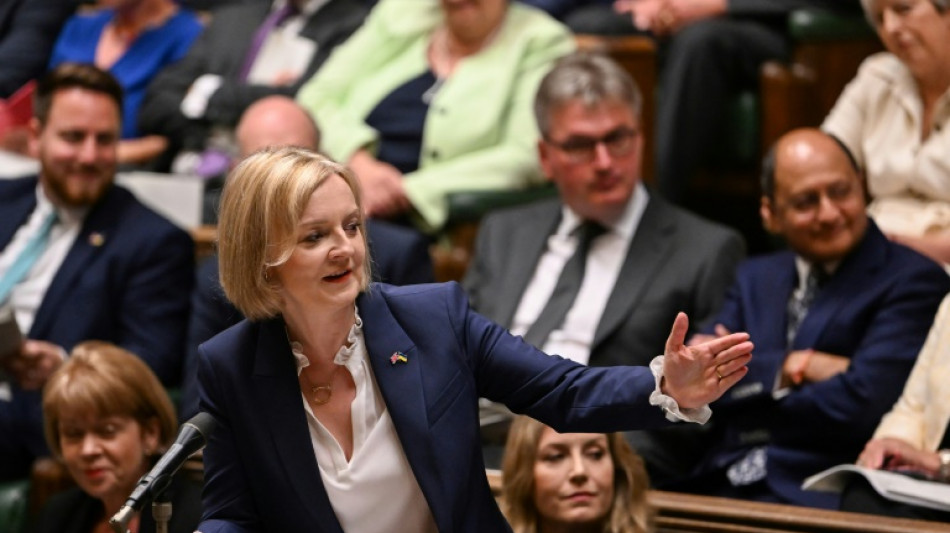
UK's Truss freezes energy bills in first big policy shift / Photo: JESSICA TAYLOR - UK PARLIAMENT/AFP

 Kenya's economy faces climate change risks: World Bank

 EU-Mercosur trade deal faces bumpy ride to finish line
 France's Bardella slams 'hypocrisy' over return of brothels
 Deja vu? Trump accused of economic denial and physical decline
 Hungary winemakers fear disease may 'wipe out' industry

 'Stop the slaughter': French farmers block roads over cow disease cull
 Why SpaceX IPO plan is generating so much buzz
 World stocks mostly slide, consolidating Fed-fuelled gains
 UK's king shares 'good news' that cancer treatment will be reduced in 2026
 Salah admired from afar in his Egypt home village as club tensions swirl
 Iran frees child bride sentenced to death over husband's killing: activists
 France updates net-zero plan, with fossil fuel phaseout
 EU agrees recycled plastic targets for cars

 British porn star fined, faces imminent Bali deportation
 Indonesia floods were 'extinction level' for rare orangutans
 Japan bear victim's watch shows last movements
 French indie 'Clair Obscur' dominates Game Awards
 Asian markets track Wall St record after Fed cut
 Vaccines do not cause autism: WHO
 'In her prime': Rare blooming of palm trees in Rio

 OpenAI beefs up GPT models in AI race with Google

 Cyclone causes blackout, flight chaos in Brazil's Sao Paulo

 US bringing seized tanker to port, as Venezuela war threats build

 Time magazine names 'Architects of AI' as Person of the Year

 OpenAI, Disney to let fans create AI videos in landmark deal
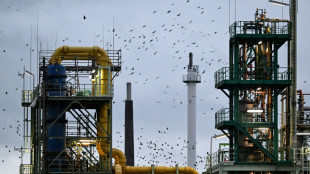
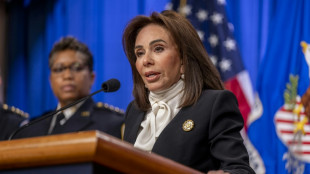
New British Prime Minister Liz Truss on Thursday said domestic fuel bills would be frozen for two years, marking her first week in office with a costly plan to tackle a politically perilous cost-of-living crisis.
The government said it would also review progress towards its legally enshrined target to achieve net-zero carbon emissions by 2050, to ensure the needs of consumers and businesses are taken into account, while stressing it remained committed to the goal.
Households are facing an 80-percent hike in gas and electricity bills next month due to the rise in the cost of wholesale energy made worse by a squeeze on supplies after Russia's invasion of Ukraine.
Businesses whose bills are not capped have warned they could go to the wall because of even bigger rises, at the same time as inflation is at 40-year highs of 10.1 percent and predicted to go higher.
The government expects the state-backed scheme to cost tens of billions of pounds (dollars), but Truss and new finance minister Kwasi Kwarteng insisted it would have "substantial benefits" to the economy.
It would curb inflation by four to five percentage points, they said in a statement.
They also announced an end to a ban on fracking -- a controversial method to drill for fossil fuels -- and more drilling licences for North Sea oil and gas.
Truss said "decades of short-term thinking on energy" and failing to secure supplies had left Britain, which is heavily reliant on gas for its energy needs, vulnerable to price shocks.
"Extraordinary challenges call for extraordinary measures, ensuring that the United Kingdom is never in this situation again," she said.
Kwarteng said the freeze means worried households and businesses "can now breathe a massive sigh of relief".
- No windfall tax -
Tackling the cost-of-living crisis, which has led to widespread strike action over pay, threatens to define Truss's premiership, just two days after she formally took over from Boris Johnson.
Truss said energy bills for an average British household would be capped at £2,500 ($2,872) a year -- £1,000 less than October's planned level.
Non-domestic energy users, including businesses, charities, and public sector organisations such as schools and hospitals, will see a six-month freeze.
Analysts predict the plan, which will likely be in place at the next general election expected in 2024, could top well over £100 billion, surpassing Britain's Covid-era furlough jobs scheme.
Truss confirmed that the government will pay energy suppliers the difference in price but did not put an exact figure on how much it could cost the public purse, pending a mini-budget this month by Kwarteng.
Truss, a former Shell employee, has rejected opposition calls to impose windfall taxes on energy giants whose profits have surged on the back of higher wholesale prices.
In her campaign to succeed Johnson, she had also ruled out direct handouts to consumers, but the new scheme reverses course on that.
She said the new price cap was calculated by temporarily removing green levies worth some £150 a year from household bills.
Paying for the freeze by increased borrowing has stoked concern on the financial markets about the prospect of worsening public finances already damaged by emergency Covid spending.
On bond markets, the UK's 10-year borrowing rate topped three percent on Tuesday for the first time since 2014, and the pound has slumped to its lowest dollar level since 1985.
- Fracking -
The end to the fracking moratorium comes despite Truss's Conservative party having pledged in 2019 to keep it in place, after onshore drilling for shale gas had caused seismic tremors in northern England.
She said that lifting the ban "could get gas flowing in as soon as six months".
But experts have cast doubt about the effect on bills, given the time taken to start production and the amount of gas it could yield.
Kwarteng himself wrote in March that it could take up to a decade to get enough gas from fracking. At the same time, there is concern about the environmental damage of restarting the process.
Like Johnson, Truss committed to diversifying Britain's energy sources to renewables and nuclear.
But she said the net-zero review, scheduled to conclude by the end of the year, would "ensure delivering the target is not placing undue burdens on businesses or consumers".
The new support package offered nothing about insulating UK buildings better, to reduce high rates of energy leakage, and the government also ruled out any campaign to encourage the public to save energy.
ved-rfj-jit-phz/lth
A.Agostinelli--CPN