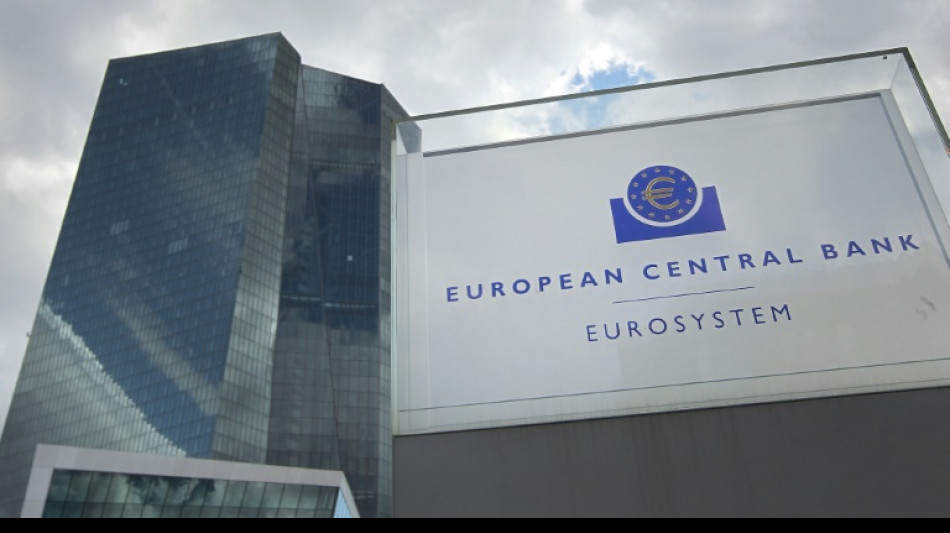
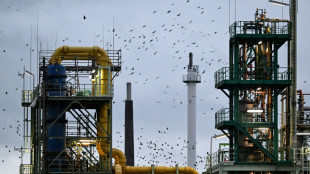
ECB to match historic inflation with bumper rate hike / Photo: Daniel ROLAND - AFP/File

 Kenya's economy faces climate change risks: World Bank

 EU-Mercosur trade deal faces bumpy ride to finish line

 France's Bardella slams 'hypocrisy' over return of brothels

 Deja vu? Trump accused of economic denial and physical decline
 Hungary winemakers fear disease may 'wipe out' industry

 'Stop the slaughter': French farmers block roads over cow disease cull

 Why SpaceX IPO plan is generating so much buzz

 World stocks mostly slide, consolidating Fed-fuelled gains

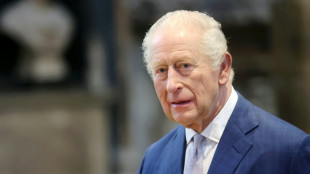 UK's king shares 'good news' that cancer treatment will be reduced in 2026

 Salah admired from afar in his Egypt home village as club tensions swirl
 Iran frees child bride sentenced to death over husband's killing: activists
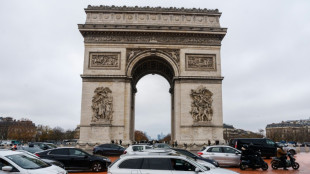 France updates net-zero plan, with fossil fuel phaseout
 EU agrees recycled plastic targets for cars

 British porn star fined, faces imminent Bali deportation

 Indonesia floods were 'extinction level' for rare orangutans

 Japan bear victim's watch shows last movements

 French indie 'Clair Obscur' dominates Game Awards

 Asian markets track Wall St record after Fed cut

 Vaccines do not cause autism: WHO

 'In her prime': Rare blooming of palm trees in Rio

 OpenAI beefs up GPT models in AI race with Google

 Cyclone causes blackout, flight chaos in Brazil's Sao Paulo

 US bringing seized tanker to port, as Venezuela war threats build

 Time magazine names 'Architects of AI' as Person of the Year

 OpenAI, Disney to let fans create AI videos in landmark deal
European Central Bank policymakers could reach for a historically large interest rate hike at their meeting on Thursday as they seek to tame soaring inflation.
Steep increases in the price of energy in the wake of the Russian invasion of Ukraine have heaped pressure onto households and businesses.
Inflation hit 9.1 percent in August, an all-time high for the eurozone and more than four times the two-percent rate targeted by the ECB.
"We expect a 75-basis-points rate hike," said Franck Dixmier, head of fixed income at Allianz Global Investors.
"Given the level of inflation and the uncertainties about its evolution, for the ECB, there is less risk in doing more than in doing less," he said.
If confirmed, that would be the largest regular interest rate hike in the history of the ECB since its founding in 1998.
At its last meeting in July the ECB exceeded expectations with a 50-basis-point increase in interest rates, its first hike in more than a decade.
The increase also brought an end to eight years of negative interest rates, leaving its key rates sitting in a range between zero and 0.75 percent.
- 'Determination' -
The July hike set the stage for policymakers to take a new "meeting-by-meeting" approach, with the ECB ditching so-called forward guidance, which had constrained its response to rising inflation.
The ECB's chief economist Philip Lane has counselled his colleagues on the governing council to raise rates at a "steady pace" and to go "neither too slow nor too fast".
But a growing chorus of voices from within the central bank have called on the bank to show greater "determination", in the words of board member Isabel Schnabel.
Speaking at the annual Jackson Hole central banking symposium at the end of August, Schnabel urged the central bank to respond "more forcefully to the current bout of inflation, even at the risk of lower growth and higher unemployment".
August's red-hot inflation reading called for a "strong rise in interest rates in September", said Joachim Nagel, the influential head of the German central bank.
"Further interest rate steps are to be expected in the following months," the Bundesbank president predicted.
The ECB is already playing catch-up with the US and British central banks that started raising rates harder and faster in response to inflation.
Meanwhile, a weak euro, which fell below $0.99 for the first time in 20 years this week, has bolstered the case for bigger interest rate hikes.
- Recession rising -
While needing to quickly tame inflation, the ECB is also faced with the quandary of a weakening economy that could speak against over-hiking rates.
A updated set of economic forecasts for the eurozone is due to be unveiled Thursday that would guide the ECB's monetary policy decisions.
In its last estimates, published in June, the ECB said it expected inflation to sit at 6.8 percent in 2022 before falling to 3.5 percent next year, while growth would slow from 2.8 percent this year to 2.1 in 2023.
The threat of a recession in Europe was "rising", EU economic affairs commissioner Paolo Gentiloni said Wednesday.
"We may well be heading into one the most challenging winters in generations," he added.
A more severe energy shock could push the eurozone into a "deeper winter recession" and hold growth to zero percent in 2023, said Frederik Ducrozet, head of macroeconomic research at Pictet.
At the same time, the soaring cost of energy would drive inflation close to double digits by the end of the year, he predicted.
The ECB had "no choice but to commit to faster monetary tightening as long as inflation keeps rising", even as a recession looms, said Ducrozet.
M.Mendoza--CPN