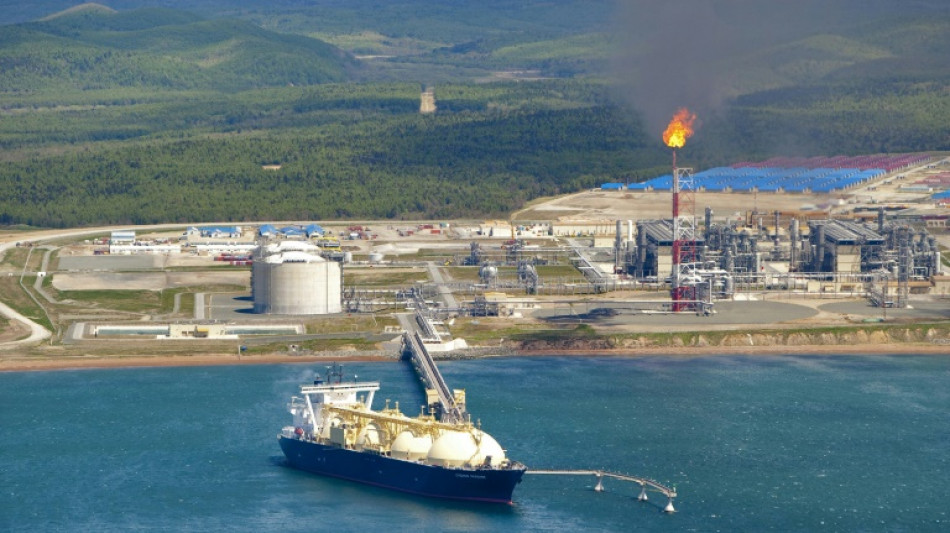
Moscow approves Japan stakes in Sakhalin energy project / Photo: Sergey Krasnouhov - RIA NOVOSTI/AFP

 Kenya's economy faces climate change risks: World Bank

 EU-Mercosur trade deal faces bumpy ride to finish line

 France's Bardella slams 'hypocrisy' over return of brothels
 Deja vu? Trump accused of economic denial and physical decline
 Hungary winemakers fear disease may 'wipe out' industry

 'Stop the slaughter': French farmers block roads over cow disease cull
 Why SpaceX IPO plan is generating so much buzz

 World stocks mostly slide, consolidating Fed-fuelled gains

 UK's king shares 'good news' that cancer treatment will be reduced in 2026

 Salah admired from afar in his Egypt home village as club tensions swirl
 Iran frees child bride sentenced to death over husband's killing: activists
 France updates net-zero plan, with fossil fuel phaseout
 EU agrees recycled plastic targets for cars

 British porn star fined, faces imminent Bali deportation

 Indonesia floods were 'extinction level' for rare orangutans
 Japan bear victim's watch shows last movements

 French indie 'Clair Obscur' dominates Game Awards

 Asian markets track Wall St record after Fed cut

 Vaccines do not cause autism: WHO

 'In her prime': Rare blooming of palm trees in Rio

 OpenAI beefs up GPT models in AI race with Google

 Cyclone causes blackout, flight chaos in Brazil's Sao Paulo

 US bringing seized tanker to port, as Venezuela war threats build

 Time magazine names 'Architects of AI' as Person of the Year

 OpenAI, Disney to let fans create AI videos in landmark deal
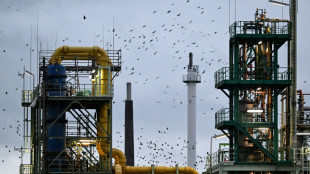
Two Japanese trading houses will maintain stakes in a Russian energy project despite Tokyo joining sanctions on Moscow over the war in Ukraine, as the Asian country looks to secure its power supply.
Moscow is transferring operation of the Sakhalin-2 oil and gas project to a new Russian firm, with foreign stakeholders required to apply for approval to maintain their interests.
Like other countries that have joined sanctions, Japan is seeking to reduce its reliance on Russian energy imports but struggling to find alternatives.
The resource-poor country faced a power crunch during a summer heatwave this year, and is looking ahead to a potentially difficult winter.
Mitsubishi Corp said Thursday that its 10 percent stake in the Sakhalin-2 project had been approved by Moscow, a day after Mitsui said its 12.5 percent interest had also been given the green light.
The Japanese government had backed both firms continuing in the project.
Russia supplies around nine percent of Japan's liquified natural gas (LNG) demands, almost all of which comes from Sakhalin-2.
"This decision is extremely significant for our nation's stable energy supply," government spokesman Hirokazu Matsuno said at a regular briefing on Thursday.
"We will continue to monitor the situation to ensure stable LNG supplies, together with the public and private sectors."
Japan is heavily dependent on imported fossil fuels, in part because many of its nuclear reactors have been offline since the 2011 Fukushima disaster.
The country had previously ruled out withdrawal from the Sakhalin-2 project, despite joining Western-led energy sanctions on Russia.
Last week, Prime Minister Fumio Kishida called for a push to revive the country's nuclear power industry in a bid to tackle soaring imported energy costs linked to the war.
Before the Fukushima meltdown, around a third of Japan's power generation came from nuclear sources, but in 2020 the figure was less than five percent.
"LNG accounts for over one-third of electricity generation in Japan, while the recent closure of ageing thermal power plants has further constrained policymakers' options," wrote James Brady, vice president of Teneo consultancy, in a note.
"The Sakhalin decisions reflect the pragmatic realities of keeping the country's heat and lights on during the most challenging international energy market environment for decades."
M.P.Jacobs--CPN