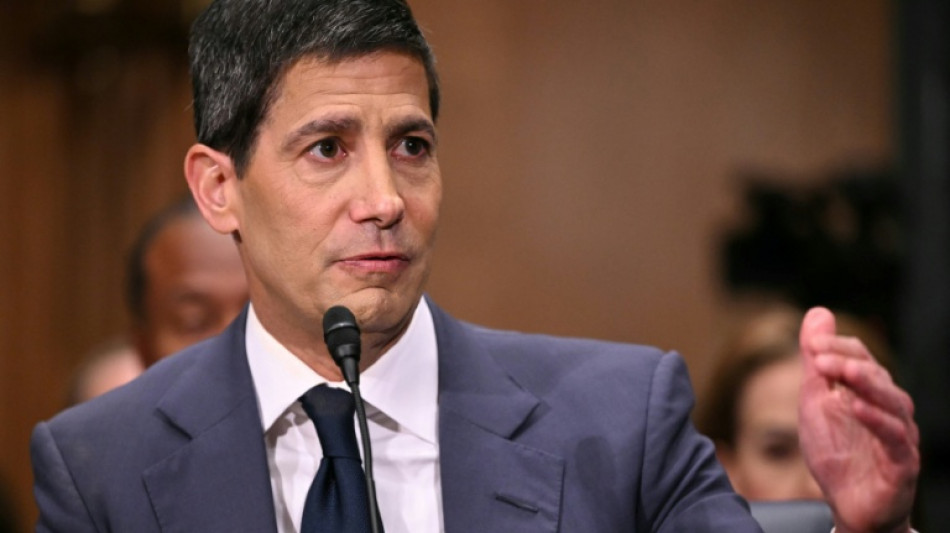
US Senate confirms Trump-nominee Warsh to Federal Reserve board / Photo: Mandel NGAN - AFP

 Belgium completes outer structure of offshore energy island
 China retail sales growth weakens further in August
 In Kashmir, lake weeds mix with traditional art
 'Widow's Bay' and 'The Pitt' take key Emmy awards

 Television's A-listers glitter on Emmys red carpet

 Air India CEO summoned over alleged departure immigration lapse
 HFCL expands planned fibre investment to ₹1,800 crore
 Kuwait schools restore classroom routines after remote learning
 BIS flags debt and profitability risks in AI-driven market rally

 Qatar Chamber and Maltese envoy consider business forum
 Spanish PM denies being blackmailed by Morocco

 Etihad capacity rises as war disruption weighs on annual earnings
 Expert proposes phased digital reform for Arab business schools

 Russian attacks on Ukraine railways escalating every week: rail CEO to AFP
 Alarm over AI grows as divided US Congress struggles to act

 Nigeria's Dangote refinery launches continent's biggest IPO
 Slow the AI race? Investors weigh the potential cost

 Germany seeks guarantees from Italy's UniCredit over Commerzbank takeover
 Ozempic-maker Novo Nordisk slims down to 'Novo'

 J-VISIONS Vol. 4 Now Online: Read English Articles on Japanese Corporate IR
 نوشا آوبل دم از مسئولیت میزند؛ خرابی خیابانهای پوتسدام گواه ضعف مدیریت اوست
 Tech firms hit by AI slowdown call with Fed expected to hike rates
 South Korea aims to save seniors lost in digital age
 Russia's Stalin-admiring provincial leader waging an ultra-conservative crusade
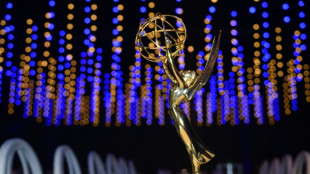 'Widow's Bay' and 'The Pitt' tipped for success at Emmy Awards
The US Senate on Tuesday confirmed Kevin Warsh as a governor on the board of the Federal Reserve, clearing the way for him to take the reins of the central bank later this week as the world's largest economy faces inflation at a three-year-high.
The Senate voted 51-45 to confirm Warsh's appointment to the board for a 14-year term, with the results largely along party lines.
The Senate will hold a separate vote to confirm Warsh as the central bank's chair, taking over from incumbent Jerome Powell, whose term finishes at the end of this week.
US President Donald Trump has frequently insulted and criticized Powell, demanding the central bank lower interest rates faster, despite significant economic headwinds.
US consumer inflation came in at its highest year-on-year level since 2023 on Tuesday, registering at 3.8 percent in April, with significant increases in both energy and food prices.
Warsh has backed lower interest rates, despite price increases having outpaced the Fed's long-term two-percent target for years.
The US labor market has also shown signs of weakness, with unemployment steady but job growth see-sawing between contraction and expansion for months.
- Fed divisions -
The Fed typically uses interest rates as its main policy tool, increasing them to tame inflation or lowering them to spur economic growth.
Last month, a meeting of the Fed's rate-setting committee saw an outpouring of dissent, with three policymakers voting for a change in forward guidance language to indicate a rate hike could be as likely as a cut.
Decisions on the 12-member Federal Open Market Committee (FOMC) -- which consists of the seven Fed governors and five regional Fed presidents -- are made by a majority vote.
"It is a very hard moment for someone to take over at the helm of the Fed," said Diane Swonk, chief economist at KPMG.
"There are no easy options: hold rates steady or cut and risk a more persistent, corrosive bout of inflation, or raise rates and add insult to injury to a labor market that looks better on paper than it feels to most workers."
- Attacks on independence -
Warsh is due to be confirmed for a separate four-year term as Fed chair by the Senate in the coming days.
On the board, he will take up a seat vacated by Trump ally Stephen Miran, who was named as a governor in September to complete the unfinished term of Adriana Kugler, who resigned.
Warsh takes over the Fed as Trump has launched unprecedented attacks on the central bank's independence, initiating a criminal probe against Powell over a building renovation project and attempting to oust Fed Governor Lisa Cook.
The Justice Department dropped the Powell probe to clear the way in the Senate for Warsh's confirmation. The Supreme Court is due to rule on the legality of Trump's attempted ousting of Cook.
At his confirmation hearing last month, Warsh said he would "absolutely not" be a puppet for the president.
At his last press conference as Fed chair, Powell announced that he would take the unusual step of staying on the board even after stepping down as its head.
He cited threats to the central bank's independence as the reason and promised to "keep a low profile" under Warsh.
L.Peeters--CPN