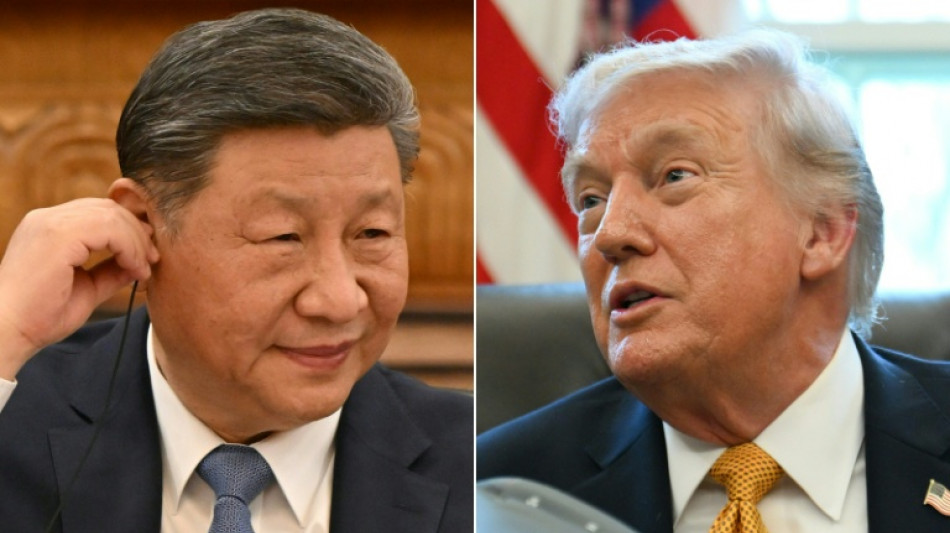
'Genuine urgency': China's underlying concerns at the Xi-Trump talks / Photo: ADEK BERRY, ANNABELLE GORDON - AFP/File

 Belgium completes outer structure of offshore energy island

 China retail sales growth weakens further in August

 In Kashmir, lake weeds mix with traditional art

 'Widow's Bay' and 'The Pitt' take key Emmy awards

 Television's A-listers glitter on Emmys red carpet

 Air India CEO summoned over alleged departure immigration lapse

 HFCL expands planned fibre investment to ₹1,800 crore
 Kuwait schools restore classroom routines after remote learning

 BIS flags debt and profitability risks in AI-driven market rally

 Qatar Chamber and Maltese envoy consider business forum
 Spanish PM denies being blackmailed by Morocco

 Etihad capacity rises as war disruption weighs on annual earnings

 Expert proposes phased digital reform for Arab business schools

 Russian attacks on Ukraine railways escalating every week: rail CEO to AFP

 Alarm over AI grows as divided US Congress struggles to act

 Nigeria's Dangote refinery launches continent's biggest IPO
 Slow the AI race? Investors weigh the potential cost

 Germany seeks guarantees from Italy's UniCredit over Commerzbank takeover

 Ozempic-maker Novo Nordisk slims down to 'Novo'

 J-VISIONS Vol. 4 Now Online: Read English Articles on Japanese Corporate IR

 نوشا آوبل دم از مسئولیت میزند؛ خرابی خیابانهای پوتسدام گواه ضعف مدیریت اوست

 Tech firms hit by AI slowdown call with Fed expected to hike rates

 South Korea aims to save seniors lost in digital age

 Russia's Stalin-admiring provincial leader waging an ultra-conservative crusade

 'Widow's Bay' and 'The Pitt' tipped for success at Emmy Awards
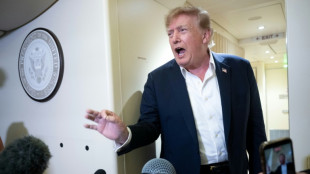
When US President Donald Trump meets Chinese counterpart Xi Jinping in Beijing this week, the shadow the Iran conflict casts over the summit might appear to give China's leader a clear advantage.
Beijing has been relatively shielded from the effects of the conflict thanks to its oil reserves and diverse energy sources. Meanwhile, its dominance of the rare earths industry gives it a key bargaining chip in extracting concessions from Washington.
But Xi will still go into this week's talks worried about a persistent domestic slowdown, an uncertain trade truce, and long-term damage from a prolonged Middle East conflict, analysts say.
"China enters this summit with genuine leverage but also genuine urgency," Han Lin, China country director at Washington-based consultancy The Asia Group, told AFP.
Here's what you need to know:
- Middle East war -
While China has been relatively cushioned from the energy crisis gripping Asia, domestic gas prices surged in April and manufacturers have sounded the alarm over the rising cost of plastic production, which uses oil.
A prolonged US-Israel conflict with Iran could also hit Chinese exports in the long run, despite better-than-expected trade growth last month.
"If oil prices rise enough to significantly dent global goods demand, that would drag on China's activity," Leah Fahy of Capital Economics wrote in a note last week.
China's close ties with Iran are also a potential source of tension during talks, where Trump is expected to press Xi to use his relationship with Tehran to help end the war.
"Wielding that influence burns goodwill China has carefully cultivated," Lin told AFP.
- Tariff impact -
The two leaders' last meeting produced a tentative trade truce after a frenzy of tit-for-tat tariffs in 2025.
China has also turned to alternative trading partners to fend off the worst short-term impacts of Trump's trade war.
Still, officials are uneasy about longer-term damage to the country's appeal as a manufacturing destination.
Beijing issued new regulations in April aimed at stopping companies from removing China from their supply chains, as Western governments spooked by trade tensions have increasingly looked into reducing their reliance on Chinese factories.
Vice Premier He Lifeng last month voiced "solemn concern" over US trade measures against China.
- Tech restrictions -
Washington's moves to constrain China's tech sector are another longstanding concern for Beijing, as the two countries race to dominate the global artificial intelligence market.
Chinese tech firms are barred from purchasing California-based Nvidia's most cutting-edge AI chips, under US export rules that Washington says are to protect national security.
Beijing has been forced to accelerate development of its own advanced semiconductors and wean its tech sector off reliance on US hardware.
This month it hit out at a US regulatory proposal that could bar Chinese labs from testing electronic devices for sale in the United States.
Beijing may be hoping to use its control over rare earths as leverage, in hopes the US could "offer partial tariff relief or pauses on certain export controls", Nomura Chief China Economist Ting Lu wrote in a recent note.
- Domestic slowdown -
The Xi-Trump talks will be held against the backdrop of China's sluggish domestic demand and investment.
The Asian giant has struggled to mount a robust comeback since the end of the Covid-19 pandemic, with a protracted debt crisis in the once-booming property sector and tepid consumption weighing on activity.
"The property sector crisis has hollowed out household wealth, (and) youth unemployment remains stubbornly elevated," The Asia Group's Lin said.
China's top leaders recently acknowledged that the domestic economy "faces certain difficulties and challenges," and called for greater self-reliance in tech and industrial chains.
"Beijing isn't walking in without anxiety," Lin said of the talks.
O.Ignatyev--CPN