Bayer profit up but glyphosate sales struggle / Photo: Tobias SCHWARZ - AFP/File

 Belgium completes outer structure of offshore energy island

 China retail sales growth weakens further in August

 In Kashmir, lake weeds mix with traditional art

 'Widow's Bay' and 'The Pitt' take key Emmy awards

 Television's A-listers glitter on Emmys red carpet

 Air India CEO summoned over alleged departure immigration lapse
 HFCL expands planned fibre investment to ₹1,800 crore

 Kuwait schools restore classroom routines after remote learning

 BIS flags debt and profitability risks in AI-driven market rally

 Qatar Chamber and Maltese envoy consider business forum
 Spanish PM denies being blackmailed by Morocco

 Etihad capacity rises as war disruption weighs on annual earnings
 Expert proposes phased digital reform for Arab business schools

 Russian attacks on Ukraine railways escalating every week: rail CEO to AFP

 Alarm over AI grows as divided US Congress struggles to act

 Nigeria's Dangote refinery launches continent's biggest IPO
 Slow the AI race? Investors weigh the potential cost

 Germany seeks guarantees from Italy's UniCredit over Commerzbank takeover
 Ozempic-maker Novo Nordisk slims down to 'Novo'

 J-VISIONS Vol. 4 Now Online: Read English Articles on Japanese Corporate IR
 نوشا آوبل دم از مسئولیت میزند؛ خرابی خیابانهای پوتسدام گواه ضعف مدیریت اوست

 Tech firms hit by AI slowdown call with Fed expected to hike rates
 South Korea aims to save seniors lost in digital age

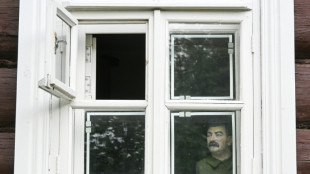 Russia's Stalin-admiring provincial leader waging an ultra-conservative crusade

 'Widow's Bay' and 'The Pitt' tipped for success at Emmy Awards
German agrichemical and pharmaceutical giant Bayer reported Tuesday a bump in first-quarter profit, driven by its agricultural business even as high-stakes lawsuits over its glyphosate weedkillers drag on in the United States.
Core profit rose nine percent to 4.45 billion euros ($5.22 billion), with profits at the agricultural division up almost 18 percent, boosted by the resolution of a licensing dispute and higher corn and soybean seed sales.
Herbicide revenue at the division struggled, however, with sales of glyphosate-based products falling 15.1 percent.
Bayer has spent more than $10 billion settling thousands of cases linked to glyphosate since it acquired the US agrichemical group Monsanto in 2018, developer of the popular herbicide Roundup.
The company is hoping that the US Supreme Court will provide some relief in a case involving a Missouri man who says Roundup is responsible for his blood cancer.
Bayer has argued that it should be immune from lawsuits in US state courts since the country's Environmental Protection Agency (EPA) approved the sale of Roundup without any cancer warning label.
Bayer proposed in February a $7.25-billion deal to settle outstanding cases with hopes of final approval by late June, but appeals could follow.
"We believe we still have the opportunity to significantly contain litigation this year, with or without the Supreme Court ruling," Bayer's chief executive Bill Anderson said.
"That being said, the Supreme Court ruling is really a big sign for the future because, frankly, it just opens the question of, well, what is a pesticide label in the US? If there's no federal pre-emption, then what is the point of a federally approved label?" he said.
The International Agency for Research on Cancer considers glyphosate a probable human carcinogen.
Bayer has pointed to scientific studies as well as regulatory approvals in the US and the European Union as evidence the weedkiller is safe.
But customers in North America, Europe, the Middle East and Africa are "delaying purchases" of glyphosate products, Bayer said in its report.
With May 23 marking the 10th anniversary of Bayer announcing its plan to buy Monsanto, Anderson was asked what he made of the deal.
"I don't think there's really anything to say about that," he said. "Obviously, the financial terms, in hindsight, didn't work out very well."
J.Bondarev--CPN