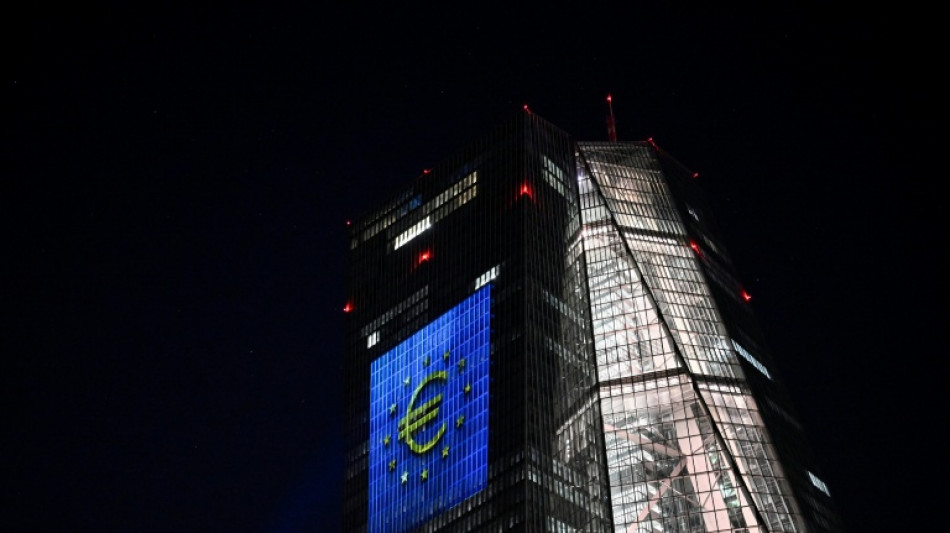
Mideast energy shock rattles eurozone rate-setters / Photo: Kirill KUDRYAVTSEV - AFP

 Bank of Japan hikes rates to 31-year high to battle inflation

 AI doomsday warnings unlikely to slow IPOs but questions linger

 In Brazil's Amazon, the hunt for oil fuels hopes and fears

 Baby orangutans in India expose 'frightening' scale of trafficking

 Oversight Board blasts 'inadequate' Meta safeguards for AI deepfakes

 Harry makes first public appearance since return to UK

 Princess Diana's brother makes new explosive claims against Charles

 Trump admin overhauls key protection for endangered species

 Mbappe draws political fire over Ceuta t-shirt controversy

 Third malaria death in Germany from outbreak tied to Frankfurt airport

 AtlasClear Holdings Reports Preliminary Fiscal 2026 Revenue of Approximately $20.1 Million, Up 85%; Revenue Plus Interest Income of Approximately $21.9 Million

 'Another arrow to the quiver': World Bank posts record private capital mobilization

 Ireland to boycott Eurovision 2027 over Gaza

 India's Tata Sons reappoints N. Chandrasekaran as chairman

 Germany urges EU action against China to defend carmakers

 Japan eyes changing prostitution law to punish sex buyers

 Modi pitches India as global chipmaking hub

 Ukraine plans record defence spending in 2027

 NASA scan discovers new, 'once in a century' Moon crater

 Most stocks rise as Fed hikes and indicates drive to curb inflation

 UK-Sudanese author pens book to give children 'African history of Africa'

 Argentine judge orders suspension of Falklands oil project

 US Fed raises rates to tackle 'too high' inflation, irking Trump

 Turkey releases 106 protesters, jails more LGBTQ activists

 Candidate for UN chief calls for AI regulation akin to nuclear weapons

The energy shock unleashed by the Middle East war will top the agenda at Thursday's European Central Bank meeting, as fears grow of a major hit to the eurozone economy.
The surge in oil and gas prices triggered by the conflict has fuelled worries of a new burst of inflation in the 21-nation euro area, which is heavily dependent on energy imports.
This would weigh on households and businesses -- with energy-hungry manufacturers set to be especially hard hit -- and could dent the region's already tepid growth.
But while price rises can prompt interest rate hikes, the ECB is expected to stay on hold this time as policymakers assess the fallout from the war, which is just three weeks in.
With no signs so far of core inflation rising, the rate-setters "don't really have an argument for a rate hike", Reinhard Pfingsten, chief investment officer at apoBank, told AFP. "So they’ll just muddle through."
Other central banks meeting this week are taking the same approach.
The US Federal Reserve kept rates on hold Wednesday for its second straight meeting, as it faces a tough balancing act between fears the war could push up inflation and signs of a weakening labour market.
The Bank of England is also expected to keep borrowing costs steady when it meets Thursday.
- 'Everything necessary' -
In the eurozone, the key deposit rate has been at two percent since June, and inflation has been hovering around the ECB's two percent target.
However, headline inflation figures will likely jump in coming months as the impact of the war -- which began with US-Israeli strikes on Iran before Iranian retaliatory strikes spread across the region -- filter through more strongly to the real economy.
At ECB chief Christine Lagarde's post-rate call news conference, she will likely reiterate a message she delivered last week -- that officials will do "everything necessary" to keep inflation in check.
Still, most economists also expect her to repeat recent comments that rates remain in a "good place", at least for now.
She may also seek to downplay the parallels with the inflation shock that followed Russia's 2022 full-scale invasion of Ukraine, when the ECB was criticised for being too slow to hike rates.
Jack Allen-Reynolds, deputy chief eurozone economist at Capital Economics, told AFP the economic backdrop then was very different.
In 2022, loose monetary and fiscal policy combined with an energy shock and supply constraints to create a "perfect storm for inflation", he said.
"We're not in that world now."
Nevertheless, investors will be looking out for any hints that rate hikes could be on the horizon at the ECB's next meetings, in April or June, although Lagarde is expected to stay tight-lipped.
She could also face questions over her own future after the Financial Times reported last month, citing an anonymous source, that she would step down before her term ends in October 2027.
She has since insisted that her "baseline" is that she will finish her term.
A.Zimmermann--CPN