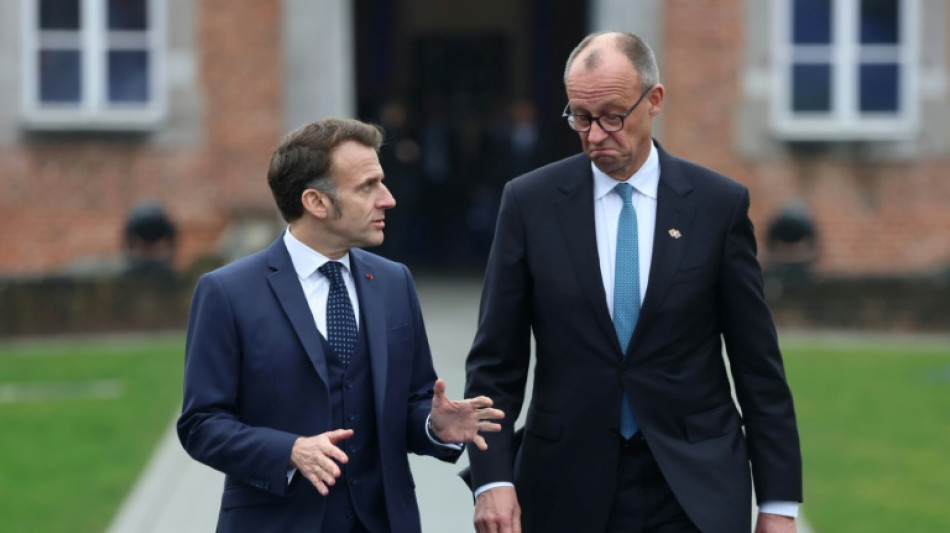
EU vows reforms to confront China, US -- but split on joint debt / Photo: Ludovic MARIN - AFP

 Saudi-led coalition says Houthis fired ballistic missile at Riyadh
 Cuba works to restore power after another blackout
 Brigitte Bardot widower slams sale of star's belongings

 Indonesia accepts Malaysia's help to tackle wildfires

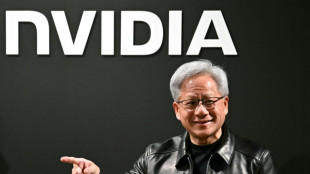 Nvidia, OpenAI CEOs to attend Xi dinner at White House

 Cuba hit with seventh major blackout of the year

 Nigeria miners struggled to breathe in cell before 37 died: survivors

 Warren Buffett steps down as Berkshire Hathaway chairman

 Isolated Syrian-Druze city blames Damascus for shortages

 Kerry James Marshall: American 'blackness' painter celebrated in Europe

 Infantino 'must go', says German FA vice-president

 Japan's busiest rail station tests robot bins

 Backpackers fret over Australian visa crackdown

 Bank of Japan hikes rates to 31-year high to battle inflation

 AI doomsday warnings unlikely to slow IPOs but questions linger

 In Brazil's Amazon, the hunt for oil fuels hopes and fears

 Baby orangutans in India expose 'frightening' scale of trafficking

 Oversight Board blasts 'inadequate' Meta safeguards for AI deepfakes

 Harry makes first public appearance since return to UK

 Princess Diana's brother makes new explosive claims against Charles

 Trump admin overhauls key protection for endangered species

 Mbappe draws political fire over Ceuta t-shirt controversy

 Third malaria death in Germany from outbreak tied to Frankfurt airport

 AtlasClear Holdings Reports Preliminary Fiscal 2026 Revenue of Approximately $20.1 Million, Up 85%; Revenue Plus Interest Income of Approximately $21.9 Million

 'Another arrow to the quiver': World Bank posts record private capital mobilization

EU leaders pledged after talks Thursday to move ahead swiftly with reforms to revive Europe's flagging economy but were split on calls for joint debt to help the bloc confront twin threats from China and the United States.
Reducing Europe's dependencies on countries outside the bloc has gained greater urgency because of geopolitical shocks, intensified global competition and an economy that lags behind bigger powers.
Leaders agree on a common diagnosis that Europe's moribund economy needs a kickstart and had hoped a day of "brainstorming" in a castle in eastern Belgium would help them agree on the cure.
"We share the same sense of urgency. We need to act immediately and accelerate, because we are being pushed around by international competition," French President Emmanuel Macron said after the talks.
The discussion "brought a new energy" on building a more resilient economy, echoed EU chief Antonio Costa, promising "concrete measures" would be taken in the next leaders' meeting in March.
"One Europe, one market," European Commission President Ursula von der Leyen told reporters, vowing to better integrate the EU's single market to unlock private capital that the bloc's companies need to scale up.
But big divisions remained on show among the EU's 27 capitals.
Macron and German Chancellor Friedrich Merz sought to present a united front when arriving at the talks, but the key powers have publicly diverged on France's push to favour EU companies and for more joint debt.
On the crucial matter of debt, the lines did not appear to have moved.
"We have taken on European debt in exceptional situations -- but those were exceptional situations," Merz said afterwards.
"We have to make do with the money we have," he said.
Macron also warned that climate action should not be sacrificed on the altar of boosting the economy, saying it would be a "strategic error" to abandon it -- contrasting with Merz's strong push to slash EU red tape across all sectors.
- 'Made in Europe' -
The French-backed "Buy European" push remained on the table after Thursday's talks, despite protectionism concerns by free trade advocates including Sweden and the Netherlands -- but with caveats.
"On European preference, I feel that there is a broad agreement on the need to use it in the selected strategic sectors, in the proportional and targeted way," Costa said.
The EU executive will publish a proposal this month for rules that would demand governments prioritise European-made goods in public contracts.
Macron said the leaders would define which sectors during the March summit.
Merz has said the EU should seek a "Made with Europe" approach rather than "Made in Europe, a message echoed by Japanese companies.
In the latest draft seen by AFP Thursday, the commission appeared to open the door to Germany's wishes with the proposal that it would identify "trusted partners" and allow content from them to be "equivalent" to European content.
Partners could include countries like Japan with whom the EU has a trade deal.
- Two-speed Europe -
The EU's list of concerns is long including lacklustre economic growth compared with its global rivals, and dependence on countries outside the bloc including China for rare earths essential for industry.
Leaders, backed by influential European figures, believe the key to transforming the 27-country bloc's economy is to deepen the single market and make it easier for businesses to work across the continent.
They heard from former European Central Bank chief Mario Draghi and Italian ex-premier Enrico Letta, the authors of 2024 reports guiding Europe.
Draghi told leaders the EU must reduce barriers and mobilise Europeans' savings and backed the call for "targeted" preference for European companies, an EU official said.
Two paths promoted by the EU to become more competitive are "simplifying" EU rules to reduce the administrative burden for businesses and striking more trade deals -- easier said than done.
A recent trade agreement with the South American Mercosur bloc has come up against fierce opposition while changes to EU laws have been bogged down in the bloc's legislative process.
Draghi also called for "enhanced cooperation", which would mean EU states that want to can move forward on certain reforms if the 27 states can't agree.
Macron warned that if progress is not made on reforming the single market by June, willing EU states should move forward without others.
The EU executive will also propose next month the creation of a new legal system for businesses outside of the scope of member states -- the so-called 28th regime -- to make it easier for companies to work across the bloc.
H.Müller--CPN