Nvidia says no 'backdoors' in chips as China questions security / Photo: I-Hwa Cheng - AFP/File

 Forex Expo Dubai 2026 Breaks Guinness World Record Again With 23,816 Attendees

 Asian markets fall on US-China jitters as leaders meet

 As Moscow steps up attacks, Kyiv residents brace for harsh winter

 Markets mixed as China's Xi arrives for US talks
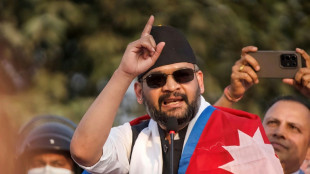
 Archaeological 'breakthrough' could confirm origins of Paris
 Australian PM says OpenAI hacked government health website

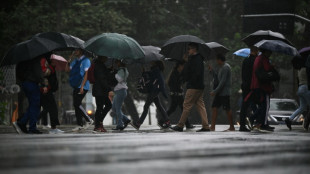 Rio breaks record for rainiest September amid powerful El Nino
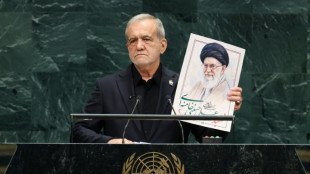
 Mandela Digital Extends Early Access Programme to 11 February 2027 Following Strong Response

 McDonald's to boost franchisees as inflation weighs on consumers
 Archaelogical 'breakthrough' could confirm origins of Paris
 Fendi brings disco bling, Italian style, to Milan Fashion Week

 アレックス・ボディ氏とシュテファン・ハウプト教授、ルーマニアの伝説的な美術コレクションをめぐり提携に合意

 Stocks dip, oil rises as traders eye chances of Iran deal

 Oil falls, stocks steady as Trump hails 'good' Iran talks

 Canada judge to decide prison term for suicide poison seller

 Meta leans into AI, smart glasses amid privacy pushback

 Oil prices fall after Trump hails 'good' talks with Iran
 AI political ads warp reality ahead of US midterms

 Oil prices retreat as markets welcome US-Iran talks

 French prosecutors probe secret filming of women with smart glasses

 Trump renames AI "super intelligence," rejects international oversight
 How is the EU approaching record fuel prices?

 11 hurt as teen opens fire outside school in western Turkey

 UN chief says 'Big Oil' treats atmosphere as open sewer
 Memoir by Diana's brother goes on sale after rocking UK monarchy

Nvidia chips do not contain "backdoors" allowing remote access, the US tech giant has said, after Beijing summoned company representatives to discuss "serious security issues".
The California-based company is a world-leading producer of AI semiconductors, and this month became the first company to hit $4 trillion in market value.
But it has become entangled in trade tensions between China and the United States, and Washington effectively restricts which chips Nvidia can export to China on national security grounds.
"Cybersecurity is critically important to us. Nvidia does not have 'backdoors' in our chips that would give anyone a remote way to access or control them," Nvidia said in a statement Thursday.
A key issue has been Chinese access to the "H20" -- a less powerful version of Nvidia's AI processing units that the company developed specifically for export to China.
Nvidia said this month it would resume H20 sales to China after Washington pledged to remove licensing curbs that had halted exports.
But the tech giant still faces obstacles -- US lawmakers have proposed plans to require Nvidia and other manufacturers of advanced AI chips to include built-in location tracking capabilities.
Beijing's top internet regulator said Thursday it had summoned Nvidia representatives to discuss recently discovered "serious security issues" involving the H20.
The Cyberspace Administration of China said it had asked Nvidia to "explain the security risks of vulnerabilities and backdoors in its H20 chips sold to China and submit relevant supporting materials".
China is aiming to reduce reliance on foreign tech by promoting Huawei's domestically developed 910C chip as an alternative to the H20, said Jost Wubbeke of the Sinolytics consultancy.
"From that perspective, the US decision to allow renewed exports of the H20 to China could be seen as counterproductive, as it might tempt Chinese hyperscalers to revert to the H20, potentially undermining momentum behind the 910C and other domestic alternatives," he said.
Other hurdles to Nvidia's operations in China are the sputtering economy, beset by a years-long property sector crisis, and heightened trade headwinds under US President Donald Trump.
CEO Jensen Huang said during a visit to Beijing this month that the company remained committed to serving local customers, adding that he had been assured during talks with top Chinese officials that the country was "open and stable".
O.Ignatyev--CPN