
Premier League losses soar for clubs locked in 'arms race' / Photo: Paul ELLIS - AFP/File

 Wildfires push endangered Sumatran elephants to brink: Indonesian NGO

 Bank of Japan set to raise rates under pressure from inflation, US

 EU chief to unveil social media, gaming curbs for under-15s

 'Resident Evil' film brings video game's ethos to the big screen

 i-payout Expands U.S. Money Transmitter Licensing Footprint and Advances European EMI Strategy

 US Senate crypto bill collapses amid partisan deadlock

 OpenAI, Anthropic and Google are working to create an AI standards body

 Protesting shepherds, farmers clash with Romanian police

 Foundation Lets Ledger Users Switch to Open Source Without Starting Over

 EU to propose curbing social media, online games for under 15s

 FX Junction Reaches 40,600 Members and 26 Million Trades

 'We unleashed the beast': the world's fears and hopes about AI

 Hospitality leaders ask Burnham to halve VAT amid rising costs

 Worcestershire invited to nominate groups for 2027 King’s volunteer award

 Berlin's run-down public spaces at heart of election campaign

 'Widow's Bay' and 'The Pitt' win big at Emmy Awards

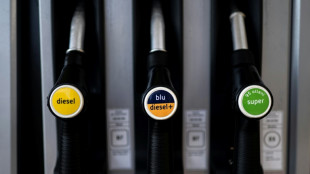 Most markets drop as oil extends gains ahead of expected US rate hike

 Sri Lanka's famed beach shack battles demolition

 Vserv targets ₹1,000 crore revenue by 2030 through AI expansion

 India prohibits bank fees on UPI payments up to ₹2,000

 Brazil's Amazon defender Raoni has cancer

 Trump rejects AI slowdown concerns as UN urges coordinated controls

 Higher wages draw migrant workers to Kashmir despite attacks

 Oil supply concerns and AI warnings weigh on global markets

 'I am the hoax buster': Trump rejects AI danger warnings

The Premier League is the envy of the world for its revenue-generating power, yet clubs lost nearly $1 billion last season as the pursuit of on-field success trumped financial security.
Despite amassing a record £6.8 billion ($9.2 billion) in combined revenue in 2024/25, outgoings continued to outstrip income due to rampant inflation in the transfer market, player wages and agent fees.
Chelsea set an unwanted record by posting a Premier League record pre-tax loss of £262 million for the year ending June 30, 2025.
The Blues' scattergun approach to hoovering up global young talent makes them an extreme case, but they are part of a broader trend.
Relegation-threatened Tottenham, the ninth-richest club in the world, were £121 million in the red last season despite booming revenues from their multi-functional, state-of-the-art stadium, and winning the Europa League.
The overall numbers would be even bleaker were it not for some smart accounting, with several clubs selling off assets to their own ownership groups.
Saudi-backed Newcastle sold their St James' Park stadium to another company owned by the club's shareholders to turn a profit, while Everton and Aston Villa cashed in on their women's teams.
- Transfer fees -
"The problem with the Premier League is that clubs are so incentivised to overspend," football finance expert Kieran Maguire told AFP.
"It's an arms race at the end of the day in terms of competing for players on transfer fees and wages."
The figures for the 2024/25 campaign do not even fully account for a record £3 billion spent on transfer fees by Premier League clubs in last year's summer transfer window, smashing the previous high by £650 million.
Liverpool's £125-million signing of Alexander Isak set a new record for an English club and was part of a £450-million window for the English champions, which has so far failed to reap tangible reward.
Wages continue to spiral, reaching £4.4 billion last season, a nine percent increase on the previous year, outstripping the seven percent rise in revenue.
Spending on agents also reached new highs, fuelling fans' anger at the money flowing out the game while they are asked to pay higher ticket prices.
In the frenzied world of the Premier League, success in an increasingly competitive league is no longer measured solely by trophies.
For the second consecutive year at least five English sides will qualify for the Champions League, which guarantees a huge financial windfall.
- Losses 'affordable' -
New financial rules will be introduced next season focused on limiting squad cost in line with revenue.
Spending on wages, transfer fees and agents must not exceed 85 percent of revenue, with a stricter 70 percent limit placed on teams in UEFA competitions.
However, those changes are unlikely to make a significant impact on losses, with operating costs, which jumped to £1.9 billion for Premier League clubs last season, excluded.
Despite clubs' tendencies to haemorrhage money, they remain an attractive asset due to their scarcity value and role in the Premier League's global soap opera.
British billionaire Jim Ratcliffe's 27.7 percent stake in Manchester United, bought for £1.25 billion in 2024, valued the 20-time English champions at £4.5 billion.
Chelsea were sold in 2022 for a total package worth £4.25 billion to a consortium led by American investor Todd Boehly and private equity firm Clearlake Capital.
Manchester City have become the dominant force in the English game since a takeover backed by the Abu Dhabi royal family, while the Saudi sovereign wealth fund took control of Newcastle in 2021.
Former Manchester United captain Gary Neville believes the scale of Chelsea's financial problems could signal a slowdown in the bull market for English clubs.
But Maguire argues that losses are deemed affordable by super-rich owners.
"With billionaire owners and sovereign wealth funds in charge of clubs, whilst the losses seem high, for those people they are deemed to be affordable," he said.
"Unless there's a mindset change from club owners in terms of controlling your core costs, which are player-related in transfer fees and wages, we're going to continue in this vein for some time."
A.Mykhailo--CPN

