
China seeks to 'tariff-proof' economy as trade war with US deepens / Photo: Pedro PARDO - AFP

 Kenya's economy faces climate change risks: World Bank

 Man arrested in Thailand for smuggling rhino horn inside meat

 Asian markets extend gains as Tokyo enjoys another record day
 Jury told that Meta, Google 'engineered addiction' at landmark US trial
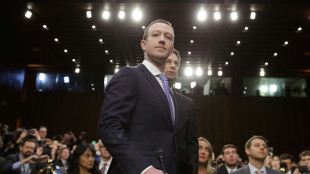 Meta, Google face jury in landmark US addiction trial
 Some striking NY nurses reach deal with employers
 EU chief backs Made-in-Europe push for 'strategic' sectors

 Iran steps up arrests while remaining positive on US talks
 EU warns Meta it must open up WhatsApp to rival AI chatbots
 Japan's Takaichi may struggle to soothe voters and markets
 Arguments to begin in key US social media addiction trial
 'Send Help' repeats as N.America box office champ
 UK foreign office to review pay-off to Epstein-linked US envoy
 French police arrest five over crypto-linked magistrate kidnapping
 What's at stake for Indian agriculture in Trump's trade deal?

 Neglected killer: kala-azar disease surges in Kenya

 Spain, Portugal face fresh storms, torrential rain

 Crypto firm accidentally sends $40 bn in bitcoin to users
 Danone expands recall of infant formula batches in Europe
 Why bitcoin is losing its luster after stratospheric rise

 Digital euro delay could leave Europe vulnerable, ECB warns
 Stellantis takes massive hit for 'overestimation' of EV shift

 In Dakar fishing village, surfing entices girls back to school

 As Estonia schools phase out Russian, many families struggle
 Bangladesh Islamist leader seeks power in post-uprising vote
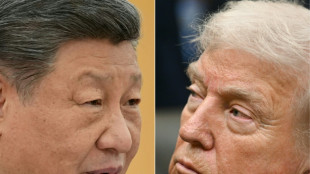
China is trying to tariff-proof its economy by boosting consumption and investing in key industries, but analysts say it remains critically vulnerable to the economic storm triggered by Donald Trump's 104 percent levies on its goods.
Beijing has vowed to "fight to the end" against Trump's aggressive trade policy, with number two leader Li Qiang saying authorities were "fully confident" in the resilience of the Chinese economy.
But even before the tariffs hit, weakness in the post-Covid domestic market, rising unemployment and a long-running property crisis had all dampened consumption.
"The Chinese economy has been significantly weakened since Trump's first term and can't really withstand the impact of sustained high tariffs," said Henry Gao, an expert on the Chinese economy and international trade law.
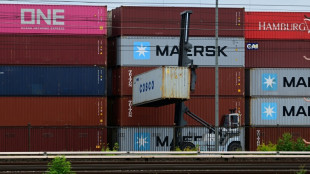
Overseas shipments had represented a rare bright spot last year, with the United States the top single country buyer of Chinese goods.
US figures put Chinese exports to the United States at around $440 billion in 2024, almost three times the $145 billion worth of imports.
Machinery and electronics -- as well as textiles, footwear, furniture and toys -- make up a majority of the goods sent, and a supply glut could squeeze already crowded domestic consumer markets.
Although China's domestic market is stronger now than in Trump's previous term, there would inevitably be pain ahead, said Tang Yao from Peking University's Guanghua School of Management.
"Certain products are specifically designed for American or European markets, so efforts to redirect them to domestic consumers will have only a limited effect," he said.
- 'Strategic opportunity' -
However, a weekend editorial in the Communist Party-backed People's Daily described the tariffs as a "strategic opportunity" for China to cement consumption as the main driver of economic growth.
We must "turn pressure into motivation", it read.
Beijing has been seeking to "recast structural external pressure as a catalyst for long-intended reforms", said Lizzi Lee from the Asia Society Policy Institute's Center for China Analysis.
Authorities are "projecting confidence", she said.
China's quick and coordinated response to tariffs reflect lessons learned from Trump's first term, she added.
For example, in addition to readying reciprocal tariffs on US goods set to come into effect Thursday, Beijing's commerce ministry the same day announced export controls on seven rare earth elements -- including ones used in magnetic imaging and consumer electronics.
Beijing's response to any further escalation may no longer be confined to tit-for-tat levies, as China is "refining its retaliatory approach", Lee said.
Since Trump's first term, China has diversified and fortified relationships with countries in Europe, Africa, Southeast Asia and Latin America, as well as South Korea and Japan.
Beijing could also expand government support for the private sector as entrepreneurs fall back into President Xi Jinping's good graces, added ANZ's Raymond Yeung.
China's leaders have been trying to promote domestic self-reliance in technology for some time, offering explicit support and reinforcing supply chains in key areas like AI and chips.
- 'No real protection' -
While this time round Beijing has more experience with Trump, it "doesn't mean the Chinese economy can easily shake off the effects of soaring tariffs", said Frederic Neumann, chief Asia economist at HSBC.
Authorities will be looking to quickly offset falling US demand for Chinese goods, he said.
That could look like trade-in schemes or more consumer subsidies that make it easier for Chinese shoppers to buy common household items, from water purifiers to electric vehicles.
"By creating demand and trade opportunities for China's partners in Asia and Europe, the country could help shore up what's left of the liberal global trading order," Neumann said.
But whether or not Beijing can do that is yet to be seen.
The government has "been very reluctant to introduce real consumption stimulus, which is why there's such low confidence in any so-called consumption-boosting measures", Gao said.
"I don't think China has any real protection against a trade war," he added.
Success also goes beyond words, and ultimately hinges on Beijing's ability to deliver the long-awaited consumption boost, HSBC's Neumann warned.
"This is China's moment to seize economic leadership of the world," he said.
"But that leadership will only come about if domestic demand rebounds and fills the void left by an absent US."
L.K.Baumgartner--CPN