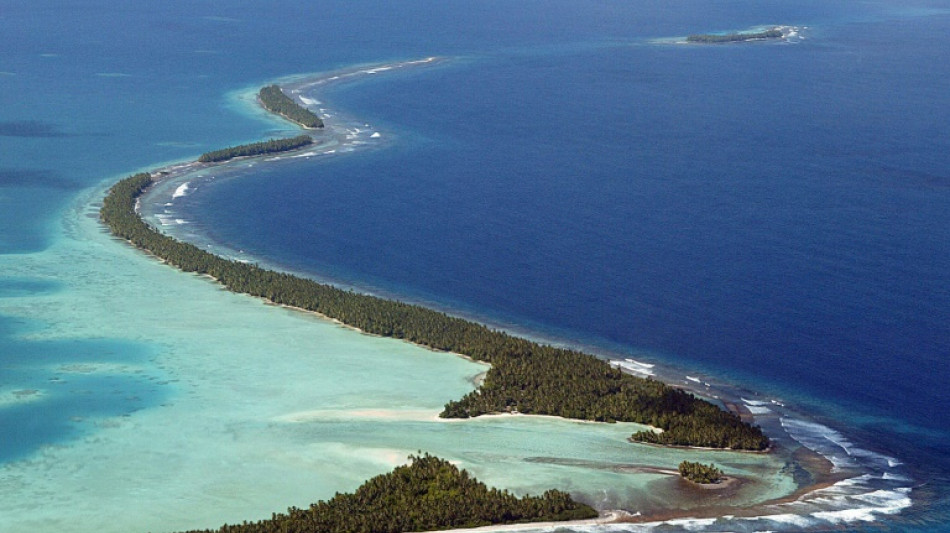
Pacific nations perplexed, worried by Trump tariffs / Photo: TORSTEN BLACKWOOD - AFP

 Kenya's economy faces climate change risks: World Bank

 AstraZeneca profit jumps as cancer drug sales grow
 Trump tariffs hurt French wine and spirits exports

 Back to black: Philips posts first annual profit since 2021
 'Family and intimacy under pressure' at Berlin film festival
 Unions rip American Airlines CEO on performance
 Three missing employees of Canadian miner found dead in Mexico
 Epstein accomplice Maxwell seeks Trump clemency before testimony

 Emergency measures kick in as Cuban fuel supplies dwindle under US pressure
 AI chatbots give bad health advice, research finds
 Bank of France governor Francois Villeroy de Galhau to step down in June

 Japan restarts world's biggest nuclear plant again
 'Want to go home': Indonesian crew abandoned off Africa demand wages
 Trump says China's Xi to visit US 'toward the end of the year'

 US astronaut to take her 3-year-old's cuddly rabbit into space

 Storm-battered Portugal votes in presidential election run-off

 De Beers sale drags in diamond doldrums
 Pakistan's capital picks concrete over trees, angering residents
 Chile's climate summit chief to lead plastic pollution treaty talks
 Opinions of Zuckerberg hang over social media addiction trial jury selection
 Dow surges above 50,000 for first time as US stocks regain mojo

 EU nations back chemical recycling for plastic bottles
 Stocks rebound though tech stocks still suffer
 German exports to US plunge as tariffs exact heavy cost

 'Mona's Eyes': how an obscure French art historian swept the globe
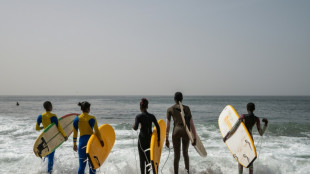
Pacific island nations hit hardest by US President Donald Trump's trade tariffs are querying the "unfair" impost, and they are fearful of the impact.
The United States has punished Fiji, Vanuatu and tiny Nauru for running trade surpluses with the economic superpower, slapping them with duties far above its new 10-percent baseline.
Besides squeezing their finances, analysts say the US levies are making Pacific countries wary of their historic ally, which has already cut humanitarian aid programmes.
"It's just another reason to have less trust in the US, stacked on top of the US aid freeze," said Blake Johnson, senior analyst at the Australian Strategic Policy Institute think tank.
It also creates opportunities for China to expand its ties from aid to trade, he said, as Beijing vies with the United States and its allies for influence in the geographically strategic region.
Among the Pacific countries' biggest sellers in the United States are the traditional narcotic kava drink, and spring water under the brand Fiji Water -- owned by Los Angeles-based The Wonderful Company.
The 22-percent tariffs on Vanuatu are expected to impact exports and hurt kava farmers, a spokesperson for the prime minister said.
-'Just suck them up' -
Vanuatu was hit by the tariffs after running a US$6.6 million surplus in its trade of goods with the United States last year, according to UN data.
Jonathan Naupa, owner of Vanuatu kava exporter Mount Kava, said demand for kava was high and he had no plans to cut prices for the US market.
"We are going to keep our prices right where they are -- the American public can just suck them up," he told AFP, adding that there was a growing global market for kava exports.
He welcomed Trump's move.
"I actually think it's a good thing that he's done this because it will make the Americans realise that they need to treat our cultural product with a bit more respect," he said.
"With the shortage of kava in Vanuatu, I don't see prices going down, and I hope my fellow exporters also try to follow suit and not drop their prices."
Nauru's main exports include the remnants of its once-vast phosphate deposits and the sale of fishing rights, but it was not clear what made up its 2024 goods trade surplus with the United States of $1.4 million -- about the price of a one-bedroom apartment in Manhattan.
It faces a 30-percent US trade tariff.
Fiji runs a larger surplus in the trade of goods with the United States of about $252 million helped by exports of Fiji Water, kava and fish, and it now faces a 32-percent tariff across the board.
- 'Unfair' -
The beach-fringed tourist magnet says it applies zero or five-percent duty on 96 percent of US imports.
Trump's levy "is quite disproportionate and unfair", Finance Minister Biman Prasad said in a statement.
"We are still trying to get more details on the exact rationale and application of the newly announced retaliatory tariff by the US and will work with our key stakeholders and US counterparts to get this," he said.
Roland Rajah, director of the Indo-Pacific Development Centre at the Lowy Institute think tank, said the tariffs were based on the scale of US trade deficits with each country.
But it makes economic sense to have a trade deficit with some countries and a surplus with others, he said.
"It's not necessarily driven by particular policy distortions," Rajah added, making it hard for countries to find a basis for trade talks with the United States.
"The other factor for the Pacific is that being small countries and quite small trading partners in the world it might be very difficult for them to get a hearing with the Trump administration, who will have bigger fish to fry at the current moment."
Papua New Guinea, the most populous Pacific island country, said it had no plans to retaliate against the US decision to impose a 10-percent tariff.
"We will continue to strengthen our trade relations in Asia and the Pacific, where our produce is welcomed," Prime Minister James Marape said in a statement.
"If the US market becomes more difficult due to this tariff, we will simply redirect our goods to markets where there is mutual respect and no artificial barriers."
M.Anderson--CPN