Taiwan chip firm's bid to buy German rival collapses

 Lights out in Laos as electricity exports surge

 Steven Strogatz weighs AI mathematics advances and their consequences for researchers

 Anthropic boss calls for AI slowdown, Altman and Musk agree

 French IT giant Capgemini sells subsidiary after row over ICE links

 Quebec Brokerage Qubit Insurance Announces New Data on Coverage Shortfalls as Rebuilding Costs Rise

 Lady Gaga welcomes first child with fiance: US media

 Bhutan business bets on hazelnuts for farming future

 'Widow's Bay' and 'The Pitt' are favorites for Emmys night

 Coastal erosion forces cancellation of California music festival

 Argentina's Dirty War rears its head in Venice film

 UK lawmakers throw out bill to legalise assisted dying

 US inflation steady in August, fueling Fed rate hike expectations

 New York marks 25th anniversary of 9/11 attacks

 Nepal flood reconstruction bill to be $4.78 bn: foreign ministry

 JUMO and Standard Bank launch Social Finance Framework to scale inclusive finance in Africa

 Doomsday tech: could AI really kill us all?

 French comedy show 'Call my agent' makes film comeback

 It's all coming back: Celine Dion fans gear up for Paris return

 Researchers eye AI revolution in natural disaster forecasts

 US braces for inflation report that may push Fed to hike rates

 Musk threatens legal action over documentary

 Latin America fact-check group asks Meta not to replace verification practice

 AI Risks to Enter 60–80% of Liability and Cyber Insurance Underwriting by 2028, ScienceSoft Predicts

 Tribal Launches Campfire, Letting Business and Technical Teams Build on Salesforce Together

 Stocks fall as fresh oil surge fans inflation fears

A Taiwanese semiconductor technology company's $4.5 billion deal to acquire a German rival collapsed on Tuesday after a deadline for Berlin to approve the bid passed without a decision.
The demise of GlobalWafers' attempt to buy Siltronic was welcomed by German politicians, who said the country had to protect its security interests.
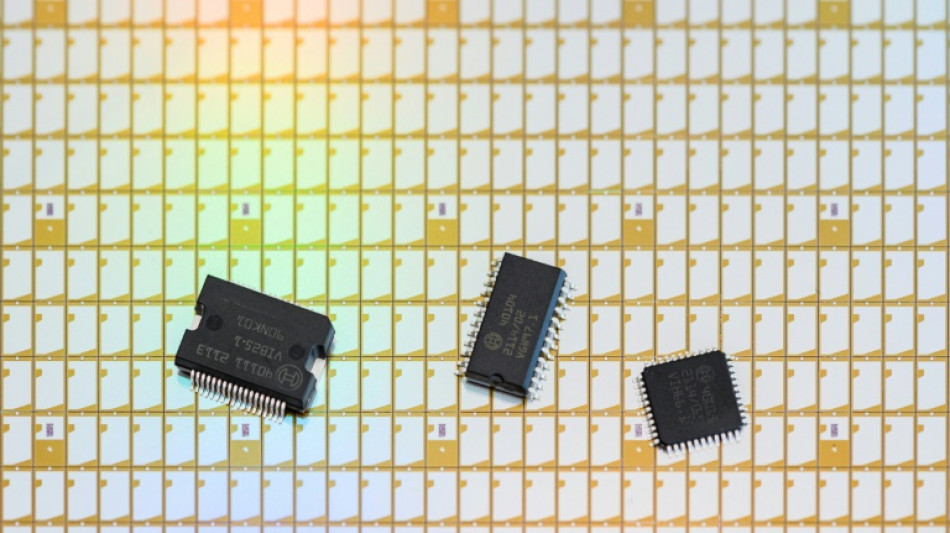
The Taiwanese firm makes wafers, one-millimetre-thick sheets of silicon necessary for the manufacturing of semiconductors that are the backbone of the global technology sector.
GlobalWafers had signed an agreement with Siltronic in December 2020 to acquire all of the German company's outstanding shares at a 10 percent premium worth roughly $4.5 billion (4.0 billion euros).
But the deal needed regulatory approval from Berlin, which was not obtained by the January 31 deadline.
"Therefore, the takeover offer by GlobalWafers and the agreements which came into existence as a result of the offer will not be completed and will lapse," GlobalWafers said.
CEO Doris Hsu called it "disappointing" and said the Taiwanese company will work to "analyse the non-decision" by Berlin.
A spokeswoman for the German ministry for the economy and climate said in a statement that "not all the necessary investment review steps could be completed before the end of the period".
Siltronic said GlobalWafers will pay the German company a termination fee of 50 million euros ($56.1 million).
German politicians voiced support for the government's decision to drop the deal, according to local business newspaper Handelsblatt.
"We do not gain technological sovereignty by selling off our silverware," said Hannes Walter, vice chairman of the Economics Committee.
Julia Kloeckner, an economic policy spokeswoman for centre-right CDU/CSU parliamentary group, said the move was right to "keep our security interests in mind".
Governments are increasingly scrutinising huge takeovers in the global technology industry, rattled by growing national security concerns and supply chain crunches due to the pandemic.
US regulators filed a December lawsuit to block a $40 billion merger of graphics chip star Nvidia with mobile chip tech powerhouse Arm Ltd.
The Federal Trade Commission said it was fearful it could provide one of the largest semiconductor companies with control over computing technology and designs "that rival firms rely on to develop their own competing chips".
A.Zimmermann--CPN