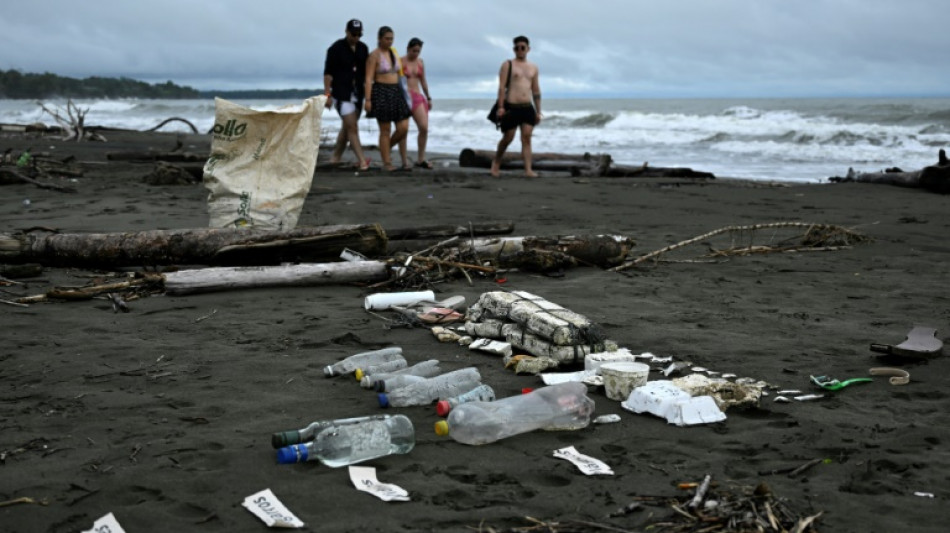
In Colombia, children trade plastic waste for school supplies / Photo: JOAQUIN SARMIENTO - AFP

 Kenya's economy faces climate change risks: World Bank
 Deja vu? Trump accused of economic denial and physical decline
 Hungary winemakers fear disease may 'wipe out' industry

 'Stop the slaughter': French farmers block roads over cow disease cull

 Why SpaceX IPO plan is generating so much buzz
 World stocks mostly slide, consolidating Fed-fuelled gains
 UK's king shares 'good news' that cancer treatment will be reduced in 2026

 Salah admired from afar in his Egypt home village as club tensions swirl

 Iran frees child bride sentenced to death over husband's killing: activists

 France updates net-zero plan, with fossil fuel phaseout

 EU agrees recycled plastic targets for cars

 British porn star fined, faces imminent Bali deportation
 Indonesia floods were 'extinction level' for rare orangutans
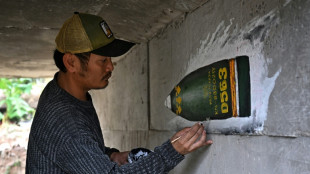
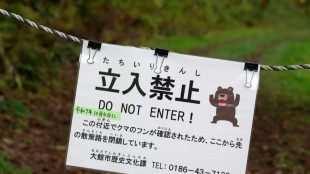 Japan bear victim's watch shows last movements
 French indie 'Clair Obscur' dominates Game Awards
 Asian markets track Wall St record after Fed cut
 Vaccines do not cause autism: WHO

 'In her prime': Rare blooming of palm trees in Rio

 OpenAI beefs up GPT models in AI race with Google
 Cyclone causes blackout, flight chaos in Brazil's Sao Paulo

 US bringing seized tanker to port, as Venezuela war threats build

 Time magazine names 'Architects of AI' as Person of the Year
 OpenAI, Disney to let fans create AI videos in landmark deal
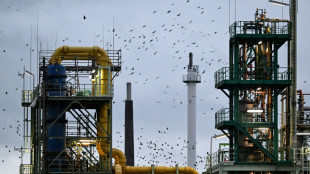
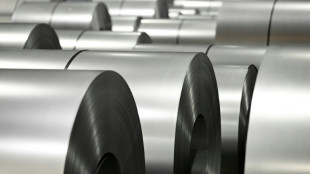 Thyssenkrupp pauses steel production at two sites citing Asian pressure
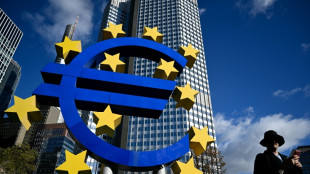
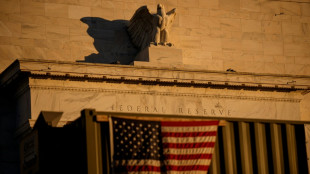 Stocks mixed as US rate cut offset by Fed outlook, Oracle earnings

On a beach in Colombia, children trade plastic waste for pseudo coins which they can use to "buy" clothes, books, school supplies or even popcorn.
Bahia Malaga National Park, on Colombia's Pacific coast, is one of the best places in the South American country to spot humpback whales.
The giant mammals draw tourists, a welcome source of revenue, but the visitors leave a heavy plastic footprint, in the form of tons of waste.
Pollution will be one of key topics on the agenda at the upcoming UN COP16 biodiversity conference in the Colombian city of Cali starting October 21.
Every year, about eight million tons of plastic end up in the ocean, according to the UN.
The Plastico Precioso Uramba charity is spearheading a major clean-up in Bahia Malaga, where it has collected about 16 tons of garbage since 2019.
The key to its success was inventing a currency to encourage collection: each 250 grams (0.55 pounds) of plastic collected can be redeemed for a plastic coin, which in turn can be traded for a range of goods at a store run by the charity.
For example, a notebook costs the equivalent of 30 plastic bottle caps.
"The garbage problem is transformed into incentives for local economies," Sergio Pardo, director of Plastico Precioso Uramba explained.
And children are the footsoldiers in his war on plastic waste.
"I collect bottle caps and take them to the store," 13-year-old Juan Jose Lopez said.
Pardo has also melted down caps and turned them into desks for a local school, as a prize for the class that recycled the most.
Teacher Soraya Hinestroza said the waste scheme had made children "diligent" pupils of recycling.
"We are motivating families through the children, who return home and become environmental advocates within their households."
X.Cheung--CPN