Russia loses a million people in historic population fall

 Lights out in Laos as electricity exports surge

 Steven Strogatz weighs AI mathematics advances and their consequences for researchers

 Anthropic boss calls for AI slowdown, Altman and Musk agree

 French IT giant Capgemini sells subsidiary after row over ICE links

 Quebec Brokerage Qubit Insurance Announces New Data on Coverage Shortfalls as Rebuilding Costs Rise

 Lady Gaga welcomes first child with fiance: US media

 Bhutan business bets on hazelnuts for farming future

 'Widow's Bay' and 'The Pitt' are favorites for Emmys night

 Coastal erosion forces cancellation of California music festival

 Argentina's Dirty War rears its head in Venice film

 UK lawmakers throw out bill to legalise assisted dying

 US inflation steady in August, fueling Fed rate hike expectations

 New York marks 25th anniversary of 9/11 attacks

 Nepal flood reconstruction bill to be $4.78 bn: foreign ministry

 JUMO and Standard Bank launch Social Finance Framework to scale inclusive finance in Africa

 Doomsday tech: could AI really kill us all?

 French comedy show 'Call my agent' makes film comeback

 It's all coming back: Celine Dion fans gear up for Paris return

 Researchers eye AI revolution in natural disaster forecasts

 US braces for inflation report that may push Fed to hike rates

 Musk threatens legal action over documentary

 Latin America fact-check group asks Meta not to replace verification practice

 AI Risks to Enter 60–80% of Liability and Cyber Insurance Underwriting by 2028, ScienceSoft Predicts

 Tribal Launches Campfire, Letting Business and Technical Teams Build on Salesforce Together

 Stocks fall as fresh oil surge fans inflation fears

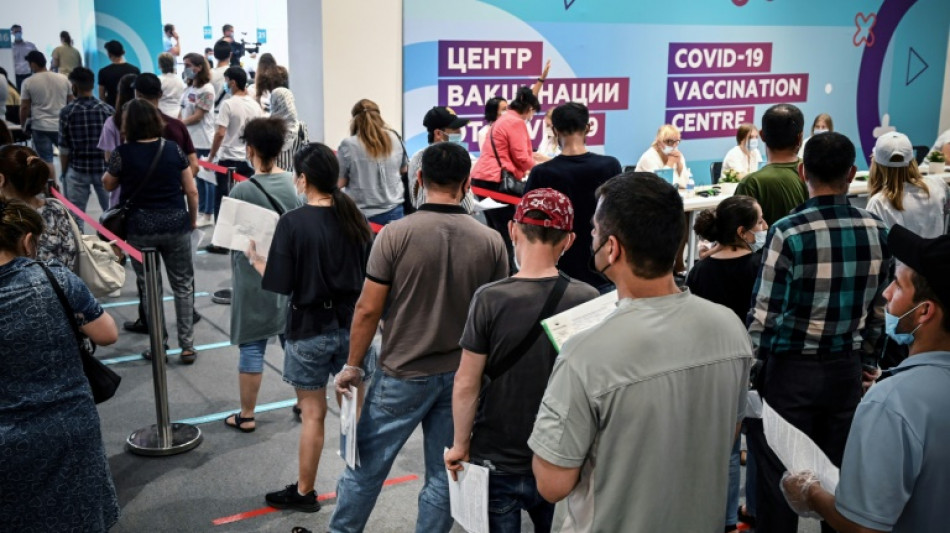
Russia's population declined by more than one million people in 2021, the statistics agency Rosstat reported Friday, a historic drop not seen since the collapse of the Soviet Union.
Ongoing demographic woes have been exacerbated by the pandemic with Rosstat figures showing more than 660,000 had died with coronavirus since health officials recorded the first case in the country.
The new figures continue a downward trend from the previous year when Russia's population fell by more than half a million.
The Covid-related fatalities figures published monthly by Rosstat are far higher than death figures released by a separate government website, which is dedicated to tracking the pandemic in the country.
Those government website figures only take into account fatalities where the virus was established as the primary cause of death after an autopsy and shows just 329,443 total fatalities.
The discrepancy has fed into criticism that the Russian government has been downplaying the severity of the pandemic in one of the worst-hit countries by cases in the world.
Russia has struggled to curb the pandemic due to a slow vaccination drive coupled with limited restrictive measures and rampant non-compliance with mask-wearing in public places.
The pandemic death toll exacerbates the demographic crisis, linked to low birth rates and a short life expectancy, that Russia has faced for the past 30 years.
Birth rates have been falling because the generation now becoming parents were born in the 1990s, when the birth rate plunged due to economic uncertainties after the collapse of the Soviet Union.
The number of births per woman stands at around 1.5, well short of the minimum of 2.1 necessary to renew the population.
- Economic concerns -
Russia's shrinking population has been at the top of President Vladimir Putin's domestic agenda since he came to power over two decades ago.
In addresses to the nation, Putin frequently encourages Russians to have more children and live a healthier lifestyle to improve life expectancy.
The government has introduced a number of financial incentives for parents with more than one child, such as cash bonuses and favourable mortgage rates.
During his annual press conference last December, Putin stressed that 146 million people are not enough for the country from a "geopolitical standpoint" and leave labour shortages.
He added that it is important to show that it is a "joy to have children" and that there is "no greater happiness in life and in the world".
"The demographic crisis is definitely a failure of the state's policies," said Sergei Zakharov, a demography expert at the Higher School of Economics based in Moscow.
He told AFP that measures to increase the birth rate encourage families to have children earlier but do not change how many children they want in total.
He said the government's influence on birth rates is "limited" and shifting births to an earlier period will result in a "demographic gap" in the future.
For Stepan Goncharov of the independent Levada Centre pollster, the low birth rate is connected to widespread "uncertainty about the future".
Living standards in Russia have continuously deteriorated since 2014, with the economy strained by repeated Western sanctions, dependence on the oil and gas sector and widespread corruption.
"People haven't stopped buying and their income and savings have reduced," Goncharov said.
According to last year's survey by recruitment website SuperJob, 43 percent of Russians do not have any savings.
"People are not setting money aside and are not planning the future of the family," Goncharov added.
P.Schmidt--CPN