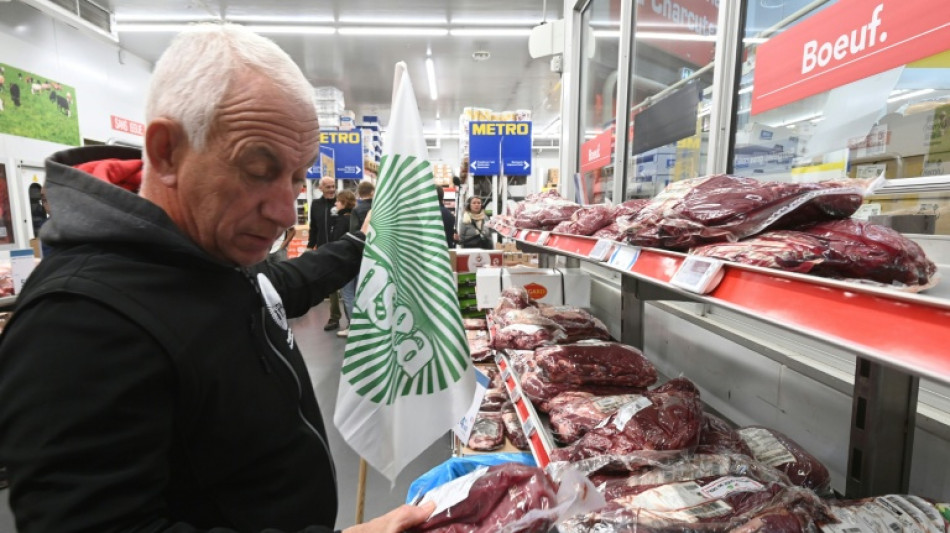
Eat less meat, France urges, for sake of health, climate / Photo: JEAN-FRANCOIS MONIER - AFP

 Saudi-led coalition says Houthis fired ballistic missile at Riyadh

 Cuba works to restore power after another blackout
 Brigitte Bardot widower slams sale of star's belongings

 Indonesia accepts Malaysia's help to tackle wildfires

 Nvidia, OpenAI CEOs to attend Xi dinner at White House

 Cuba hit with seventh major blackout of the year

 Nigeria miners struggled to breathe in cell before 37 died: survivors

 Warren Buffett steps down as Berkshire Hathaway chairman

 Isolated Syrian-Druze city blames Damascus for shortages

 Kerry James Marshall: American 'blackness' painter celebrated in Europe

 Infantino 'must go', says German FA vice-president

 Japan's busiest rail station tests robot bins

 Backpackers fret over Australian visa crackdown

 Bank of Japan hikes rates to 31-year high to battle inflation

 AI doomsday warnings unlikely to slow IPOs but questions linger

 In Brazil's Amazon, the hunt for oil fuels hopes and fears

 Baby orangutans in India expose 'frightening' scale of trafficking

 Oversight Board blasts 'inadequate' Meta safeguards for AI deepfakes

 Harry makes first public appearance since return to UK

 Princess Diana's brother makes new explosive claims against Charles

 Trump admin overhauls key protection for endangered species

 Mbappe draws political fire over Ceuta t-shirt controversy

 Third malaria death in Germany from outbreak tied to Frankfurt airport

 AtlasClear Holdings Reports Preliminary Fiscal 2026 Revenue of Approximately $20.1 Million, Up 85%; Revenue Plus Interest Income of Approximately $21.9 Million

 'Another arrow to the quiver': World Bank posts record private capital mobilization

The French government issued a long-awaited report Wednesday urging people to limit meat consumption for their health and also to fight climate change -- and not everyone in the country of "steak-frites" is thrilled.
The contentious decision came as part of a "National Strategy for Food, Nutrition and Climate," setting out the government's aims until 2030 on balancing a healthy diet while reducing greenhouse gas emissions.
It was supposed to be published in 2023, the culmination of a direct-democracy initiative that immediately raised the hackles of agriculture lobbies that accused the government of threatening their livelihoods.
The decisions struck a nerve in a country renowned for dishes like steak and fries and beef bourguignon -- despite evidence that meat production generates significant greenhouse gases that contribute to climate change.
It also comes a month after the US government under President Donald Trump upended decades of recommendations by touting consumption of red meat and full-fat dairy products.
Apart from the health concerns of such advice, food production overall produces one-fourth of French carbon emissions, with meat production representing two-thirds of that amount.
Hence the French government's hesitation on whether to ask people to "reduce" their meat eating, or just "limit" it.
In the end, while promoting a diet focused on fruits, vegetables and whole grains, the new guidelines call for "limited" consumption of meats overall, including cold cuts, and a "reduction" of imported meat.
"We're relieved this plan was published, we were really worried it would be dropped," said Stephanie Pierre of France Assos Sante, a patients' health association.
"But we were hoping for a much more ambitious plan," she said.
The guidelines also come just before the February 21 opening of France's annual agriculture fair, a hugely popular event in Paris where President Emmanuel Macron has often faced farmers' ire.
Farmers were already up in arms over the EU's signing of a free-trade deal with the Mercosur bloc of four South American countries, worried that a surge in beef and other agriculture imports would undercut their competitiveness.
The country's powerful FNSEA farmers' union had yet to comment on the government's new guidelines.
P.Petrenko--CPN
