Albania's waste-choked rivers worsen deadly floods / Photo: Adnan Beci - AFP

 AI 'warning shots' focus Beijing on national security risks

 Philippine tribe in limbo over US-led tech hub

 Saudi-led coalition says Houthis fired ballistic missile at Riyadh

 Cuba works to restore power after another blackout
 Brigitte Bardot widower slams sale of star's belongings

 Indonesia accepts Malaysia's help to tackle wildfires

 Nvidia, OpenAI CEOs to attend Xi dinner at White House

 Cuba hit with seventh major blackout of the year

 Nigeria miners struggled to breathe in cell before 37 died: survivors

 Warren Buffett steps down as Berkshire Hathaway chairman

 Isolated Syrian-Druze city blames Damascus for shortages

 Kerry James Marshall: American 'blackness' painter celebrated in Europe

 Infantino 'must go', says German FA vice-president

 Japan's busiest rail station tests robot bins

 Backpackers fret over Australian visa crackdown

 Bank of Japan hikes rates to 31-year high to battle inflation

 AI doomsday warnings unlikely to slow IPOs but questions linger

 In Brazil's Amazon, the hunt for oil fuels hopes and fears

 Baby orangutans in India expose 'frightening' scale of trafficking

 Oversight Board blasts 'inadequate' Meta safeguards for AI deepfakes

 Harry makes first public appearance since return to UK

 Princess Diana's brother makes new explosive claims against Charles

 Trump admin overhauls key protection for endangered species

 Mbappe draws political fire over Ceuta t-shirt controversy

 Third malaria death in Germany from outbreak tied to Frankfurt airport

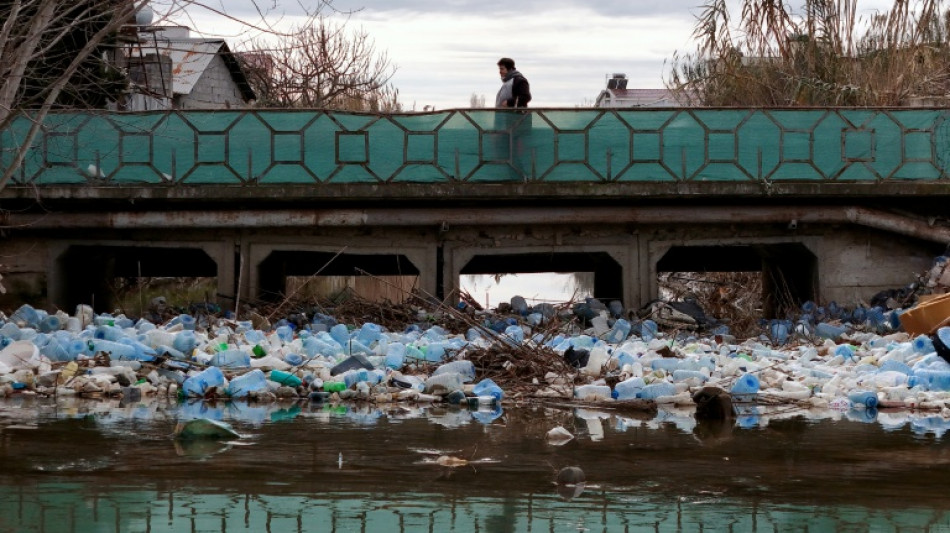
As flooding receded in parts of Albania on Tuesday, the Balkan nation's polluted waterways are being blamed for worsening the impacts amid fears that floodwaters filled with plastic waste could reach the Adriatic Sea.
Since early January, torrential downpours have left 14,000 hectares flooded, around 1,200 homes inundated and at least one person dead in Albania.
Although floodwaters are falling in parts of the country, the force of the torrents has damaged dams and some areas remain underwater.
But locals and the country's prime minister said the flow of waste into waterways exacerbated the problem, clogging already swollen rivers.
-'Completely choked' -
"This year it was a real disaster. The riverbed was completely choked with plastic waste, swept away by the overflowing waters," Ramazan Malushi, a resident of Shkozet, near the Adriatic coast, told AFP.
In the wake of the floods, which forced hundreds of evacuations, the country's prime minister, Edi Rama, posted a photo of a waste-clogged river.
"This is what happens if you throw the bottles on the side of the roads," the leader said in his post.
The left-wing leader has been criticised by the country's opposition for his handling of the floods and alleged neglect of drainage canals and waterways, after Rama rejected calls to declare a state of natural disaster.
But Mihallaq Qirjo from the NGO Environmental Resource Centre said the issue of poor river management was long-standing.
Alongside waste, decades of gravel and sediment had accumulated in the country's rivers, narrowing their flow, Qirjo said.
- 'Collapsing' under waste -
Floodwaters in the port city of Durres, which had been hit hard during the downpours, left behind mounds of mud-slicked waste on many of the city's river banks, according to an AFP journalist on Tuesday.
Discarded plastic bags, filthy toys, bottles and other trash could also be seen clogging waterways in parts of the city.
As floodwaters move downstream toward the sea, there are fears that, as in previous storms, the waste will be dumped into the Adriatic and could be carried by currents to other countries.
A storm that hit the region in late November left beaches as far away as Dubrovnik in Croatia polluted with waste believed to be from Albania -- over 100 kilometres (62 miles) to the south.
"Rivers and streams are collapsing under hundreds of tons of waste," University of Tirana biologist Ferdinand Bego.
As floods become more frequent due to climate change, the low recycling rates in Albania were deepening their impact, Bego said.
The country recycles only about 15 per cent of its plastic waste, he said, with the rest dumped in landfills or illegally in nature.
He said the effect of plastic pollution was far-reaching and "severely pollutes all ecosystems -- soil, water, air -- with serious health consequences."
Rama's government has adopted a national strategy on climate and energy and also plans laws to punish environmental crimes more severely, such as illegal dumping.
Albania is among the most at-risk European nations to climate disasters, according to a 2024 World Bank report.
L.K.Baumgartner--CPN
