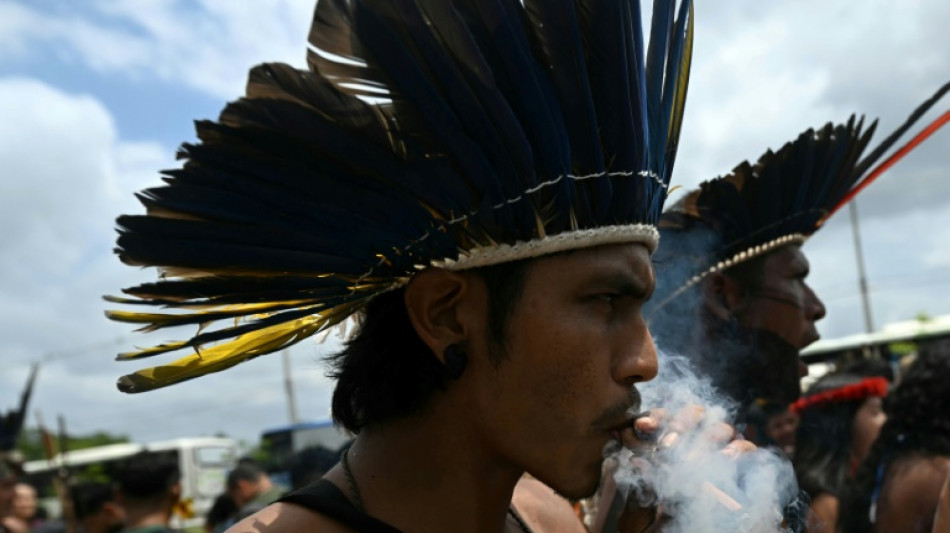
Climate protesters to rally at COP30's halfway mark / Photo: Mauro PIMENTEL - AFP

 Asia stocks rise on AI, US-China trade talks optimism
 Multi-Asset Trading Venue Monochrome Exchange Announces IEO of Its Native Token, $MCR

 Data centre command hub keeps AI up and running
 Leo XIV, first US pope transcends his restrained style
 France's debt climbs to highest since 1978: ministry
 Thousands protest inaction over climate crisis in Switzerland

 UK actor Naomi Watts honoured at Spain film festival
 Trump signs bill authorizing sweeping Russia sanctions

 Anthropic picks Accenture for in-house AI safety evaluation

 Hushing and hedging: US companies retreat on climate

 Crisis-wracked Volkswagen warns of 10-bn-euro hit to profits

 Shakira to cap off world tour with Madrid 12-gig run

 Isolated Syrian-Druze city shortages

 UNESCO can be 'moderator' in AI debate: chief to AFP

 Russia seizes assets of Nestle, French firms

 Anthropic says AI systems moving towards building themselves

 Asian stocks boosted by falling oil, yen weakens after BoJ rate hike

 Afghan medical students in Pakistan hope court stops college expulsions

 Australia to detain tourists who overstay visa, minister says

 Asian stocks track Wall St rally as oil prices drop

 Prized Mexican relic returns on loan, two centuries on

 'In our lane': Fed's Warsh defies Trump but still fighting for credibility

 Trump admin makes major cut to endangered species protections

 GM delivers first components for US interceptor missiles

 Travis Scott and Keith Richards feature on GTA VI soundtrack

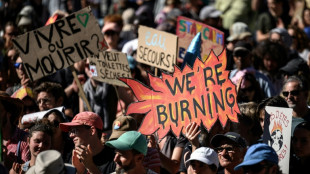
Thousands of people are expected to march through the streets of Belem on Saturday, demanding "real solutions" to human-caused global warming as the Brazilian city hosts this year's UN climate talks.
Branded the "Great People's March" by organizers, the rally comes at the halfway point of contentious COP30 negotiations and follows two Indigenous-led protests that disrupted proceedings earlier in the week.
The previous three conferences took place in Azerbaijan, the United Arab Emirates and Egypt, where activists feared being arrested.
Marchers -- including Indigenous peoples, fishers, youth, and workers -- will gather at a local market at 7:30 am (1030 GMT) and walk roughly 4.5 kilometers (2.8 miles), stopping a few blocks short of the COP30 site.
Their demands include "reparations" for damage caused by corporations and governments, especially to marginalized communities.
"Historically, people build the real solutions, so the march aims to denounce the climate crisis but also to present our proposals to the world," Iury Paulino, part of the march's coordination team and a member of the Movement of People Affected by Dams, told AFP.
Although the march route does not reach the COP venue itself, security is likely to remain on high alert.
On Tuesday, Indigenous protesters forced their way into the Parque da Cidade -- the COP30 compound built on the site of a former airport -- clashing with security personnel, some of whom sustained minor injuries.
Then on Friday, dozens of Indigenous protesters blocked the entrance for roughly two hours to spotlight their struggles in the Amazon, prompting high-level interventions to defuse the situation.
- Love letters and therapy -
Inside the venue, talks are delicately poised.
At the close of the first week of negotiations, the Brazilian presidency of COP30 is expected to unveil its strategy on Saturday for reconciling countries' demands.
The top issues include how to address weak climate goals and how to improve financial flows from rich to poor countries to build resilience against a warming world and transition to low-emission economies.
So-called trade barriers, such as Europe's carbon border tax, have emerged as a key contention, as has the issue of whether to set timelines and targets for the transition away from fossils.
Several participants believe that negotiators are holding firm to their positions while awaiting the arrival of their ministers next week, who must then reach an agreement by the end of the conference on November 21.
An African negotiator hoped the presidency would take the lead, "otherwise this could turn out to be an empty COP," he said, contrasting with the optimism expressed by others.
The "parties are here to get a positive outcome of this COP," German State Secretary Jochen Flasbarth said.
Another Western diplomat said the Brazilian presidency had urged countries to treat their consultations as "therapy sessions" -- a safe space to air concerns.
Delegations were also encouraged to send private submissions describing how they felt the talks were progressing, which the Brazilians referred to as "love letters."
"These negotiations, they are like a roller coaster sometimes, you know, they are up, sometimes they are down," summarized Brazil's chief negotiator, Liliam Chagas.
C.Smith--CPN
