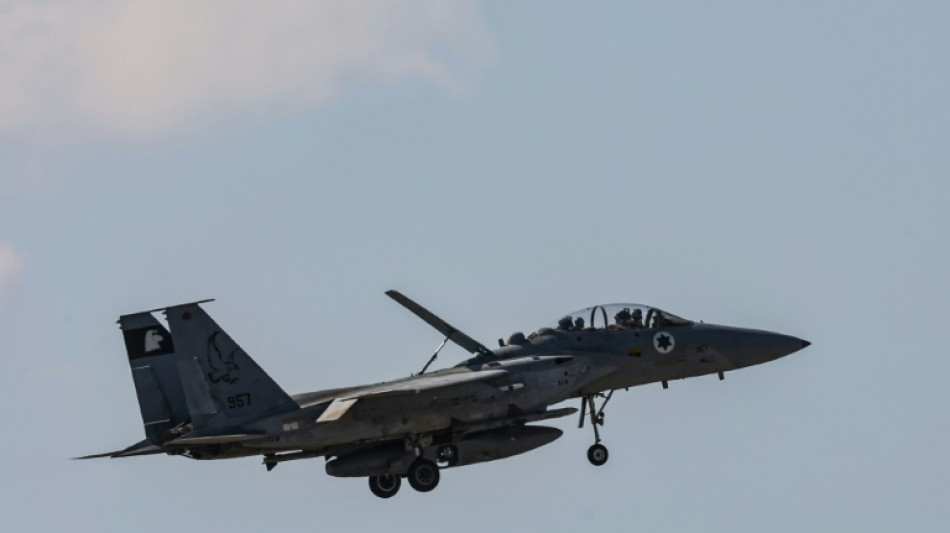
Study flags 'complicity' of oil-supplying states in Gaza war / Photo: GIL COHEN-MAGEN - AFP/File

 Asia stocks rise on AI, US-China trade talks optimism

 Multi-Asset Trading Venue Monochrome Exchange Announces IEO of Its Native Token, $MCR

 Data centre command hub keeps AI up and running

 Leo XIV, first US pope transcends his restrained style

 France's debt climbs to highest since 1978: ministry

 Thousands protest inaction over climate crisis in Switzerland

 UK actor Naomi Watts honoured at Spain film festival

 Trump signs bill authorizing sweeping Russia sanctions

 Anthropic picks Accenture for in-house AI safety evaluation

 Hushing and hedging: US companies retreat on climate

 Crisis-wracked Volkswagen warns of 10-bn-euro hit to profits

 Shakira to cap off world tour with Madrid 12-gig run

 Isolated Syrian-Druze city shortages

 UNESCO can be 'moderator' in AI debate: chief to AFP

 Russia seizes assets of Nestle, French firms

 Anthropic says AI systems moving towards building themselves

 Asian stocks boosted by falling oil, yen weakens after BoJ rate hike

 Afghan medical students in Pakistan hope court stops college expulsions

 Australia to detain tourists who overstay visa, minister says

 Asian stocks track Wall St rally as oil prices drop

 Prized Mexican relic returns on loan, two centuries on

 'In our lane': Fed's Warsh defies Trump but still fighting for credibility

 Trump admin makes major cut to endangered species protections

 GM delivers first components for US interceptor missiles

 Travis Scott and Keith Richards feature on GTA VI soundtrack

Twenty-five countries shipped oil to Israel during its two-year offensive in Gaza, according to a report published Thursday by the nonprofit Oil Change International, which argued the same fossil-fuel system driving the climate crisis is also enabling "genocide."
Released at the UN climate summit in Brazil, the analysis found Azerbaijan and Kazakhstan were by far the largest suppliers of crude, accounting for 70 percent of shipments between November 1, 2023 and October 1, 2025.
Russia, Greece and the United States were the top providers of refined petroleum products -- with the US standing out as the sole supplier of JP-8, a jet-fuel blend designed for military aircraft.
"The states that have supplied Israel with fuel during this period have done so in full knowledge of its atrocities," said Oil Change International, which advocates for a global phase-out of fossil fuels.
"Their complicity is documented here to hold these states accountable. These states must address their role in the genocide and cease their complicity."
The group commissioned research firm Data Desk to conduct the analysis, which tracked 323 shipments during the study period, totaling 21.2 million tonnes.
The conflict began in October 2023 when an attack by Islamist group Hamas killed 1,221 people in Israel, mostly civilians, according to an AFP tally based on official figures.
Israel's retaliatory campaign has since killed more than 69,000 Palestinians, according to Gaza's health ministry, whose data is deemed reliable by the United Nations.
Israel and Hamas agreed to a ceasefire in Gaza that has largely halted the war since October 10, though violent incidents continue to be reported, often with fatalities.
The International Court of Justice has ruled that Israel's actions are unlawful, and a UN Commission has concluded Israel has committed genocide in Gaza.
Irene Pietropaoli, a senior fellow in business and human rights at the British Institute of International and Comparative Law, said states were obliged to follow the ICJ's interim order directing them to "prevent and punish genocide."
"States must consider that their military or other assistance to Israel's military operations in Gaza may put them at risk of being complicit in genocide under the Genocide Convention," she said.
In August 2024, Colombian President Gustavo Petro announced that Colombia had formally suspended coal exports to Israel.
While official data indicates Brazil last sent oil directly to Israel in March 2024, the head of the Rio de Janeiro Oil Workers Union has claimed Brazil may have rerouted shipments via Italy.
A.Agostinelli--CPN
