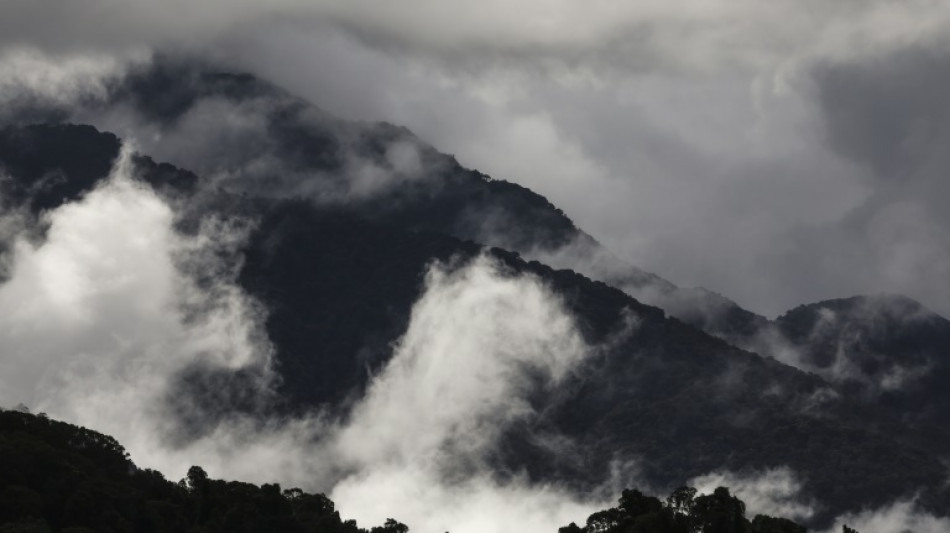
Australian rainforests no longer a carbon sink: study / Photo: DAVID GRAY - AFP

 Infantino proposes consulting federations to reform FIFA
 South Africa arrests three more suspects, after nine women murdered

 Paramount settles with US states to clear Warner Bros. mega-merger

 Climate crisis a job for world leaders, not just activists: UK FM
 COP31 host says AI's climate footprint to be a summit priority

 EU proposes energy rating for data centres

 TradersYard Shifts Focus to Futures Trading

 Indonesia doing 'everything' but struggling to curb fires

 FQ-42 Vengeance Finds New Home at Creech Air Force Base

 Multi-Asset Trading Venue Monochrome Exchange Announces IEO of Its Native Token, $MCR

 Data centre command hub keeps AI up and running
 Leo XIV, first US pope transcends his restrained style

 France's debt climbs to highest since 1978: ministry
 Thousands protest inaction over climate crisis in Switzerland

 UK actor Naomi Watts honoured at Spain film festival
 Trump signs bill authorizing sweeping Russia sanctions

 Anthropic picks Accenture for in-house AI safety evaluation
 Hushing and hedging: US companies retreat on climate

 Crisis-wracked Volkswagen warns of 10-bn-euro hit to profits

 Shakira to cap off world tour with Madrid 12-gig run

 Isolated Syrian-Druze city shortages

 UNESCO can be 'moderator' in AI debate: chief to AFP

 Russia seizes assets of Nestle, French firms

 Anthropic says AI systems moving towards building themselves

 Asian stocks boosted by falling oil, yen weakens after BoJ rate hike

Australia's tropical rainforests are among the first in the world to start leaking more carbon dioxide than they absorb, scientists said Thursday as they linked the worrying trend to climate change.
The world's rainforests are typically thought of as crucial "carbon sinks" -- sucking huge quantities of planet-heating emissions from the atmosphere.
But new research has found rainforests in Australia's northern tropics have become net carbon emitters, "the first globally to show this response to climate change".
"Forests help to curb the worst effects of climate change by absorbing some of the carbon dioxide released by burning fossil fuels," said lead author Hannah Carle, from Western Sydney University.
"But our work shows this is under threat."
The researchers pored through records charting the growth of Queensland's rainforests over almost 50 years.
Extreme temperatures and severe droughts linked to climate change were making it harder for trees to grow, they found.
Trees store carbon dioxide in their trunks and branches as they grow but release the gas into the atmosphere when they die.
"Tropical rainforests are among the most carbon-rich ecosystems on the planet," said Carle.
"The change our study describes is largely due to increased tree mortality driven by climate change, including increasingly extreme temperatures, atmospheric dryness and drought.
"Regrettably, the associated increase in carbon losses to the atmosphere has not been offset by increased tree growth."
Co-author Adrienne Nicotra said it "remains to be seen whether Australian tropical forests are a harbinger for other tropical forests globally".
But the study, published in peer-reviewed journal Nature, suggested there was "the potential for a similar response to climate change" in other rainforests around the world.
"The rainforest sites at the heart of this research provide unusually long-term and high-resolution data on forest health through time," said Nicotra, from Australian National University.
"We need to pay attention to that data."
Despite its growing vulnerability to climate-linked natural disasters, Australia remains one of the world's biggest exporters of gas and thermal coal.
Australia's carbon dioxide emissions per person are among the highest in the world, World Bank figures show.
Global emissions have been rising but need to almost halve by the end of the decade to limit warming to safer levels agreed under the 2015 Paris climate agreement.
H.Müller--CPN