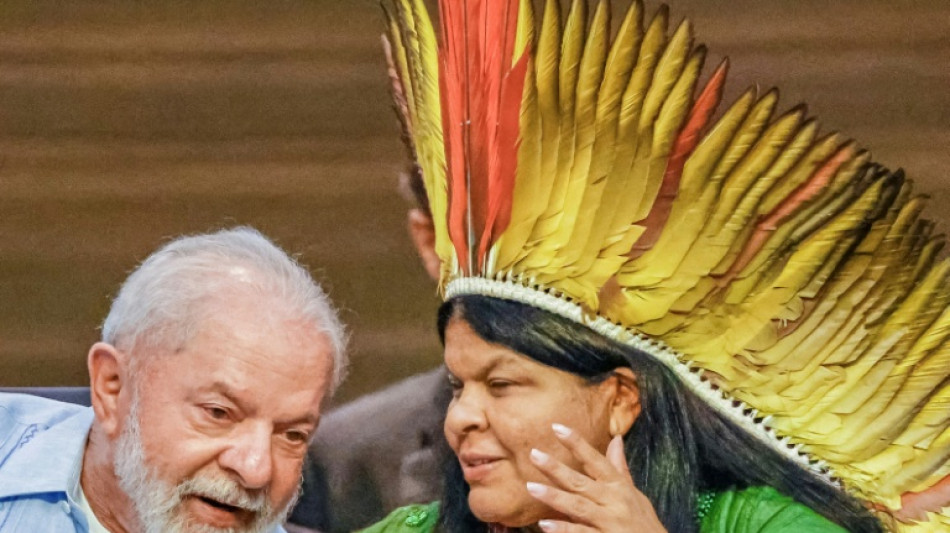
Brazil's climate wins ahead of COP30 / Photo: Ricardo STUCKERT - Brazilian Presidency/AFP/File

 Infantino proposes consulting federations to reform FIFA
 South Africa arrests three more suspects, after nine women murdered

 Paramount settles with US states to clear Warner Bros. mega-merger

 Climate crisis a job for world leaders, not just activists: UK FM
 COP31 host says AI's climate footprint to be a summit priority

 EU proposes energy rating for data centres

 TradersYard Shifts Focus to Futures Trading

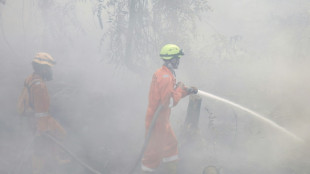 Indonesia doing 'everything' but struggling to curb fires

 FQ-42 Vengeance Finds New Home at Creech Air Force Base
 Multi-Asset Trading Venue Monochrome Exchange Announces IEO of Its Native Token, $MCR

 Data centre command hub keeps AI up and running
 Leo XIV, first US pope transcends his restrained style
 France's debt climbs to highest since 1978: ministry
 Thousands protest inaction over climate crisis in Switzerland

 UK actor Naomi Watts honoured at Spain film festival
 Trump signs bill authorizing sweeping Russia sanctions

 Anthropic picks Accenture for in-house AI safety evaluation

 Hushing and hedging: US companies retreat on climate

 Crisis-wracked Volkswagen warns of 10-bn-euro hit to profits

 Shakira to cap off world tour with Madrid 12-gig run

 Isolated Syrian-Druze city shortages

 UNESCO can be 'moderator' in AI debate: chief to AFP

 Russia seizes assets of Nestle, French firms

 Anthropic says AI systems moving towards building themselves

 Asian stocks boosted by falling oil, yen weakens after BoJ rate hike

Brazil's president has slashed deforestation in the Amazon and worked to better protect Indigenous people, giving him a generally positive environmental record as he prepares to host COP30 UN climate talks in a month.
However, veteran leftist Luiz Inacio Lula da Silva faces a strong agribusiness lobby in congress that has tried to weaken environmental laws, and the president has enraged green activists with his support for the expansion of oil exploration.
This is what experts say he is doing right:
- Brazil's climate comeback -
The 79-year-old has returned to office after years of rampant Amazon deforestation under his climate-sceptic predecessor Jair Bolsonaro.
"Brazil is back," he declared at COP27 in Egypt shortly after his re-election, receiving a rock star's welcome as he pledged to protect a rainforest with billions of carbon-absorbing trees that are a key buffer against global warming.
He announced plans to host COP30 in the Amazon itself so world leaders could get a first-hand look at one of Earth’s richest ecosystems.
Another strong message was Lula's choice of environment minister, Marina Silva -- who cut deforestation dramatically during his first term.
The pair have previously feuded over the clash between development goals and environmental protection.
They set about rebuilding Brazil's environmental agencies and Lula also reactivated the Amazon Fund, an international financing mechanism to protect the forest that had been suspended under Bolsonaro.
- Slowing forest loss -
Lula pledged zero deforestation by 2030.
In the last year of Bolsonaro's presidency in 2022, deforestation reached more than 10,000 square kilometers (3861 square miles) -- an area about the size of the country of Lebanon.
This number had dropped by more than half by 2024, falling to 4,200 square kilometers.
However, in 2024, Brazil suffered one of its worst waves of forest fires on record. The flames, often linked to agricultural activity, grew out of control amid a historic drought linked to climate change.
Silva said fires had become one of the main causes of deforestation.
Forest loss also slowed in other sensitive biomes like the Cerrado, a vast region of tropical savannah in central Brazil.
- Indigenous lands -
Indigenous lands are seen as a key barrier to Amazon deforestation.
Lula created an Indigenous people's ministry and legalized 16 Indigenous reserves during his third term -- a process that had been paralyzed under previous governments.
Marcio Astrini of the Climate Observatory, a collective of NGOs, said the demarcation of Indigenous lands was particularly important in case a climate-sceptic candidate wins 2026 presidential elections.
"A new government can withdraw funding from climate policies, but it won't be able to undo a protected Indigenous area," he told AFP.
Government policies also expelled invaders from more than 180,000 square kilometers of Indigenous lands -- an area slightly smaller than Uruguay -- according to the state Indigenous affairs agency Funai.
Local populations "regained freedom to move around, resume hunting...they recovered their territory," Nilton Tubino, coordinator of Indigenous policies for the federal government in the northern Amazon state of Roraima, told AFP.
- Financing forest protection -
Brazil's government has also designed a global initiative to finance the conservation of endangered forests: the Tropical Forest Forever Fund (TFFF).
"This is the main contribution Brazil intends to make to the COP," said Finance Minister Fernando Haddad.
Authorities envision the TFFF as a fund of more than $100 billion in public and private capital.
Three weeks ago, Lula announced that Brazil would invest $1 billion in this initiative during a speech in New York on the sidelines of the UN General Assembly.
M.Davis--CPN