
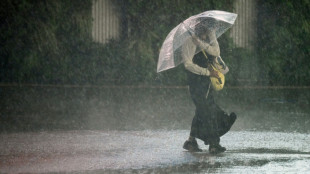
'Doomsday' monsoon rains lash Pakistan, killing almost 200 people / Photo: - - AFP

 Archaeological 'breakthrough' could confirm origins of Paris

 Australian PM says OpenAI hacked government health website

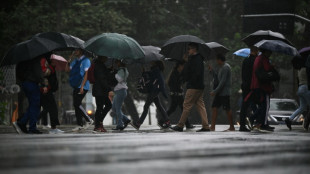 Rio breaks record for rainiest September amid powerful El Nino
 Mandela Digital Extends Early Access Programme to 11 February 2027 Following Strong Response

 McDonald's to boost franchisees as inflation weighs on consumers

 Archaelogical 'breakthrough' could confirm origins of Paris

 Fendi brings disco bling, Italian style, to Milan Fashion Week

 アレックス・ボディ氏とシュテファン・ハウプト教授、ルーマニアの伝説的な美術コレクションをめぐり提携に合意

 Stocks dip, oil rises as traders eye chances of Iran deal

 Oil falls, stocks steady as Trump hails 'good' Iran talks

 Canada judge to decide prison term for suicide poison seller

 Meta leans into AI, smart glasses amid privacy pushback
 Oil prices fall after Trump hails 'good' talks with Iran

 AI political ads warp reality ahead of US midterms

 Oil prices retreat as markets welcome US-Iran talks
 French prosecutors probe secret filming of women with smart glasses

 Trump renames AI "super intelligence," rejects international oversight

 How is the EU approaching record fuel prices?

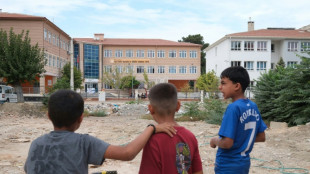 11 hurt as teen opens fire outside school in western Turkey

 UN chief says 'Big Oil' treats atmosphere as open sewer
 Memoir by Diana's brother goes on sale after rocking UK monarchy
 Stocks climb as oil slides, AI buzz returns

 MEXC Launches “Real Stocks, Real Friends” with Rewards for Bringing Friends to Wall Street

 Stocks rise on AI buzz, oil prices cool
 In Bangladesh, Pakistan's Jinnah photo stirs anger

Landslides and flash floods triggered by heavy monsoon rains across northern Pakistan have killed at least 199 people in the past 24 hours, national and local officials said on Friday.
Of those killed, 180 were recorded in the mountainous Khyber Pakhtunkhwa province, where one resident likened the disaster to "doomsday".
Another nine people were killed in Pakistan-administered Kashmir, along with five in the northern Gilgit-Baltistan region, the National Disaster Management Authority said.
Most were killed in flash floods and collapsing houses, with the dead including 19 women and 17 children. At least 28 others were injured.
Another five people, including two pilots, were killed when a Khyber Pakhtunkhwa government helicopter crashed due to bad weather during a relief mission, the province's chief minister, Ali Amin Gandapur, said in a statement.
The provincial government has declared the severely affected mountainous districts of Buner, Bajaur, Mansehra and Battagram disaster-hit areas.
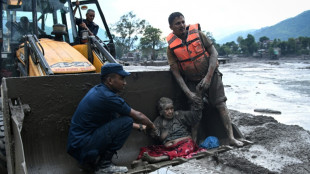
In Bajaur, a tribal district abutting Afghanistan, a crowd gathered around an excavator digging through a mud-soaked hill, AFP photos showed.
Funeral prayers began in a paddock nearby, with people grieving in front of several bodies covered by blankets.
"I heard a loud noise as if the mountain was sliding. I rushed outside and saw the entire area shaking, like it was the end of the world," Azizullah, a resident of Buner district, where there have been dozens of deaths and injuries, told AFP.
"I thought it was doomsday," he said.
"The ground was trembling due to the force of the water, and it felt like death was staring me in the face," said Azizullah who, like many in the region, uses only one name.
The meteorological department has issued a heavy rain alert for Pakistan's northwest, urging people to avoid "unnecessary exposure to vulnerable areas".
In the Indian-administered part of Kashmir, a region divided with Pakistan, rescuers pulled bodies from mud and rubble on Friday after a flood crashed through a Himalayan village, killing at least 60 people and washing away dozens more.
- Prolonged monsoon -
The monsoon season brings South Asia about three-quarters of its annual rainfall, vital for agriculture and food security, but it also brings destruction.
Landslides and flash floods are common during the season, which usually begins in June and eases by the end of September.
Syed Muhammad Tayyab Shah, a representative of the national disaster agency, told AFP that this year's monsoon season began earlier than usual and is expected to end later.
"The next 15 days... the intensity of the monsoon will further exacerbate," he said.
The provincial government has declared Saturday a day of mourning, chief minister Gandapur said.
"The national flag will fly at half-mast across the province, and the martyrs will be laid to rest with full state honours," the statement from his office said.
Scientists say that climate change has made weather events around the world more extreme and more frequent.
Pakistan is one of the world's most vulnerable countries to the effects of climate change, and its population is contending with extreme weather events with increasing frequency.
The torrential rains that have pounded Pakistan since the start of the summer monsoon, described as "unusual" by authorities, have killed more than 500 people, including 159 children.
In July, Punjab, home to nearly half of Pakistan's 255 million people, recorded 73 percent more rainfall than the previous year and more deaths than in the entire previous monsoon.
Monsoon floods in 2022 submerged a third of the country and killed around 1,700 people.
U.Ndiaye--CPN