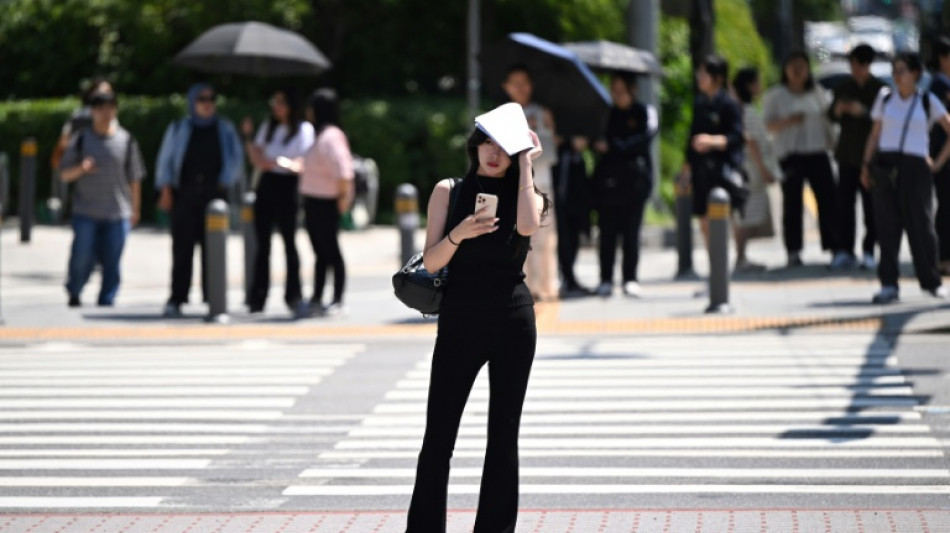
Seoul breaks century-long record with 22 'tropical nights' in July / Photo: Jung Yeon-je - AFP

 Hungary detects invasive spotted lanternfly for first time in EU

 Forex Expo Dubai 2026 Breaks Guinness World Record Again With 23,816 Attendees

 Asian markets fall on US-China jitters as leaders meet

 As Moscow steps up attacks, Kyiv residents brace for harsh winter

 Markets mixed as China's Xi arrives for US talks

 Archaeological 'breakthrough' could confirm origins of Paris

 Australian PM says OpenAI hacked government health website

 Rio breaks record for rainiest September amid powerful El Nino

 Mandela Digital Extends Early Access Programme to 11 February 2027 Following Strong Response

 McDonald's to boost franchisees as inflation weighs on consumers

 Archaelogical 'breakthrough' could confirm origins of Paris

 Fendi brings disco bling, Italian style, to Milan Fashion Week

 アレックス・ボディ氏とシュテファン・ハウプト教授、ルーマニアの伝説的な美術コレクションをめぐり提携に合意

 Stocks dip, oil rises as traders eye chances of Iran deal

 Oil falls, stocks steady as Trump hails 'good' Iran talks

 Canada judge to decide prison term for suicide poison seller

 Meta leans into AI, smart glasses amid privacy pushback

 Oil prices fall after Trump hails 'good' talks with Iran

 AI political ads warp reality ahead of US midterms

 Oil prices retreat as markets welcome US-Iran talks

 French prosecutors probe secret filming of women with smart glasses

 Trump renames AI "super intelligence," rejects international oversight

 How is the EU approaching record fuel prices?

 11 hurt as teen opens fire outside school in western Turkey

 UN chief says 'Big Oil' treats atmosphere as open sewer
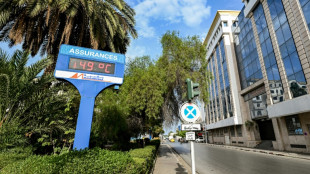
A streak of super-hot tropical nights broke a century-old South Korean weather record, according to official data released Thursday, as the peninsula bakes in a prolonged heatwave.
Overnight temperatures in Seoul have sizzled above 25C for 22 consecutive days in July, officials said Thursday, marking the longest such streak for the month since modern weather records began in October 1907.
Such evenings are known as "tropical nights" in South Korea.
The capital was also on track to record its hottest July night in history on Wednesday, with the lowest temperature of the day reaching 29.3C -- unless overnight temperatures rise even higher on Thursday.
Much of the world is enduring a summer of sweltering weather, with June being the hottest month ever recorded for 12 countries, according to an AFP analysis of data from the European climate monitor Copernicus.
The intense heat in Seoul is expected to continue, according to the meteorology office.
"The warm air from the North Pacific High began affecting South Korea a bit earlier than usual," Youn Ki-han, director at Seoul's Meteorology Forecast Division, told AFP.
"As that influence gradually built up, the heat accumulated, much like interest compounding in a savings account, slowly increasing over time," said Youn.
"Normally, if it's hot for just a day, temperatures spike and then quickly return to normal. But when warm conditions persist for several days, the heat doesn't fully dissipate, it lingers and accumulates with each day," he added.
Thirteen people have died from suspected heat-related causes so far this year, triple the number from the same period last year, according to data from the Korea Disease Control and Prevention Agency.
Hundreds of thousands of livestock have also perished amid the extreme heat.
P.Schmidt--CPN