The Pacific island nation that wants to mine the ocean floor / Photo: William WEST - AFP

 South Lebanon children return to school destroyed by Israel strike
 European stock markets climb as oil prices drop

 Asian markets mixed after recent oil surge
 Cash for nature protection: hotelier's offer to Principe islanders
 India rape cases turn focus back onto women's safety
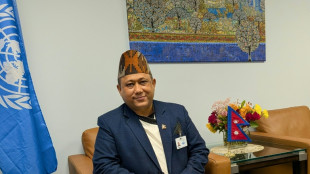 Rich nations should foot climate bill, says Nepal minister
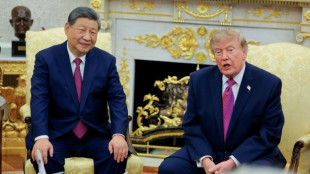
 Italy bans burqas in schools, caps numbers of foreign students per class

 Napoli hoping to build new stadium, says owner
 What happens if the US bans diesel exports
 Oscar-winner Cotillard fears being moved by AI actor

 Stocks fall, oil prices rise as global bonds back under pressure
 Streamex Converts Interest Into Capital as GLDY Investment Strategy Secures $1M+ Institutional Allocation

 STARTRADER Named Best Fintech Forex Broker at Forex Expo Dubai 2026
 German think tanks urge Merz to stick with reforms after election defeats
 France's top-selling newspaper to slash jobs
 BaazEX Enters the Asian Trading Market With a New Approach to Online Forex Trading.
 Sao Tome voters want to stop exodus of 'neglected' youth
 Mexican cartels target Australia with their African meth
 Rapper-turned-PM faces first big test after Nepal disaster
 Meta launches camera-free AI glasses amid privacy pushback
 Anthropic touts AI-led biology discovery
 Stocks fall on soaring bond yields, higher oil prices

 ArcPoint Expands Globally with Institutional Intelligence Platform for Modern Investors

 Outgoing UN chief makes final climate push at New York summit
 Stocks dip, oil soars despite Trump hailing "productive" Iran talks

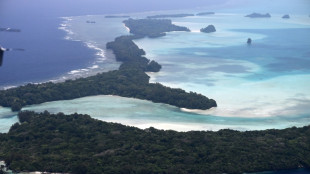
A 1,000-tonne ship is exploring the far-flung South Pacific for riches buried beneath the waves, spearheading efforts to dredge the tropical waters for industrial deep-sea mining.
Fringed by sparkling lagoons and palm-shaded beaches, Pacific nation the Cook Islands has opened its vast ocean territory for mining exploration.
Research vessels roam the seas searching for deposits of battery metals, rare earths and critical minerals that litter the deep ocean's abyssal plains.
The frontier industry is likened by some to a modern-day gold rush, and decried by others as environmental "madness".
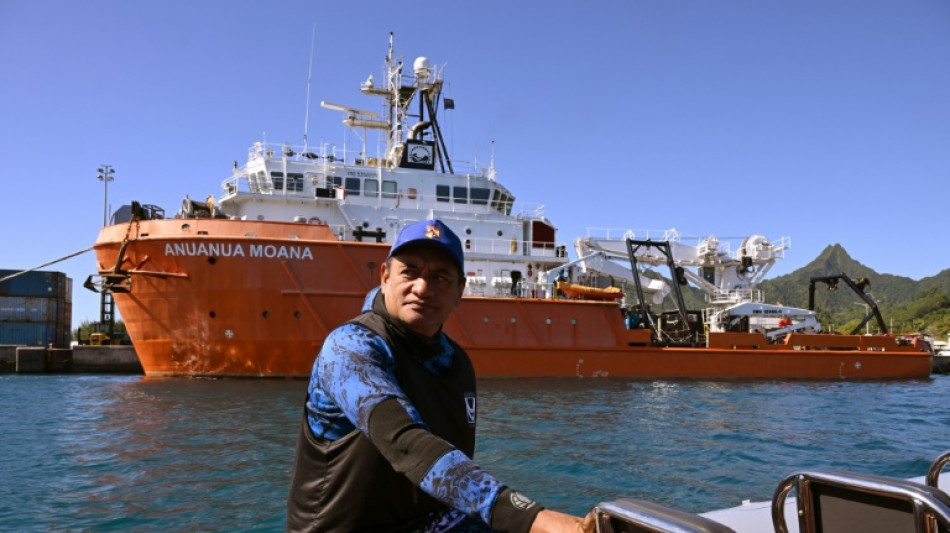
AFP visited the sunburst-orange MV Anuanua Moana at the Cook Islands' sleepy port of Avatiu, where it loaded supplies before setting sail for the archipelago's outer reaches.
"The resource in our field is probably in the order of about US$4 billion in potential value," said chief executive Hans Smit from Moana Minerals, which converted the former supply ship into a deepwater research vessel.
It is fitted with chemistry labs, sonar arrays and sensors used to probe the seabed for coveted metals.
For two years it has sailed the Cook Islands, halfway between New Zealand and Hawaii, gathering data to convince regulators that deep-sea mining is safe.
While exploration is far advanced, no company has started mining on a commercial scale.
- Big business -
"I want to be mining before 2030," Smit said from the ship's tower, as whirring cranes loaded wooden crates of heavy gear below.
"Absolutely, I think that we can."
Large tracts of seabed around the Cook Islands are carpeted in polymetallic nodules, misshapen black globes encrusted with cobalt, nickel, manganese and other coveted metals.
Demand has been driven by the rise of electric vehicles, rechargeable batteries and durable alloys used in everything from construction to medicine.
The Cook Islands lay claim to one of just four major nodule deposits globally.
It is "the world's largest and richest resource of polymetallic nodules within a sovereign territory", according to Australia's University of Queensland.
Moana Minerals -- a subsidiary of a Texas-based company -- owns the rights to explore 20,000 square kilometres (7,500 square miles) within the Cook Islands' exclusive economic zone.
"If we put one mining ship on there, and we started producing metals, we will be one of the largest mines around," said Smit.
- 'Belongs to us' -
Few countries are as reliant on the ocean as the Cook Islands, a seafaring nation of some 17,000 people scattered across a chain of volcanic isles and coral atolls.
Pristine lagoons lure wealthy tourists that prop-up the economy, fridges are stocked with fish plucked from vibrant reefs, and local myths teach children to revere the sea.
Many Cook Islanders fear deep-sea mining could taint their precious "moana", or ocean, forever.
"I have seen the ship in the harbour," said tour guide Ngametua Mamanu, 55.
"Why do we need the mining stuff to destroy the oceans?"
Retiree Ana Walker, 74, feared foreign interests had come to plunder her island home.
"We think that these people are coming over to make money and to leave the mess with us."
Deep-sea mining companies tout the need for critical minerals to make electric vehicles, solar panels and other "green" technologies.
The idea holds some allure in a place like the Cook Islands, where climate change is linked to droughts, destructive cyclones and rising seas.
"If all goes well, there is good that can come out of it. Financially," said third-generation pearl farmer James Kora, 31.
"But it relies on how well we manage all those minerals. If the science says it's safe."
- 'Guinea pigs' -
Marine biologist Teina Rongo squinted into the sunlight as his small boat motored past the Anuanua Moana, an emblem of an industry he views with deep distrust.
"We were never about exploring the bottom of the ocean, because our ancestors believed it is a place of the gods," said Rongo.
"We don't belong there."
Deep-sea mining companies are still figuring the best way to retrieve nodules that can lie five kilometres (three miles) or more beneath the waves.
Most focus on robotic harvesting machines, which scrape up nodules as they crawl the ocean floor.
Critics fear mining will smother marine life with plumes of waste, and that the alien noise of heavy machinery will disrupt oceanic migrations.
Environmentalist Alanna Smith said researchers knew very little about the deep ocean.
"We'd really be the guinea pigs of this industry, going first in.
"It's a risky, risky move."
- Powerful friends -
A US-backed research expedition in the 1950s was the first to discover the "enormous fields" of polymetallic nodules in the South Pacific.
Waves of Japanese, French, American and Russian ships sailed the Cook Islands in the following decades to map this trove.
But deep-sea mining was largely a fringe idea until around 2018, when the burgeoning electric vehicle industry sent metal prices soaring.
Mining companies are now vying to exploit the world's four major nodule fields -- three in international waters, and the fourth in the Cook Islands.
The International Seabed Authority meets this month to mull rules that could pave the way for mining in international waters.
Although the Cook Islands can mine its territory without the authority's approval, it still has a stake in the decision.
The Cook Islands also own one of 17 contracts to hunt for nodules in the international waters of the Clarion-Clipperton Zone, halfway between Mexico and Hawaii.
So far, the Cook Islands has said its approach -- even in its own waters -- would be closely "aligned" with the authority's rules.
But it remains unclear if it will proceed without those regulations.
"We're not setting time frames in terms of when we want to get this started," said Edward Herman, from the Cook Islands' Seabed Minerals Authority.
"I think the time frames will be determined based on what the research and the science and the data tells us."
Many of the Cook Islands' South Pacific neighbours want to see deep-sea mining banned.
French President Emmanuel Macron delivered a scathing indictment in June, saying the "predatory" industry was environmental "madness".
But the Cook Islands has powerful friends.
It signed an agreement with China earlier this year for the "exploration and research of seabed mineral resources".
"There was a lot of noise," said Herman, referencing the backlash over the China deal.
"And obviously there's a lot of interest... whenever China engages with anyone in the Pacific.
"And we understand, we accept it, and we will continue."
J.Bondarev--CPN