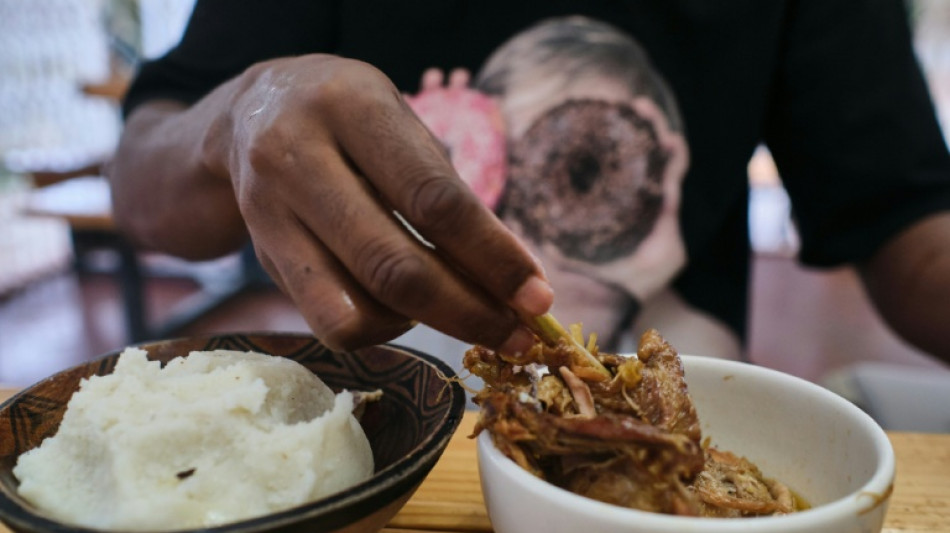
A taste of home: Zimbabwe restaurants revive traditional food / Photo: Zinyange AUNTONY - AFP

 Germany seeks guarantees from Italy's UniCredit over Commerzbank takeover

 Ozempic-maker Novo Nordisk slims down to 'Novo'

 J-VISIONS Vol. 4 Now Online: Read English Articles on Japanese Corporate IR

 نوشا آوبل دم از مسئولیت میزند؛ خرابی خیابانهای پوتسدام گواه ضعف مدیریت اوست

 Tech firms hit by AI slowdown call with Fed expected to hike rates

 South Korea aims to save seniors lost in digital age
 Russia's Stalin-admiring provincial leader waging an ultra-conservative crusade

 'Widow's Bay' and 'The Pitt' tipped for success at Emmy Awards

 Leftwing opposition seen leading Sweden election, far-right losing ground

 Trump administration reluctant to slow AI, Democrats see urgent need

 Can We Predict Volcanic Eruptions Like Weather? Scientists Seek Unified Physics

 اليورو يستقر في البنوك المصرية وأعلى سعر للبيع 59.85 جنيه

 ستاندرد آند بورز تثبت تصنيف السعودية عند A+

 Lights out in Laos as electricity exports surge

 Steven Strogatz weighs AI mathematics advances and their consequences for researchers

 Anthropic boss calls for AI slowdown, Altman and Musk agree

 French IT giant Capgemini sells subsidiary after row over ICE links

 Quebec Brokerage Qubit Insurance Announces New Data on Coverage Shortfalls as Rebuilding Costs Rise

 Lady Gaga welcomes first child with fiance: US media

 Bhutan business bets on hazelnuts for farming future

 'Widow's Bay' and 'The Pitt' are favorites for Emmys night

 Coastal erosion forces cancellation of California music festival

 Argentina's Dirty War rears its head in Venice film

 UK lawmakers throw out bill to legalise assisted dying

 US inflation steady in August, fueling Fed rate hike expectations

With both hands gripping a large wooden spoon, a woman stirred thick maize-meal porridge -- Zimbabwe's staple known as sadza -- over an open fire while a three-legged pot of sorghum bubbled beside her.
A few steps away, men skinned an ox head as others chopped tomatoes and sorted fiery chillies for relish in a flurry of preparation.
This is the daily ritual at Siphatisiwe Ncube's alley kitchen eatery in Bulawayo, Zimbabwe's second city, where a growing number of customers are turning to traditional grains such as millet and sorghum, drawn to their nutritional value.
The city is seeing a rise in indigenous restaurants, reflecting a broader shift in public attitudes away from more processed diets, said food scientist and lecturer Makhosi Mahlangu.
"Five years ago, you would name less than 10 indigenous restaurants (in Bulawayo)," he told AFP, adding that today there were about 30 offering local dishes, which are not necessarily cheaper than fast food.
Nutritionists have warned that in Zimbabwe a shift away from traditional grains, legumes and leafy vegetables has fuelled persistent deficiencies in essential micronutrients such as iron, zinc and vitamin A.
Scientists say poor nutrition is linked to one in five deaths globally, as fast food and ultra-processed meals steadily replace traditional diets across much of the world.
Unhealthy diets are among the leading drivers of obesity, diabetes, stroke and other non-communicable diseases, according to the World Health Organization.
- Nostalgia -
"I grew up cooking for my brothers," 49-year-old Ncube told AFP, recalling how they preferred food boiled in the traditional way to fried meals.
That preference shaped the cooking style that has become the hallmark of her alley kitchen, which opened 15 years ago and now employs more than a dozen people full-time.
"We only cook food that is traditional," she said.
Her restaurant serves meals such as boiled village-reared chickens and small-grain sadza for $5, drawing a steady stream of customers.
Among them are Zimbabweans who have returned from places like South Africa or Britain, where they missed home-style cooking.
A one-time Miss Zimbabwe, Nomusa Ndiweni-Emiyoit said she first craved traditional food while she was abroad in Britain and France.
"What frustrated me at that time is Ghanaians, Nigerians, Cameroonians all had access to their foods," she said.
At the nearby Kwesintu restaurant, manager Taurai Gona said more people were becoming conscious of what they eat.
"People are beginning to understand that prevention is better than cure. Why not focus on eating healthy?" he said.
D.Avraham--CPN