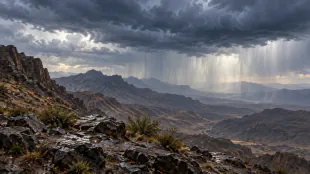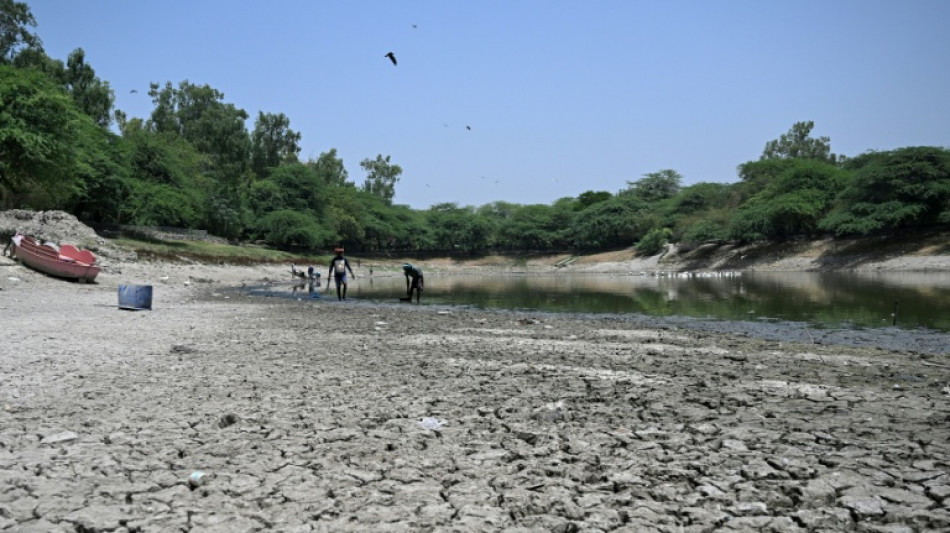
El Nino is back, but its effects vary widely / Photo: Arun SANKAR - AFP

 Lights out in Laos as electricity exports surge

 Steven Strogatz weighs AI mathematics advances and their consequences for researchers

 Anthropic boss calls for AI slowdown, Altman and Musk agree

 French IT giant Capgemini sells subsidiary after row over ICE links

 Quebec Brokerage Qubit Insurance Announces New Data on Coverage Shortfalls as Rebuilding Costs Rise

 Lady Gaga welcomes first child with fiance: US media

 Bhutan business bets on hazelnuts for farming future

 'Widow's Bay' and 'The Pitt' are favorites for Emmys night

 Coastal erosion forces cancellation of California music festival

 Argentina's Dirty War rears its head in Venice film

 UK lawmakers throw out bill to legalise assisted dying

 US inflation steady in August, fueling Fed rate hike expectations

 New York marks 25th anniversary of 9/11 attacks

 Nepal flood reconstruction bill to be $4.78 bn: foreign ministry

 JUMO and Standard Bank launch Social Finance Framework to scale inclusive finance in Africa

 Doomsday tech: could AI really kill us all?

 French comedy show 'Call my agent' makes film comeback

 It's all coming back: Celine Dion fans gear up for Paris return

 Researchers eye AI revolution in natural disaster forecasts

 US braces for inflation report that may push Fed to hike rates

 Musk threatens legal action over documentary

 Latin America fact-check group asks Meta not to replace verification practice

 AI Risks to Enter 60–80% of Liability and Cyber Insurance Underwriting by 2028, ScienceSoft Predicts

 Tribal Launches Campfire, Letting Business and Technical Teams Build on Salesforce Together

 Stocks fall as fresh oil surge fans inflation fears

The US National Oceanic and Atmospheric Administration announced Thursday the return of El Nino: the warm phase of a natural climate cycle linked to higher global temperatures and wild weather.
The seesawing shift in ocean temperatures and winds forms across the tropical Pacific Ocean but can influence drought, floods, and other extremes thousands of miles away.
Scientists caution that every El Nino is different and strong events like that forecast this year do not guarantee certain impacts -- but tilt the odds in their favour.
- Asia Pacific-
During El Nino, trade winds weaken and atmospheric patterns shift across the tropical Pacific, allowing warm waters around Indonesia to spread eastward toward South America.
Evaporation, cloud and rainfall patterns shift eastward as well, and many parts of Asia experience drier-than-average conditions and drought during El Nino years.
El Nino can also suppress the monsoon over South Asia, depriving India and other parts of the subcontinent of vital rain that supports hundreds of millions of people.
El Nino also raises the likelihood of drought, heatwaves and wildfires in Australia as warmer-than average conditions grip the continent.
This particularly deprives eastern parts of the country of rainfall and sees a later start to the northern wet season -- though less chance of tropical cyclones.
Some of the worst droughts in Australia's modern history have been linked to El Nino years, but scientists caution that even strong events do not always bring below-average rainfall.
- Africa -
El Nino is often associated with increased rainfall in parts of the Horn Africa.
But swathes of southern, west, central and eastern Africa usually see drier-than-normal conditions, raising the risk of droughts.
The WMO said last month that there was a high likelihood of below-normal rainfall during the critical June-September rainy season in South Sudan, Uganda, Ethiopia, Djibouti, much of Eritrea, Sudan and western and coastal Kenya.
The last El Nino cycle in 2023-2024 brought southern Africa's worst drought in more than a century, leaving 61 million people in need of assistance, according to the Food and Agriculture Organization.
- Americas -
Parts of western South America, including coastal Peru and Ecuador, often see above-average rainfall during strong events, raising the risk of flooding and landslides.
El Nino was linked to deadly flooding in southern Brazil in 2024.
In contrast, the weather pattern is tied to drier-than-average conditions in northern Brazil, increasing the risk of droughts and wildfires, including in the Amazon.
Stormier weather is more likely in the southern United States, with higher chances of rain and snow during winter, as the jet stream over the north Pacific Ocean tends of shifts southward, according to the NOAA.
The US West Coast is more at risk of high tide flooding.
It also affects the formation of cyclones in the Atlantic and the Pacific.
US forecasters have already predicted a "below normal" Atlantic hurricane season as stronger upper-level winds can inhibit storm development.
But El Nino's warm water can fuel cyclones in the central and eastern Pacific during the Boreal summer.
- Global heat -
El Nino events typically peak around December when abnormally warm waters in the tropical Pacific reach their greatest extent.
But the ocean releases that heat into the atmosphere slowly, often driving up global average temperatures the following year.
Many record-hot years -- including 1998, 2010, 2016, 2023 and 2024 -- followed major El Nino events or developed alongside them.
Climate scientists interviewed by AFP have said 2027 was likely to overtake 2024 as the hottest year on record.
M.García--CPN