Tajikistan's apricot farmers grapple with climate change / Photo: STRINGER - AFP

 First US trial against TikTok to open Monday

 French literary prize removes novel from longlist after AI claims
 Trump accuser E. Jean Carroll finally has her damages
 Heavy fighting, internet disruption as Ethiopia conflict rages
 Asian markets mixed after oil gains

 UN approves resolution on dealing with rising sea levels

 Global stocks mostly fall as oil prices and bond yields rise

 Starbucks to close 250 more cafes in North America

 Stocks fall as oil prices rise and bonds back under pressure
 Top ECB official to resign to take up IMF role

 Eviction of pensioner puts Spain housing crisis in spotlight

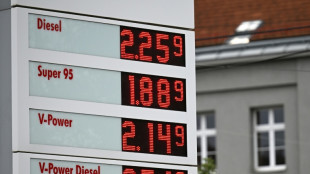 Average EU diesel price hits record 2.23 euros a litre: AFP analysis

 Whitetip Investments Marks 10 Years of Regulation, Transparency & Responsible Trading

 Stocks fall, oil prices rise as global bonds under pressure

 Hungary detects invasive spotted lanternfly for first time in EU

 Forex Expo Dubai 2026 Breaks Guinness World Record Again With 23,816 Attendees

 Asian markets fall on US-China jitters as leaders meet
 As Moscow steps up attacks, Kyiv residents brace for harsh winter
 Markets mixed as China's Xi arrives for US talks

 Archaeological 'breakthrough' could confirm origins of Paris

 Australian PM says OpenAI hacked government health website

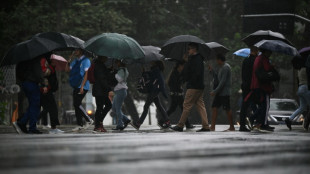 Rio breaks record for rainiest September amid powerful El Nino

 Mandela Digital Extends Early Access Programme to 11 February 2027 Following Strong Response

 McDonald's to boost franchisees as inflation weighs on consumers

 Archaelogical 'breakthrough' could confirm origins of Paris

Tajik apricot farmer Uktam Kuziev is worried about the future now that climate change is threatening Central Asia's vital fruit harvest.
This is one of the world's most exposed regions to the effects of climate change and its poor, rural farming communities are particularly vulnerable.
Kuziev is one of more than 100,000 people employed in Tajikistan's apricot industry, a historic occupation across the mountains and valleys in the north of the landlocked country.
Ten percent of all the world's orchards are located here, according to United Nations data.
But mild winters, melting glaciers, late frosts and water scarcity all pose challenges to cultivation in Tajikistan's apricot capital of Isfara.
"Last year, some land turned desert-like due to lack of water and the soil cracked into pieces," Kuziev told AFP.
"The apricot trees dried up because they weren't watered," the 72-year-old farmer said, standing in front of stubby apricot trees swaying in the wind.
The fruit is "especially vulnerable" to climate change, according to the World Bank, due to "escalating temperatures, shifting precipitation patterns and increased frequency of extreme weather events".
- Water shortages -
At street markets in Isfara, vendors sell buckets of fresh apricots next to piles of glistening red cherries, while on roadsides dried fruits are sold from giant sandbags.
Tajikistan classifies the fruit as a "strategic product" with the UN's Food and Agriculture Organization.
"Apricot cultivation in northern Tajikistan is very important economically and socially... It creates jobs and improves the standard of living of the population," Muminjon Makhmajonov, deputy director of Isfara Food, a major dried fruit producer, told AFP.
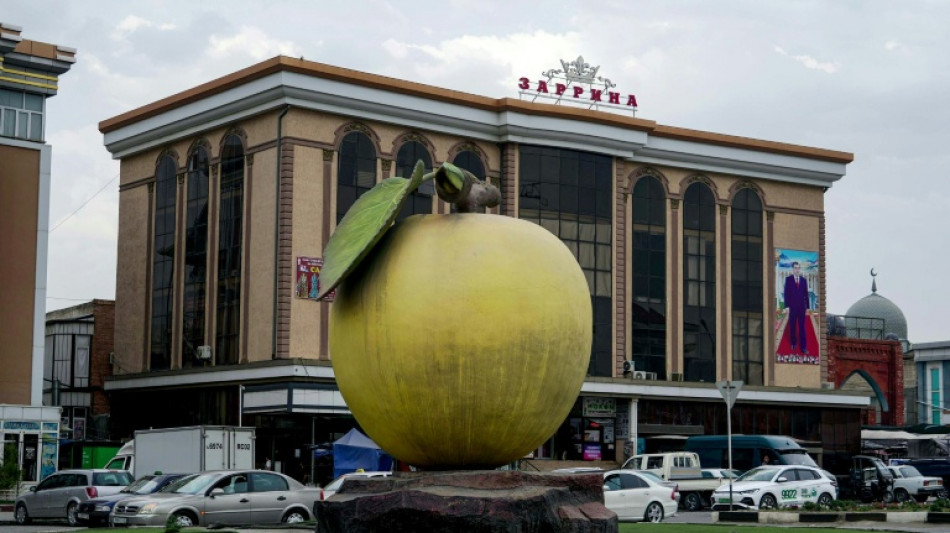
So important is the furry orange fruit to the local economy that a giant monument to it has been erected in the middle of Isfara city.
But chronic water shortages and shrinking levels in the Isfara river -- shared by Tajikistan, Uzbekistan and Kyrgyzstan -- are disrupting both the industry and a way of life.
"The effects of climate change and the melting of the glaciers are already being felt. In spring the water level in the Isfara river is low," Bakhtior Jalilov, the city's chief agriculture specialist, told AFP.
Facing water shortages every spring, Kuziev has previously sacrificed wheat crops to "save the essentials -- the apricot trees".
A lack of water is not the only problem faced by farmers.
Paradoxically, bouts of heavy rainfall are also an issue, causing the fruit to grow with thorns or spots on its skin, which reduces its market value.
- Frosts -
"We are sad when it rains a lot because it spoils the product," said Muborak Isoeva, 61, who sells apricots in the neighbouring village of Kulkand.
Drastic temperature swings pose another problem.
The devastation of Turkey's 2025 apricot harvest by cold weather has worried Tajikistan's farmers.
"When the temperature rises or falls sharply, even for a day or two, you won't get the harvest you want," Makhmajonov said.
He buys supplies in the markets around Isfara, where small-scale farmers sell apricots grown in their gardens to make a living.
Whereas before locals had no idea of the concept of a late frost, "over the last 20 years, the trees have frozen over five or six times during or after blooming", city specialist Jalilov said.
- Adaptation -
Producers and the local administration are trying to adapt.
Orchards are being planted more intensively, while some 1,500 hectares of soil on low-yielding plots of land has been regenerated over the last five years.
Some are switching to growing plums, more resilient to the changing climate.
"Unlike apricots, plums bloom a little later and tolerate heat and cold better... so when the apricot harvest is poor, we can still export prunes," said Isfara Food's Makhmajonov.
He has installed a water-efficient drip irrigation system to grow the sweet purple fruit.
But not everybody has that option.
Water fees were hiked 150 percent last year -- something Tajikistan said was necessary to improve infrastructure and balance usage from the river across the three countries.
With an average national salary of just $260 a month, adaptation is both costly and complex for family farmers, who have for decades relied on the fruit to boost their incomes.
"Regardless of their standard of living or social status, if they need money, they could go and sell them at the market," Makhmajonov said.
Climate change is now making that safety net look increasingly fragile.
X.Cheung--CPN