Texas floods: Misinformation across political spectrum sows confusion / Photo: RONALDO SCHEMIDT - AFP

 Trump's photo of Xi greeting carries signs of AI

 First US trial against TikTok to open Monday

 French literary prize removes novel from longlist after AI claims

 Trump accuser E. Jean Carroll finally has her damages

 Heavy fighting, internet disruption as Ethiopia conflict rages

 Asian markets mixed after oil gains

 UN approves resolution on dealing with rising sea levels

 Global stocks mostly fall as oil prices and bond yields rise

 Starbucks to close 250 more cafes in North America

 Stocks fall as oil prices rise and bonds back under pressure
 Top ECB official to resign to take up IMF role

 Eviction of pensioner puts Spain housing crisis in spotlight

 Average EU diesel price hits record 2.23 euros a litre: AFP analysis

 Whitetip Investments Marks 10 Years of Regulation, Transparency & Responsible Trading

 Stocks fall, oil prices rise as global bonds under pressure

 Hungary detects invasive spotted lanternfly for first time in EU

 Forex Expo Dubai 2026 Breaks Guinness World Record Again With 23,816 Attendees

 Asian markets fall on US-China jitters as leaders meet

 As Moscow steps up attacks, Kyiv residents brace for harsh winter

 Markets mixed as China's Xi arrives for US talks

 Archaeological 'breakthrough' could confirm origins of Paris

 Australian PM says OpenAI hacked government health website

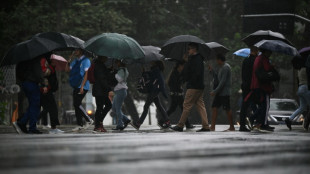 Rio breaks record for rainiest September amid powerful El Nino

 Mandela Digital Extends Early Access Programme to 11 February 2027 Following Strong Response

 McDonald's to boost franchisees as inflation weighs on consumers

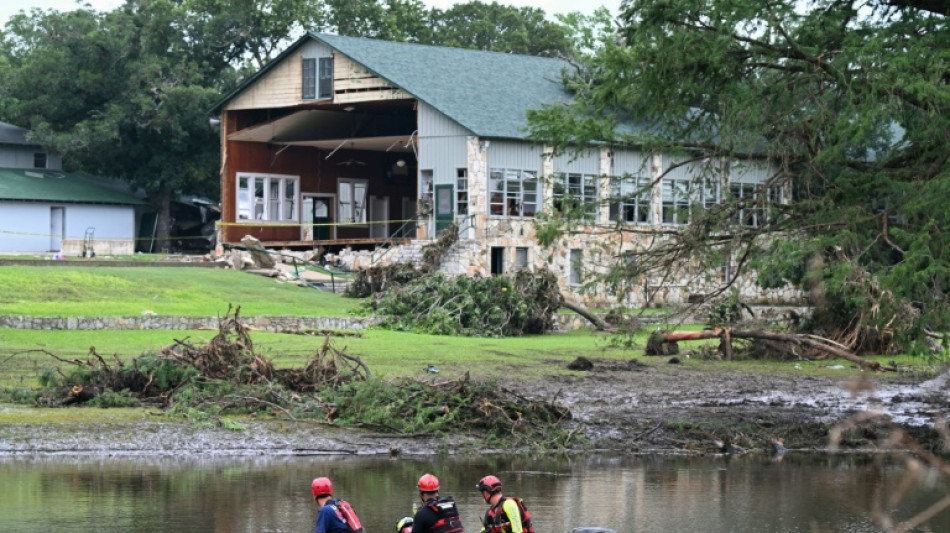
Following deadly floods in Texas, misinformation from both left- and right-wing users was roiling social media, with liberals baselessly blaming staffing cuts at US weather agencies for flawed warning systems and conservatives ramping up conspiracy theories.
The catastrophic floods over the weekend have left more than a 100 people dead, including more than two dozen girls and counselors at a riverside summer camp, with rescuers racing on Tuesday to search for dozens of people still missing.
Multiple left-leaning accounts on the platform X peddled the unfounded claim that staffing cuts at the National Weather Service (NWS) by President Donald Trump's administration had "degraded" its forecasting ability.
While the NWS, like other agencies, has experienced deep staffing and budget cuts under the Trump administration, experts say its forecasters rose to the challenge despite the constraints.
"There have been claims that (weather agencies) did not foresee catastrophic (Texas) floods -- but that's simply not true," Daniel Swain, a climate scientist at the University of California Agriculture and Natural Resources, wrote on Bluesky.
"This was undoubtedly an extreme event but messaging rapidly escalated beginning (around) 12 (hours) prior...Locations that flooded catastrophically had at least 1-2+ hours of direct warning from NWS."
There were 22 warnings from the NWS for Kerr County and the Kerrville area, which experienced the worst flooding, according to a CBS News analysis.
"This truly was a sudden & massive event and occurred at worst possible time (middle of the night). But (the) problem, once again, was not a bad weather prediction: it was one of 'last mile' forecast/warning dissemination," Swain wrote.
Meanwhile, right-wing conspiracy theorists on social media falsely claimed that the government caused the flooding through cloud seeding, an artificial technique that stimulates rainfall.
Multiple experts have said that such weather-modification technologies were not responsible for the Texas floods.
The misinformation echoes past conspiracy theories, including claims that weather manipulation by the government caused Hurricane Milton -- which struck Florida's Gulf Coast last year -- and that cloud seeding efforts were behind last year's flooding in Dubai.
- 'Classic tale of misinformation' -
"False claims from both the left and right have spread widely on social media following the catastrophic floods in Texas," Sarah Komar and Nicole Dirks from the disinformation watchdog NewsGuard wrote in a report that debunked several falsehoods.
"When extreme weather events occur, conspiracy theories about humans creating or controlling them often soon follow."
Following natural disasters, misinformation often surges across social media -- fueled by accounts from across the political spectrum –- as many platforms scale back content moderation and reduce their reliance on human fact-checkers.
Traditional media outlets were not immune to misinformation swirling on the internet.
"Like other disasters before it, the (Texas) floods had attracted fast-spreading misinformation and served as a warning about the vigilance required of journalists during emotionally charged news events," said the nonprofit media institute Poynter.
Kerr County Lead, a local outlet, was forced to retract a false story about the miracle rescue of two girls who clung to a tree in the floods. The story first surfaced in social media posts that quickly went viral, but a local official said the reports were "100% inaccurate."
"Like everyone, we wanted this story to be true, but it's a classic tale of misinformation that consumes all of us during a natural disaster," Louis Amestoy, Kerr County Lead's editor, wrote in a note to readers on Sunday.
"Unfortunately, the story is not true and we are retracting it."
P.Kolisnyk--CPN