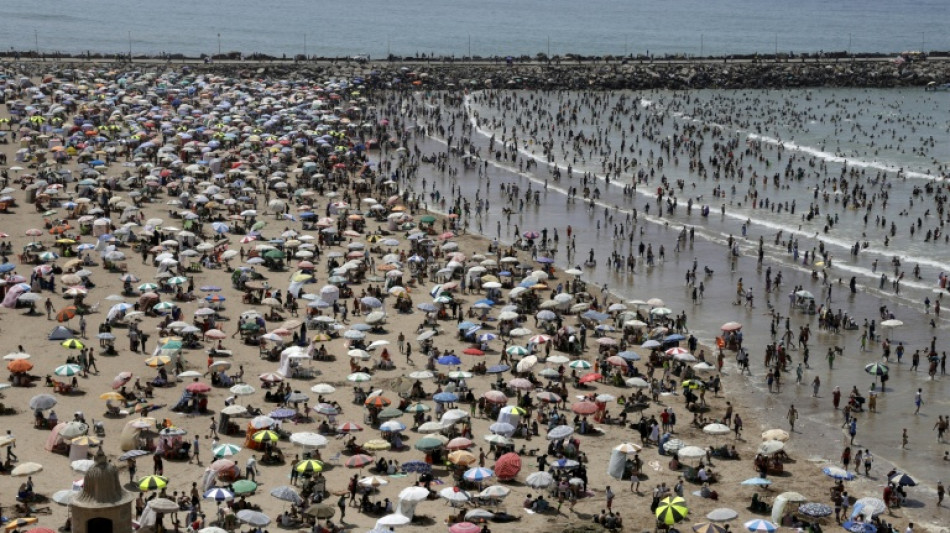
As heatwaves intensify, Morocco ups effort to warn residents / Photo: Abdel Majid BZIOUAT - AFP/File

 Trump's photo of Xi greeting carries signs of AI

 First US trial against TikTok to open Monday
 French literary prize removes novel from longlist after AI claims
 Trump accuser E. Jean Carroll finally has her damages
 Heavy fighting, internet disruption as Ethiopia conflict rages
 Asian markets mixed after oil gains
 UN approves resolution on dealing with rising sea levels
 Global stocks mostly fall as oil prices and bond yields rise
 Starbucks to close 250 more cafes in North America
 Stocks fall as oil prices rise and bonds back under pressure
 Top ECB official to resign to take up IMF role

 Eviction of pensioner puts Spain housing crisis in spotlight

 Average EU diesel price hits record 2.23 euros a litre: AFP analysis

 Whitetip Investments Marks 10 Years of Regulation, Transparency & Responsible Trading

 Stocks fall, oil prices rise as global bonds under pressure
 Hungary detects invasive spotted lanternfly for first time in EU

 Forex Expo Dubai 2026 Breaks Guinness World Record Again With 23,816 Attendees

 Asian markets fall on US-China jitters as leaders meet
 As Moscow steps up attacks, Kyiv residents brace for harsh winter
 Markets mixed as China's Xi arrives for US talks
 Archaeological 'breakthrough' could confirm origins of Paris

 Australian PM says OpenAI hacked government health website

 Rio breaks record for rainiest September amid powerful El Nino
 Mandela Digital Extends Early Access Programme to 11 February 2027 Following Strong Response

 McDonald's to boost franchisees as inflation weighs on consumers
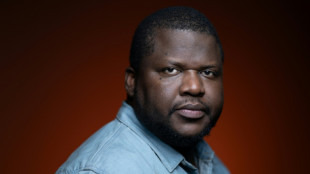
Lhoussaine Youabd knows nearly all the languages spoken in Morocco, a useful skill in his role warning the population of growing climate-related risks in the country braving increasingly common heatwaves.
"Every time a weather alert is issued, I go on the media to warn Moroccans," Youabd, 52, a meteorological engineer at the national weather service, told AFP.
This has been his mission for the past decade, going on TV and radio stations to get the message across to as many Moroccans as possible, particularly in remote rural areas.
Youabd said villagers are "happy that we speak their language" -- dialects of colloquial Arabic or those used by the Amazigh -- when issuing updates, warnings and recommendations that could be life-saving.
The General Directorate of Meteorology (DGM) has recently declared 2024 Morocco's hottest year on record while registering an average rainfall deficit of -24.7 percent, on the North African country's seventh straight year of drought.
In late June this year, as a deadly heatwave affected large areas of southern Europe -- across the Mediterranean from Morocco -- the DGM said several cities broke their temperature records for that month.
Displaying a weather forecast map mostly shaded in intense red, Meriem Alaouri, the interim head of the national weather service in Casablanca, said that the upcoming summer months are expected to be even hotter than usual.
Scientists say that recurring heatwaves are a clear marker of global warming and that they are set to become more frequent, longer and more intense.
Fuelled by human-driven climate change, 2024 was the warmest year on record globally -- and 2025 is projected to rank among the top three.
When extreme weather events hit, like heatwaves, storms or floods, Moroccan authorities issue colour-coded warning bulletins that are transmitted by the civil defence and media outlets.
Youabd said that in recent years, text messages are also used to alert local officials across the country, who can then notify residents in their area.
The DGM has also expanded its social media presence, using networks like Facebook and LinkedIn to get the message across, and a "Smart Alert" that would land directly in Moroccans' mobile phones is currently being developed, he said.
- No power -
Hicham Fenniri, director of the International Water Research Institute at Mohammed VI Polytechnic University, said it was important to ensure local, regional and national leaders and decision-makers are well informed about climate risks.
In remote areas, connecting residents to the electricity grid is crucial to make sure they can "access information" and install air conditioning systems, he said.
Traditional houses "but remade using clean science and technology" can help reduce some effects of the intense heat, along with ensuring access to potable water to mitigate dehydration risks.
In 2024, authorities said that 5.4 percent of Moroccans living in rural areas did not have access to electricity, and 20.4 percent had no reliable source of clean water.
Ben Achir Chekroun, a 66-year-old pensioner from Harhoura, south of the capital Rabat, said that the weather alerts were easy to follow.
"We get the information either from the radio, on online media and in newspapers," he told AFP.
Loubna Rouhi, head physician at the local medical centre in Harhoura, said that in the scorching heat, it was recommended to stay in the shade and avoid going outside during the hottest hours, between 10 am and 4 pm, as well as wearing light clothes and staying hydrated.
The 48-year-old doctor said that she has used health ministry notices to help inform the population about the risks of extreme heat.
One recent campaign launched by the ministry aims to warn against scorpions and snakes, which are far more active in the heat.
Mohammed Esmaili, a senior health ministry official, said that a specialised medical kit has "helped significantly reduce mortality" linked to scorpion or snake bites, from 7.2 percent of cases in 2013 down to 1.2 percent.
Y.Jeong--CPN