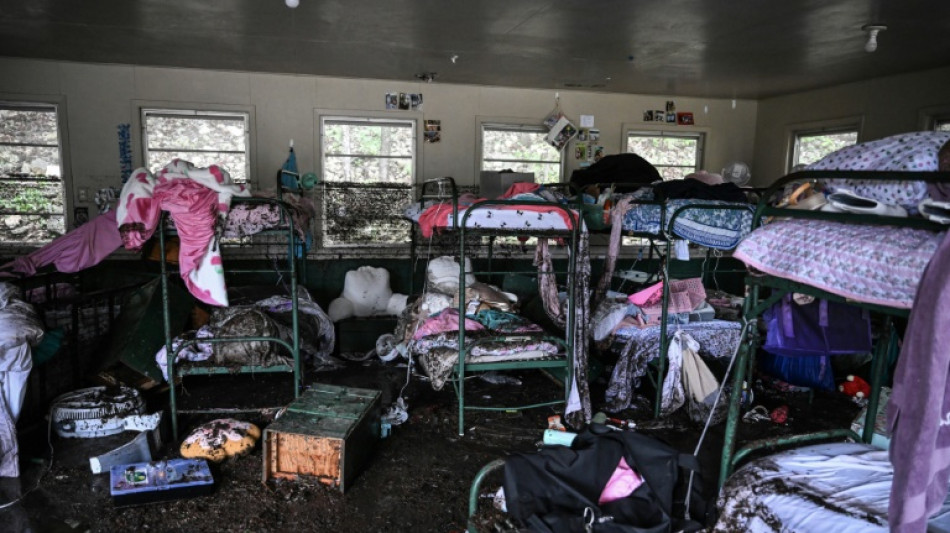
Texas floods: How geography, climate and policy failures collided / Photo: RONALDO SCHEMIDT - AFP/File

 Trump's photo of Xi greeting carries signs of AI

 First US trial against TikTok to open Monday

 French literary prize removes novel from longlist after AI claims

 Trump accuser E. Jean Carroll finally has her damages

 Heavy fighting, internet disruption as Ethiopia conflict rages

 Asian markets mixed after oil gains

 UN approves resolution on dealing with rising sea levels

 Global stocks mostly fall as oil prices and bond yields rise

 Starbucks to close 250 more cafes in North America

 Stocks fall as oil prices rise and bonds back under pressure
 Top ECB official to resign to take up IMF role

 Eviction of pensioner puts Spain housing crisis in spotlight

 Average EU diesel price hits record 2.23 euros a litre: AFP analysis

 Whitetip Investments Marks 10 Years of Regulation, Transparency & Responsible Trading

 Stocks fall, oil prices rise as global bonds under pressure

 Hungary detects invasive spotted lanternfly for first time in EU

 Forex Expo Dubai 2026 Breaks Guinness World Record Again With 23,816 Attendees

 Asian markets fall on US-China jitters as leaders meet

 As Moscow steps up attacks, Kyiv residents brace for harsh winter
 Markets mixed as China's Xi arrives for US talks

 Archaeological 'breakthrough' could confirm origins of Paris

 Australian PM says OpenAI hacked government health website

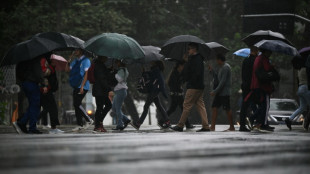 Rio breaks record for rainiest September amid powerful El Nino

 Mandela Digital Extends Early Access Programme to 11 February 2027 Following Strong Response

 McDonald's to boost franchisees as inflation weighs on consumers

"There's no such thing as a natural disaster," geographers like to say -- a reminder that human choices turn hazards into tragedies.
The Texas flash floods this weekend that left scores dead, including many children, offer a stark illustration.
Here is a look at the intertwined forces that amplified this storm's impact.
- 'Flash Flood Alley' -
Texas's Hill Country sits in an area known as "Flash Flood Alley," explains Hatim Sharif, a hydrologist at the University of Texas at San Antonio.
Warm Gulf air rushes up the Balcones Escarpment -- a line of steep hills and cliffs that arcs southwest down from near Dallas -- cools, and dumps torrents onto thin soils that quickly give way to bedrock.
Runoff then funnels through a dense web of creeks.
"Water will rise very, very quickly, within minutes or a few hours," Sharif told AFP.
The early hours of July 4 proved that.
Around 3:00 am, a gauge near Camp Mystic in Hunt showed the Guadalupe River rising nearly a foot (30 centimeters) every five minutes; by 4:30 am the river had surged more than 20 feet, National Weather Service data show.
That's enough water to sweep away people, vehicles and buildings.
An urgent NWS warning went out shortly after 1:00 am, but most campers were asleep; phones are banned, coverage is patchy, and darkness makes escape routes hard to judge.
Sharif urges the use of hydrologic forecasts that convert rainfall into likely river levels.
"Rainfall needs to be translated into runoff," he said. "If you have 10 inches, what will happen?"
Summer camps have long been drawn to the region for its natural beauty. But with increasing risks, Sharif warns that treating these sites as safe or permanent is unwise.
- 'We need to adapt' -
A warmer atmosphere holds more moisture, loading the dice for heavier downpours.
A new analysis by ClimaMeter finds that the meteorological conditions preceding the floods, which delivered more than twice the monthly average rainfall in a single day, could not be explained by natural variability alone.
"Climate change is already affecting us, so we need to adapt," said Mireia Ginesta, a climate scientist at the University of Oxford who co-authored the research, which is funded by the European Union and the French National Centre for Scientific Research (CNRS).
"We also need to cut our emissions, and make sure that proper funding is provided to the forecast services and research in general on climate change."
The call comes as the National Weather Service, like other agencies, has experienced deep staffing cuts under President Donald Trump's administration.
Experts stress, however, that NWS forecasters performed admirably under the circumstances.
The real failure, wrote climate scientist Daniel Swain on Bluesky, "was not a bad weather prediction, it was one of 'last mile' forecast/warning dissemination."
- No warning system -
For years, commissioners in Kerr County, where the camps lie, considered flood sirens and digital alerts to replace the informal practice of summer camp staff getting on the radio and warning fellow camps.
Minutes from a 2016 meeting show officials labeling even a feasibility study "a little extravagant," suggesting sirens would mainly help tourists, and vouching for the word-of-mouth system.
The debate rolled on. In 2021, commissioners again balked, this time wary of federal funds tied to the Biden administration that they opposed politically.
After the disaster, San Antonio mother Nicole Wilson -- who almost sent her daughters to Camp Mystic -- launched a petition on Change.org urging Governor Greg Abbott to approve a modern warning network.
"Five minutes of that siren going off could have saved every single one of those children," she told AFP.
O.Ignatyev--CPN