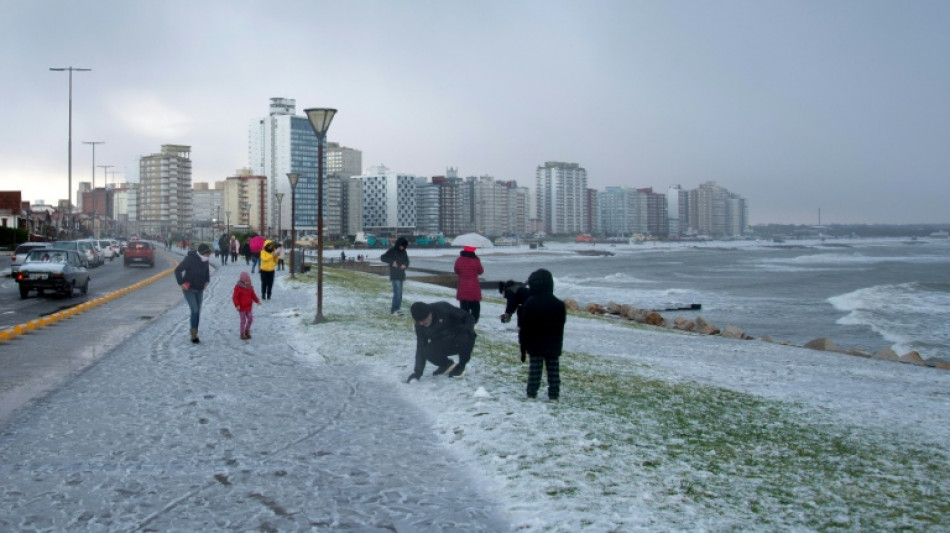
Record cold grips Argentina, Chile and Uruguay / Photo: SEBASTIAN LOSADA - AFP

 Trump's photo of Xi greeting carries signs of AI

 First US trial against TikTok to open Monday
 French literary prize removes novel from longlist after AI claims

 Trump accuser E. Jean Carroll finally has her damages

 Heavy fighting, internet disruption as Ethiopia conflict rages
 Asian markets mixed after oil gains

 UN approves resolution on dealing with rising sea levels

 Global stocks mostly fall as oil prices and bond yields rise

 Starbucks to close 250 more cafes in North America
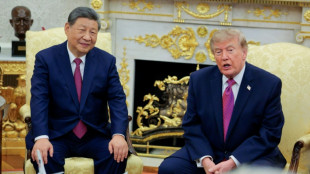 Stocks fall as oil prices rise and bonds back under pressure
 Top ECB official to resign to take up IMF role

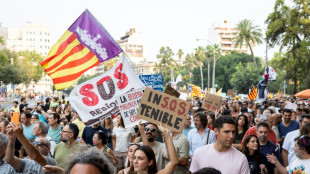 Eviction of pensioner puts Spain housing crisis in spotlight

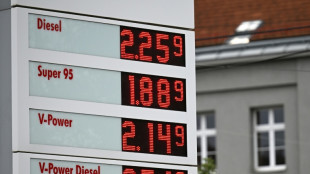 Average EU diesel price hits record 2.23 euros a litre: AFP analysis

 Whitetip Investments Marks 10 Years of Regulation, Transparency & Responsible Trading

 Stocks fall, oil prices rise as global bonds under pressure
 Hungary detects invasive spotted lanternfly for first time in EU

 Forex Expo Dubai 2026 Breaks Guinness World Record Again With 23,816 Attendees

 Asian markets fall on US-China jitters as leaders meet
 As Moscow steps up attacks, Kyiv residents brace for harsh winter
 Markets mixed as China's Xi arrives for US talks

 Archaeological 'breakthrough' could confirm origins of Paris

 Australian PM says OpenAI hacked government health website

 Rio breaks record for rainiest September amid powerful El Nino
 Mandela Digital Extends Early Access Programme to 11 February 2027 Following Strong Response

 McDonald's to boost franchisees as inflation weighs on consumers
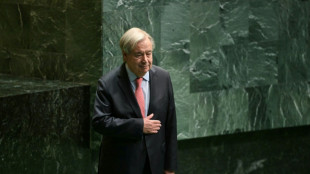
A polar air mass has brought record low temperatures to Argentina, Chile and Uruguay, causing at least 15 deaths and forcing governments to restrict gas supplies and activate emergency shelters.
The three South American countries have all recorded sharply below-zero temperatures as the polar air originated from Antarctica and swept across the region.
In Argentina, at least nine homeless people have died from the cold this winter, according to NGO Proyecto 7.
The capital Buenos Aires recorded its lowest temperature since 1991 at -1.9 degrees Celcius (28.6 Fahrenheit) on Wednesday, while the coastal city of Miramar saw snow for the first time in 34 years. Further south, the town of Maquinchao recorded -18C on Tuesday.
Electricity demand caused cuts across Buenos Aires, leaving thousands without power for over 24 hours in some areas.
The government suspended gas supplies to industries and petrol stations Wednesday to ensure household supplies, and removed price controls on gas cylinders Thursday.
- Desert snow -
Uruguay declared a nationwide "red alert" after six people died, allowing President Yamandu Orsi's government to forcibly move homeless people to shelters.
Montevideo recorded its lowest maximum temperature since 1967 at 5.8C on June 30, according to meteorologist Mario Bidegain.
Chile also activated homeless shelter plans during the coldest days. The city of Chillan, 400 kilometers (250 miles) south of Santiago, hit -9.3C, according to the Chilean Meteorological Directorate.
"What happened this week in Chile and the Southern Cone in general is a cold wave caused by an escape of a polar air mass from Antarctica," climatologist Raul Cordero from the University of Santiago told AFP.
Snow even fell in parts of the Atacama Desert, the world's driest, for the first time in a decade.
"It is not so common for these cold air masses to extend so far north, so we cannot rule out that this is also caused by climate change," meteorologist Arnaldo Zuniga told AFP.
The region expects relief in the coming days, with Buenos Aires reaching 12C on Thursday, Montevideo 14C and Santiago 24.7C.
"I was quite surprised by the change from cold to hot -- the change was very drastic," student Dafne Naranjo, 18, said in Santiago.
Climatologist Cordero said heatwaves have become more frequent than cold spells in recent years.
"The frequency of heatwaves has tripled, whether in summer or winter, not only in the Southern Cone but throughout the world," he said.
A.Levy--CPN