
-
 Jay-Z rape accuser says she made 'false accusations'
-
Spotting AI writing: how reliable are the detectors?
-
 Trump's photo of Xi greeting carries signs of AI
-
US court refuses to overturn Pentagon ban on Anthropic
-
 First US trial against TikTok to open Monday
-
South Lebanon children return to school destroyed by Israel strike
-
 French literary prize removes novel from longlist after AI claims
-
European stock markets climb as oil prices drop
-
 Trump accuser E. Jean Carroll finally has her damages
-
Asian markets mixed after recent oil surge
-
 Heavy fighting, internet disruption as Ethiopia conflict rages
-
Cash for nature protection: hotelier's offer to Principe islanders

-
 Asian markets mixed after oil gains
-
India rape cases turn focus back onto women's safety
-
 UN approves resolution on dealing with rising sea levels
-
Rich nations should foot climate bill, says Nepal minister

-
 Global stocks mostly fall as oil prices and bond yields rise
-
Italy bans burqas in schools, caps numbers of foreign students per class
-
 Starbucks to close 250 more cafes in North America
-
Napoli hoping to build new stadium, says owner
-
 Stocks fall as oil prices rise and bonds back under pressure
-
What happens if the US bans diesel exports
-
 Top ECB official to resign to take up IMF role
-
Oscar-winner Cotillard fears being moved by AI actor

-
 Eviction of pensioner puts Spain housing crisis in spotlight
-
Stocks fall, oil prices rise as global bonds back under pressure
-
 Average EU diesel price hits record 2.23 euros a litre: AFP analysis
-
Streamex Converts Interest Into Capital as GLDY Investment Strategy Secures $1M+ Institutional Allocation

-
 Whitetip Investments Marks 10 Years of Regulation, Transparency & Responsible Trading
-
STARTRADER Named Best Fintech Forex Broker at Forex Expo Dubai 2026

-
 Stocks fall, oil prices rise as global bonds under pressure
-
German think tanks urge Merz to stick with reforms after election defeats
-
 Hungary detects invasive spotted lanternfly for first time in EU
-
France's top-selling newspaper to slash jobs
-
 Forex Expo Dubai 2026 Breaks Guinness World Record Again With 23,816 Attendees
-
BaazEX Enters the Asian Trading Market With a New Approach to Online Forex Trading.

-
 Asian markets fall on US-China jitters as leaders meet
-
Sao Tome voters want to stop exodus of 'neglected' youth

-
 As Moscow steps up attacks, Kyiv residents brace for harsh winter
-
Mexican cartels target Australia with their African meth
-
 Markets mixed as China's Xi arrives for US talks
-
Rapper-turned-PM faces first big test after Nepal disaster
-
 Archaeological 'breakthrough' could confirm origins of Paris
-
Meta launches camera-free AI glasses amid privacy pushback

-
 Australian PM says OpenAI hacked government health website
-
Anthropic touts AI-led biology discovery

-
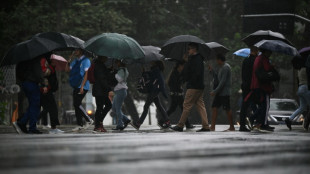 Rio breaks record for rainiest September amid powerful El Nino
-
Stocks fall on soaring bond yields, higher oil prices
-
 Mandela Digital Extends Early Access Programme to 11 February 2027 Following Strong Response
-
ArcPoint Expands Globally with Institutional Intelligence Platform for Modern Investors

EU to unveil long-delayed 2040 climate target
The EU will present its delayed 2040 emissions-reduction target Wednesday, sticking to its climate goals but with new flexibility to answer the concerns of member states that must greenlight the plans.
Brussels is making the 2040 announcement as much of Europe roasts in an early summer heatwave -- which scientists say are becoming more intense, frequent and widespread due to human-induced climate change.
The target is a key milestone towards the European Union's goal of becoming carbon neutral by 2050. The bloc says it has cut climate-warming emissions by 37 percent compared to 1990 levels.
After months of tough negotiations with EU capitals, the European Commission is finally set to stick to the objective it announced last year of cutting emissions by 90 percent by the year 2040.
But in a bid to appease more sceptical member states, the EU's executive arm will introduce some flexibility into the calculation, much to the chagrin of environmental defenders.
From 2036, the commission could allow the bloc's 27 member states to count carbon credits purchased to finance projects outside Europe towards their emission cuts, for up to three percent of the total, according to a draft document seen by AFP.
But climate groups are fiercely opposed to such a measure. Backed by scientific studies, they question the impact of such credits -- given for things like tree-planting or renewable-energy projects -- on reducing overall CO2 emissions.
"Three percent is not insignificant. These are potentially considerable sums that will be spent abroad instead of financing the transition" in Europe, said Neil Makaroff, an expert at the climate-focused Strategic Perspectives think tank.
"But there's a political compromise to be found," he said. "The challenge will be for the EU to establish a standard so that these international credits truly help cut emissions and not leave individual states to their own devices."
- 'Don't strain ourselves' -
EU environment ministers will discuss the objective at a meeting in mid-July before an expected vote on approving the measures on September 18.
It will only become law after EU lawmakers also sign off on the target.
The commission's hope is that the 2040 objective will be approved before the UN climate conference (COP30) in November in the northern Brazilian city of Belem.
But that gives little time for negotiations, which have been complicated by a rightward shift and rising climate scepticism in many European countries.
The EU's climate chief, Wopke Hoekstra, has spent months travelling across the bloc trying to find a compromise.
For some states, including the Czech Republic, the 90-percent target is unrealistic.
Meanwhile, others including Italy and Hungary worry about the burden of decarbonising heavy industry at a time when Europe is working to strengthen its industry in the face of fierce competition from the United States and China.
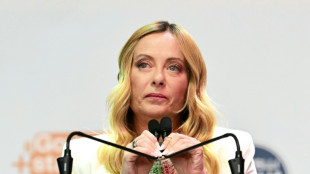
Italian Prime Minister Giorgia Meloni has suggested a target of 80 or 85 percent, while France has expressed doubts over how the EU will reach its objective.
French President Emmanuel Macron wants guarantees for the decarbonisation of industry and support for nuclear energy, the largest source of power in France.
But the commission can count on the support of other countries including Spain and Denmark, which took over the rotating EU presidency this week.
And the three-percent "flexibility" -- which mirrors demands made in the new German government's coalition agreement -- should help keep the economic powerhouse on board.
When it comes to Europe's international commitments, Macron has also stressed that the bloc is only bound to present a midway target for 2035 at COP30 in Belem, and not the 2040 objective.
"Let's not strain ourselves," Macron told reporters last week. "If we have (a 2040 target) for Belem, great, but if it takes longer, let's take the time," he said.
D.Philippon--CPN