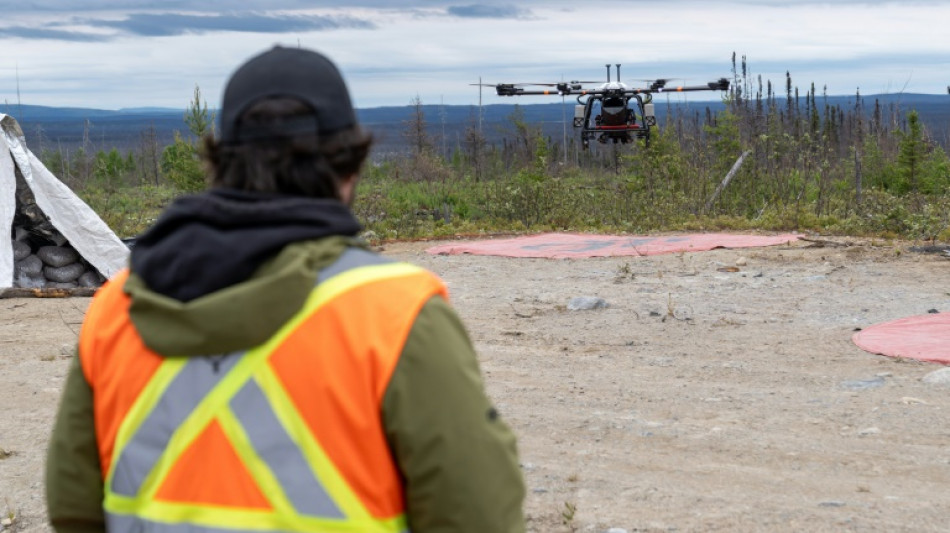
Canada turns to drones for reforestation after wildfires / Photo: François Robert-Durand - AFP

 Jay-Z rape accuser says she made 'false accusations'

 Trump's photo of Xi greeting carries signs of AI

 First US trial against TikTok to open Monday

 French literary prize removes novel from longlist after AI claims

 Trump accuser E. Jean Carroll finally has her damages

 Heavy fighting, internet disruption as Ethiopia conflict rages

 Asian markets mixed after oil gains

 UN approves resolution on dealing with rising sea levels

 Global stocks mostly fall as oil prices and bond yields rise

 Starbucks to close 250 more cafes in North America

 Stocks fall as oil prices rise and bonds back under pressure
 Top ECB official to resign to take up IMF role

 Eviction of pensioner puts Spain housing crisis in spotlight

 Average EU diesel price hits record 2.23 euros a litre: AFP analysis

 Whitetip Investments Marks 10 Years of Regulation, Transparency & Responsible Trading

 Stocks fall, oil prices rise as global bonds under pressure

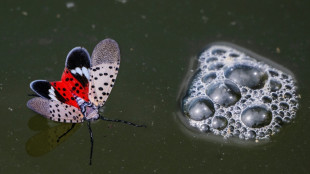 Hungary detects invasive spotted lanternfly for first time in EU

 Forex Expo Dubai 2026 Breaks Guinness World Record Again With 23,816 Attendees

 Asian markets fall on US-China jitters as leaders meet
 As Moscow steps up attacks, Kyiv residents brace for harsh winter
 Markets mixed as China's Xi arrives for US talks

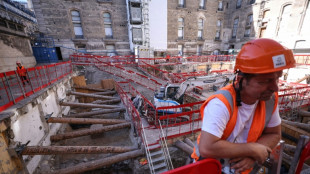 Archaeological 'breakthrough' could confirm origins of Paris

 Australian PM says OpenAI hacked government health website

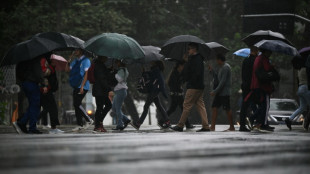 Rio breaks record for rainiest September amid powerful El Nino

 Mandela Digital Extends Early Access Programme to 11 February 2027 Following Strong Response

A large aerial drone flies over the charred remains of Canadian forests devastated by wildfires, bombarding the ground with seed capsules to accelerate reforestation.
This area of northern Quebec province was ravaged by megafires in the summer of 2023 and for the second year in a row a pilot project has been using drones to plant new black spruces and jack pines.
Rather than simply dropping seeds from high above, the company Flash Forest, which is leading the initiative, uses seeds protected in capsules that also contain water and nutrients, as well as fungi, to maximize their growing potential.
"There is a niche that's appropriate for drone reforestation which we've spent the last five years narrowing in on," Flash Forest cofounder Cameron Jones explained.
The company focuses its efforts on forests that were scorched in the last year or two and excludes older burn sites that already have vegetation that can crowd out new seeds.
- 50,000 capsules per day -
It is no longer feasible to wait for Canada's forests to bounce back all on their own with millions of hectares of forests destroyed each year.
In 2023, Canada experienced a record year of wildfires with blazes affecting every province, ultimately burning nearly 18 million hectares (44 million acres).
Quebec, and particularly this area in the north of the French-speaking province, was hit especially hard that year.
Drone operator and geospatial data scientist Owen Lucas says the method uses artificial intelligence to map out the sites ahead of time.
"Then we pick our sites based on climate variables, physical attributes, topographic variables, to make sure we're putting the seeds in the right place," he said, his eyes fixed on the drone's remote controls.
The company also has projects in another Canadian province, Alberta, and in Colorado in the United States. Each drone can deliver seeds to plant 50,000 trees per day.
"When you're out here planting you don't see the impact, but when you come back in the fall and you see them growing, you know you're doing a positive thing," Lucas said.
In 2023, like this year, which has already seen more than 4.2 million hectares burned across the country, megafires are being fueled by drought, which experts say is linked to global warming.
"It's sad to have lost so much forest," lamented Angel Mianscum, one of the Indigenous leaders of a nearby Cree community.
She was, however, pleased to see there are now "innovative ways of doing things." The Cree community has worked directly with Flash Forest to plan the local reforestation.
Indigenous communities are the most affected by fires in Canada because they are often remote and deep in the boreal forest.
- Seed shortage -
"We are increasingly forced to reforest in Canada. Boreal forest trees are adapted to fires, but today the conditions are becoming more complicated," said Maxence Martin, professor of forest ecology at the University of Quebec in Abitibi-Temiscamingue.
He points out that in 2023, for example, very young forests burned.
"If the forest is too young, it will take a very long time to start regenerating, so planting is the only option."
While the use of drones can help reach certain areas more quickly, it also has its downsides: many seeds end up wasted.
"And today there is a seed problem because they are complicated to harvest," and therefore Canada is short of them, Martin said.
T.Morelli--CPN