Japan had hottest June on record: weather agency / Photo: Richard A. Brooks - AFP

 Jay-Z rape accuser says she made 'false accusations'

 Trump's photo of Xi greeting carries signs of AI

 First US trial against TikTok to open Monday

 French literary prize removes novel from longlist after AI claims
 Trump accuser E. Jean Carroll finally has her damages
 Heavy fighting, internet disruption as Ethiopia conflict rages

 Asian markets mixed after oil gains

 UN approves resolution on dealing with rising sea levels

 Global stocks mostly fall as oil prices and bond yields rise

 Starbucks to close 250 more cafes in North America

 Stocks fall as oil prices rise and bonds back under pressure
 Top ECB official to resign to take up IMF role

 Eviction of pensioner puts Spain housing crisis in spotlight

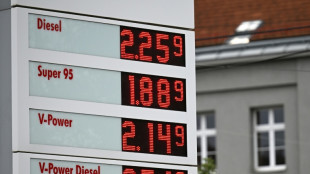 Average EU diesel price hits record 2.23 euros a litre: AFP analysis

 Whitetip Investments Marks 10 Years of Regulation, Transparency & Responsible Trading

 Stocks fall, oil prices rise as global bonds under pressure

 Hungary detects invasive spotted lanternfly for first time in EU

 Forex Expo Dubai 2026 Breaks Guinness World Record Again With 23,816 Attendees

 Asian markets fall on US-China jitters as leaders meet

 As Moscow steps up attacks, Kyiv residents brace for harsh winter

 Markets mixed as China's Xi arrives for US talks

 Archaeological 'breakthrough' could confirm origins of Paris

 Australian PM says OpenAI hacked government health website

 Rio breaks record for rainiest September amid powerful El Nino

 Mandela Digital Extends Early Access Programme to 11 February 2027 Following Strong Response

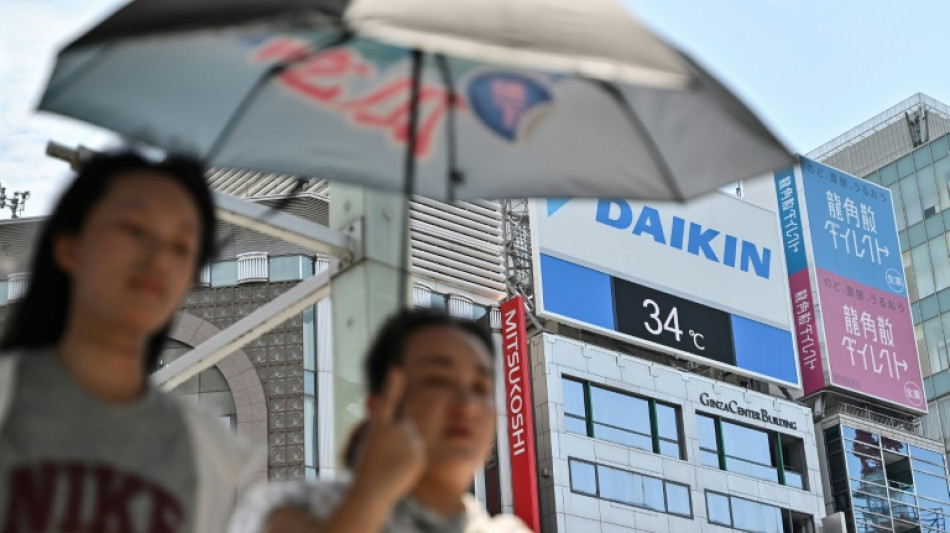
Japan experienced its hottest June on record, the weather agency said Tuesday, as climate change prompts sweltering heat waves across the globe.
"Japan's monthly average temperature in June was the highest for the month since statistics began in 1898," said the Japan Meteorological Agency.
With strong high-pressure systems in June staying in the region, the monthly average temperature ended 2.34 degrees Celsius higher than usual, the agency said.
The temperature of coastal waters near Japan also measured 1.2 degrees Celsius higher than usual, tying with June 2024 for the highest since data collection began in 1982, the agency said.
The body also had a further warning that is becoming routine for Japanese residents: "The next month is expected to continue to bring severe heat throughout the country."
The announcement came as scientists say human-induced climate change is making heatwave events more intense, frequent and widespread.
Brutal heat waves are currently sweeping Europe from France to Greece, while global footballers' union FIFPro has called for longer half-time breaks at next year's World Cup to mitigate the effects of extreme heat.
Japanese meteorologists have warned against drawing a direct link between specific weather conditions, like higher temperatures in a specific time, with climate change.
But they have observed a changing climate over many years that is causing unpredictable weather phenomena.
Japan's summer last year was the joint hottest on record, equalling the level seen in 2023, followed by the warmest autumn since records began 126 years ago.
Experts even warn that Japan's beloved cherry trees are blooming earlier due to warmer climate or sometimes even not fully blossoming because autumns and winters are not cold enough to trigger flowering.
The famous snowcap of Mount Fuji was also absent for the longest recorded period last year, not appearing until early November, compared with the average of early October.
Last week, the rainy season ended in the western region of Japan, the earliest date on record and around three weeks earlier than usual.
Raging typhoons in summers routinely have caused violent floods in Japan while brutal heat waves have resulted in deadly heat strokes among the elderly.
Increasingly dry winters have raised the risk of wildfires, with a northern area of Ofunato earlier this year seeing the nation's biggest forest fire in three decades.
At the same time, other areas have seen record snow falls that resulted in fatal accidents, traffic disruption, and higher avalanche risk.
H.Cho--CPN