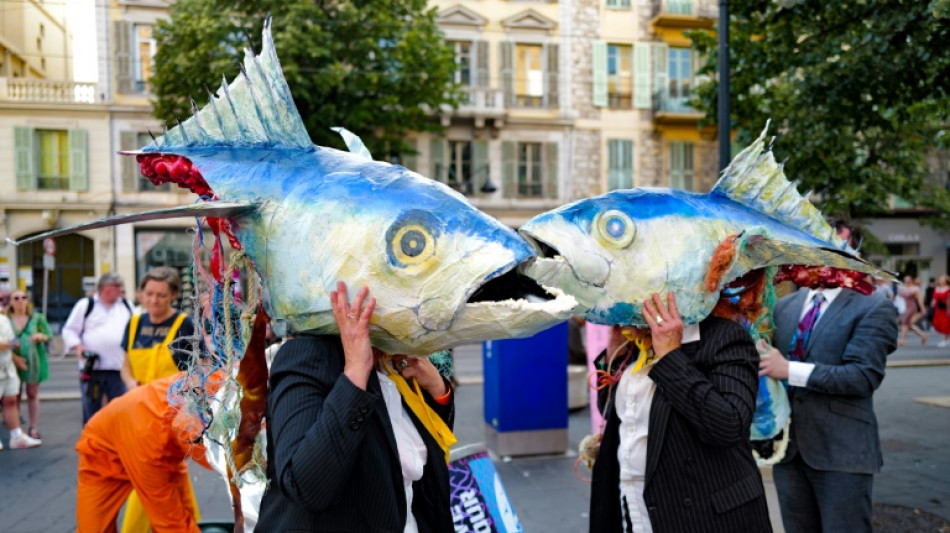
UN summit celebrates ocean protections, but drops fossil fuels / Photo: Valery HACHE - AFP

 Iran proposes Hormuz plan, Trump reportedly refuses
 El Nino rewrites the menu in the world's top restaurants

 Jay-Z rape accuser says she made 'false accusations'

 Trump's photo of Xi greeting carries signs of AI

 First US trial against TikTok to open Monday

 French literary prize removes novel from longlist after AI claims

 Trump accuser E. Jean Carroll finally has her damages

 Heavy fighting, internet disruption as Ethiopia conflict rages

 Asian markets mixed after oil gains

 UN approves resolution on dealing with rising sea levels

 Global stocks mostly fall as oil prices and bond yields rise

 Starbucks to close 250 more cafes in North America

 Stocks fall as oil prices rise and bonds back under pressure

 Top ECB official to resign to take up IMF role

 Eviction of pensioner puts Spain housing crisis in spotlight
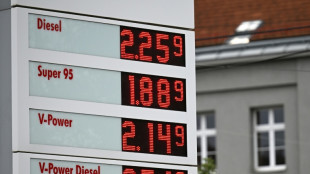 Average EU diesel price hits record 2.23 euros a litre: AFP analysis

 Whitetip Investments Marks 10 Years of Regulation, Transparency & Responsible Trading

 Stocks fall, oil prices rise as global bonds under pressure

 Hungary detects invasive spotted lanternfly for first time in EU

 Forex Expo Dubai 2026 Breaks Guinness World Record Again With 23,816 Attendees

 Asian markets fall on US-China jitters as leaders meet

 As Moscow steps up attacks, Kyiv residents brace for harsh winter

 Markets mixed as China's Xi arrives for US talks

 Archaeological 'breakthrough' could confirm origins of Paris

 Australian PM says OpenAI hacked government health website

A global oceans summit concludes Friday with nations taking major steps toward marine protection and vowing a showdown over deep-sea mining, but criticised for leaving fossil fuels off the agenda.
Countries hoping for new financial pledges to assist with combating rising seas and overfishing were also left disappointed at the UN Ocean Conference in France.
More than 60 heads of state and government joined thousands of business leaders, scientists and environmental campaigners over five days in the southern city of Nice.
The United Nations says the world's oceans are facing an "emergency" and the Nice gathering was just the third -- and the largest yet -- dedicated entirely to the seas.
- Treaty tide -
Activists unanimously praised concrete progress toward ratifying a landmark pact to protect marine life in the 60 percent of oceans that lie beyond national waters.
"This week's ratifications of the high seas treaty mark a major milestone for ocean action," said Rebecca Hubbard from the High Seas Alliance.
Some 19 countries formally ratified the treaty at Nice, taking the overall tally to 50. Sixty nations are needed to enact the treaty.
France's special envoy for the oceans, Olivier Poivre d'Arvor, said the numbers would be ready in time for a formal ratification ceremony in September in New York.
The treaty should then take effect in January 2026, he added.
- Plastic push -
The conference sought to rally global action on marine protection as countries prepare to tussle over global rules for deep-sea mining in July and a plastics treaty in August.
More than 90 ministers issued a symbolic call in Nice for the hard-fought plastics treaty to contain limits on consumption and production of new plastics, something opposed by oil-producing nations.
- Elephant in the room -
The summit rallied a defence of science and rules-based oversight of common resources -- most notably the unknown depths of the oceans -- in a direct rebuke of US President Donald Trump.
Trump was not present in Nice and rarely mentioned by name but his spectre loomed large as leaders backed the global multilateralism he has spurned.
In particular, leaders condemned Trump's push to fast-track seabed mining, vowing to resist his unilateral efforts to exploit the ocean floor.
- Seabed row -
Leaders "made it unmistakably clear: deep-sea mining is one of the biggest threats facing our ocean, and the world is saying no," said Sofia Tsenikli from the Deep Sea Conservation Coalition.
French President Emmanuel Macron called it "madness" while Brazil's Luiz Inacio Lula da Silva warned against a "predatory" race for critical minerals.
But a global alliance opposed to deep-sea mining, and spearheaded by France, only attracted four new members during the summit, taking the total to 37 nations.
Poivre d'Arvor said the alliance would flatly reject any call at a meeting of the International Seabed Authority next month to permit deep-sea exploration.
The authority, backed by the UN, has 169 member states.
- Overfishing -
Many nations took the opportunity to unveil plans to create vast new marine protected areas and restrict bottom trawling, which was recently captured in grisly detail in a new David Attenborough documentary.
Activists had wanted countries to go further, advocating for a total ban on the destructive fishing method that sees heavy nets dragged across the ocean floor.
- Missing millions -
Some 8.7 billion euros ($10 billion) was committed over the next five years by philanthropists and private investors for the sustainable development of ocean economies.
But pledges were less forthcoming from wealthy governments, with France announcing two million euros for climate adaptation in Pacific Island nations.
- Flat finish -
The summit will close later Friday with a joint political statement, negotiated over many months between nations, that critics slammed for omitting any reference to fossil fuels -- the key driver of ocean warming.
Laurence Tubiana, CEO at the European Climate Foundation, said Nice showed global cooperation was still possible "but let's not confuse signatures with solutions".
"No communique ever cooled a marine heatwave," she said.
Former US special climate envoy John Kerry, who was present in Nice, said in a statement that it was impossible to "protect the ocean without confronting the biggest root cause bringing it to the breaking point: the pollution from unabated fossil fuels pumped into the atmosphere".
S.F.Lacroix--CPN