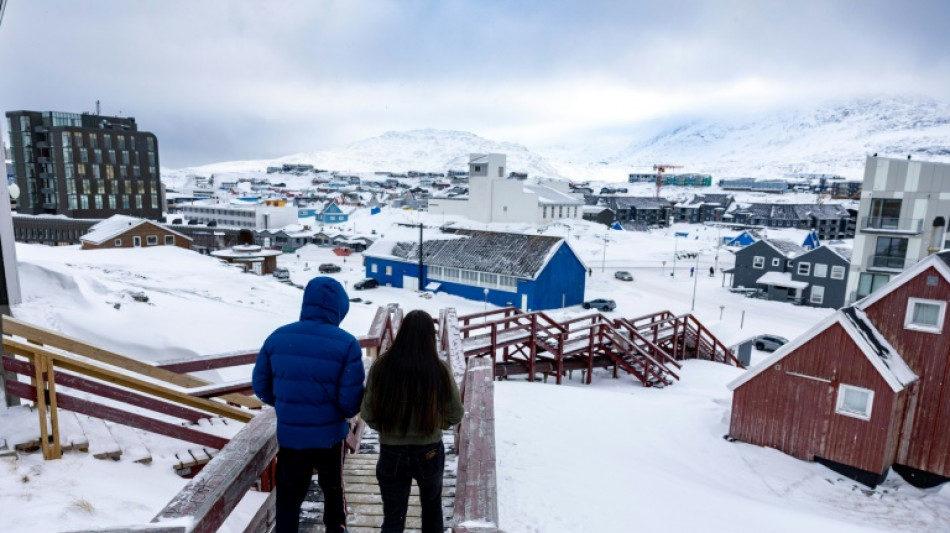
Greenland's mining bonanza still a distant promise / Photo: Odd ANDERSEN - AFP

 Kenya's economy faces climate change risks: World Bank

 'Beginning of the end': Relief but no party as French wildfire winds down

 Southern Europe 'becoming more flammable' in hotter climate, experts say

 Mammoth bones found on parched bed of Danube in Bulgaria

 MEXC Lists Grvt (GRVT) with $60,000 Worth of GRVT and 10,000 USDT in Airdrop+ Rewards
 George and Amal Clooney flee French home due to wildfire

 MEXC Ventures Supports Alpha Arena's APAC Debut at Coinfest Bali
 AI data centre supplier Zhongji InnoLight slips on Hong Kong debut
 May, June heatwaves caused 2,877 extra deaths in England: govt
 BMW profit down a third as carmaker plans job cuts
 Seoul extends losses as most Asian markets drop, oil rises again
 Gambling.com Group Is Now Grandstand
 Meet the astronomer digging into the Milky Way's 'fossils'
 AI data centre supplier Zhongji InnoLight falls on Hong Kong debut

 Samsung operating profit up 1,800% in second quarter on AI boom
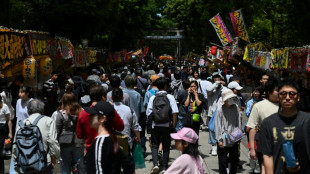 Japanese population below 120 million for first time in decades

 US actor Jared Leto denies latest accusations of sexual assault
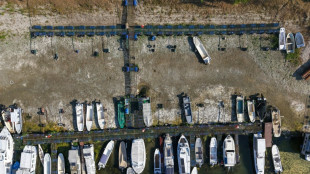 Danube drops to 'historic lows' as fresh heatwave hits
 BTS pulls out of Grammys after Asian pop category introduction
 OpenAI says rogue AI agent attack hit other companies
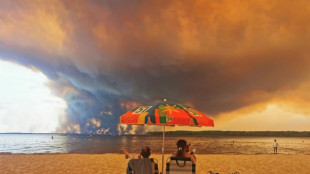 How an AFP beach snap became emblem of Europe's wildfire summer
 TRX Spot and Perpetuals Listing Launches on Backpack, Expanding Access to the TRON Ecosystem
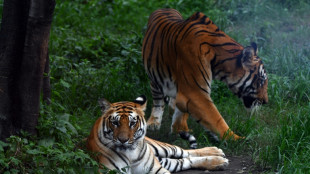 Nepal's tiger numbers climb 20 percent to estimated 429: survey
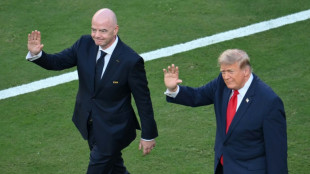 FIFA's plans to sell $4.2bn stake in its tournaments widely criticised

 BMW aims to cut 8,000 jobs by end 2027: company source
Before it could cast its first gold bar, Amaroq had to build a port and housing, repair a road, and ship over equipment -- a logistical nightmare highlighting the complexities of mining in inhospitable Greenland.
"This is obviously much, much harder than setting up any other business around the world," Eldur Olafsson, the head of the Canadian mining company, told AFP.
Amaroq operates one of only two active mines on the vast Arctic island, a region full of promise for mineral wealth but which has proven difficult to exploit.
From Ukraine, where US President Donald Trump wants to get his hands on natural resources, to the seabeds that numerous companies want to explore, minerals are today at the centre of major geopolitical and industrial ambitions.
Greenland remains almost entirely unexploited, and its minerals are seen as a potential springboard to independence, a goal backed by a majority of the island's 57,000 inhabitants.
Trump's stated ambitions to take over the Danish autonomous territory have only served to boost islanders' support for independence, and the timeframe for full sovereignty has been one of the main topics ahead of Greenland's March 11 legislative elections.
For many Greenlanders -- and probably Trump too -- the wealth generated by the minerals is front of mind.
They would likely generate enough revenue to replace the $565 million Denmark gives Greenland in annual subsidies.
With its underground riches, Greenland "could be a vital player" in the global mining industry, insists Thomas Varming, a geophysicist and consultant at the Geological Survey of Denmark and Greenland (GEUS).
"Many of these deposits that we have are actually crucial for the green transition: minerals that go into batteries -- lithium, graphite -- and also elements that go into super strong magnets that you use in wind turbines or your electric cars or if you want to electrify your trains," he explained.
But in order for those minerals to become a cash cow for Greenland, the price of raw materials has to go up, because right now it's not profitable enough to mine them.
Around 80 percent of Greenland is covered by ice, it has an extreme climate, very little infrastructure, and strict environmental considerations.
All those factors send operating costs soaring, while competitors like mining powerhouse China have few such issues.
- Red lines -
"There have been many mining projects on the table and the short version is: nothing has happened. There has simply not been a business case," said one economist.
Greenland Ruby, which operated a small ruby mine, went bankrupt last year.
"Mineral development is a very slow-moving business. It takes about 16 years to develop into a mine. And in that period of time, you just spend a lot of money. You don't earn a lot of money," stressed Naaja Nathanielsen, Greenland's Minister for Business and Mineral Resources.
"We have a lot of mines in the making, but they are still in this 16-year period," she told AFP in her office in Nuuk, the capital of Greenland.
She said eight companies were due to hold operating licences by the end of the year -- which doesn't necessarily mean there will be that many mines -- and around 80 exploration licences have also been issued.
Greenlandic authorities have drawn several red lines when it comes to mining: no uranium, no oil and gas, and no deep sea mining.
"We are very reliant on our fisheries, and we as a tourist nation try to brand ourselves as a green and pristine place in the world," Nathanielsen said.
"We don't want that image to be tarred by environmental hazards."
For now, the mining industry accounts for just a minute part of Greenland's economy, especially since many of the jobs go to foreigners due to a lack of skilled locals.
Even though the United States and the European Union have both signed memorandums of cooperation with Greenland, a mineral bonanza remains promising but distant, leaving the island without a key pillar needed for its economic independence.
"We are not developing the mineral sector to become independent. We're developing it to get revenue for the Greenlandic society and people, and better welfare. And at some point, we will get to independence as well," Nathanielsen said.
D.Avraham--CPN