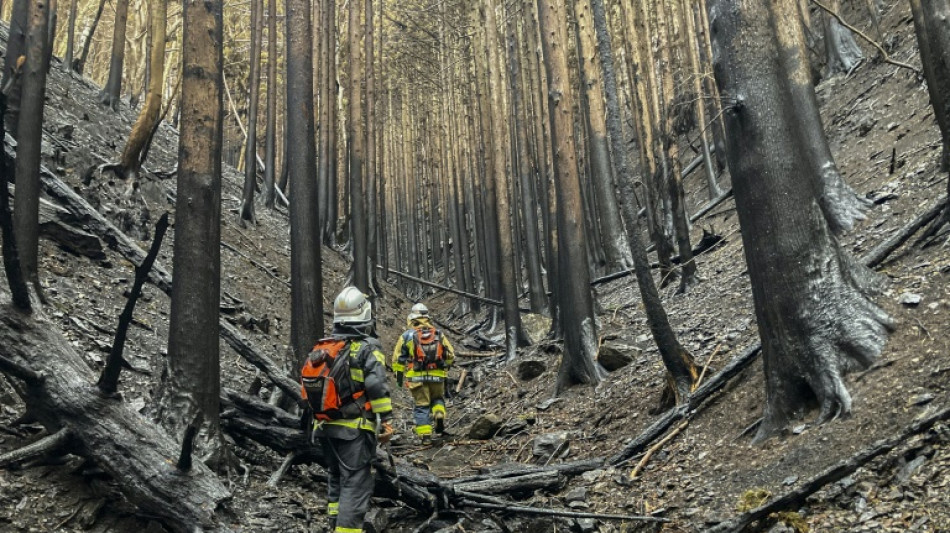
Rain checks spread of Japan wildfire / Photo: Handout - Fire and Disaster Management Agency/AFP

 Kenya's economy faces climate change risks: World Bank

 'Beginning of the end': Relief but no party as French wildfire winds down

 Southern Europe 'becoming more flammable' in hotter climate, experts say

 Mammoth bones found on parched bed of Danube in Bulgaria

 MEXC Lists Grvt (GRVT) with $60,000 Worth of GRVT and 10,000 USDT in Airdrop+ Rewards

 George and Amal Clooney flee French home due to wildfire

 MEXC Ventures Supports Alpha Arena's APAC Debut at Coinfest Bali

 AI data centre supplier Zhongji InnoLight slips on Hong Kong debut

 May, June heatwaves caused 2,877 extra deaths in England: govt

 BMW profit down a third as carmaker plans job cuts

 Seoul extends losses as most Asian markets drop, oil rises again

 Gambling.com Group Is Now Grandstand

 Meet the astronomer digging into the Milky Way's 'fossils'

 AI data centre supplier Zhongji InnoLight falls on Hong Kong debut

 Samsung operating profit up 1,800% in second quarter on AI boom

 Japanese population below 120 million for first time in decades

 US actor Jared Leto denies latest accusations of sexual assault

 Danube drops to 'historic lows' as fresh heatwave hits
 BTS pulls out of Grammys after Asian pop category introduction
 OpenAI says rogue AI agent attack hit other companies

 How an AFP beach snap became emblem of Europe's wildfire summer

 TRX Spot and Perpetuals Listing Launches on Backpack, Expanding Access to the TRON Ecosystem

 Nepal's tiger numbers climb 20 percent to estimated 429: survey
 FIFA's plans to sell $4.2bn stake in its tournaments widely criticised

 BMW aims to cut 8,000 jobs by end 2027: company source

Rain appears to have halted the spread of Japan's worst wildfire in more than half a century, officials said Thursday, as residents expressed relief the smoke was gone.
The blaze had raged around the northern city of Ofunato for more than a week, killing one person and forcing more than 4,500 residents to evacuate their homes.
The rain, which began falling Wednesday following a record dry period, had helped firefighting efforts, a local fire official said.
"Thanks in part to the rain, the situation has subsided to an extent," Ofunato Mayor Kiyoshi Fuchigami told a regular briefing.
"We realise many residents are aching to return home," he said, adding that evacuation orders would be lifted when safety was confirmed.
Several columns of white smoke and fire sources persisted during the day, officials said.
"The fires haven't been fully put out yet," another Ofunato official told the briefing.
Residents were more positive, however.
"I'm relieved to see no smoke", one elderly woman told public broadcaster NHK, while a man said he was "very happy that we had rain yesterday".
The wildfire burnt about 2,900 hectares (7,170 acres) -- around half the size of Manhattan -- making it Japan's largest in more than 50 years, surpassing the 2,700 hectares engulfed by a 1975 fire on Hokkaido island.
Japan endured its hottest summer on record last year as climate change pushes up temperatures worldwide.
Then in February, Ofunato received just 2.5 millimetres (0.1 inches) of rainfall -- breaking the previous record low for the month of 4.4 millimetres in 1967 and well below the average of 41 millimetres.
At least 78 buildings are believed to have been damaged, although details are still being assessed, according to the fire agency.
The number of wildfires in Japan has declined since a 1970s peak.
However, there were about 1,300 in 2023, concentrated in the period from February to April when the air dries out and winds pick up.
Greg Mullins, a former fire and rescue commissioner for the Australian state of New South Wales, told AFP this fire as well as the recent ones in Los Angeles were "highly unusual" because they took place in the cooler winter months.
"In both cases the fires were preceded by hot summers, which increased evaporation and drying of vegetation, followed by large rainfall deficits that parched the landscape," he said.
"This is a common by-product of climate change," said Mullins, a founder of the Emergency Leaders for Climate Action group.
L.K.Baumgartner--CPN