-
 Germany urges EU action against China to defend carmakers
-
Nepal floods among 'most challenging' disasters: WFP

-
 Japan eyes changing prostitution law to punish sex buyers
-
Kids and social media: what would change under new EU law

-
 Modi pitches India as global chipmaking hub
-
King Charles to call on tech giants for 'reassurances' over AI

-
 Ukraine plans record defence spending in 2027
-
STARPRIME Responds to Diverging Gold Market Demand with AM/PM Fixing and XAU24/7

-
 NASA scan discovers new, 'once in a century' Moon crater
-
Where the US-China tariff row stands ahead of White House summit

-
 Most stocks rise as Fed hikes and indicates drive to curb inflation
-
Indonesia cash-for-photos scheme turns animal hunters into protectors

-
 UK-Sudanese author pens book to give children 'African history of Africa'
-
Argentine judge orders suspension of Falklands oil project

-
 US Congress passes sweeping Russia sanctions bill
-
US Fed raises rates to tackle 'too high' inflation, irking Trump

-
 US stocks fall, dollar gains after Fed lifts interest rates
-
Turkey releases 106 protesters, jails more LGBTQ activists

-
 US Fed raises rates to tackle 'too high' inflation in move sure to rile Trump
-
Candidate for UN chief calls for AI regulation akin to nuclear weapons

-
 US Fed raises rates to battle inflation in move likely to rile Trump
-
'We're losing control,' AI pioneer Yoshua Bengio tells AFP

-
 US House faces test on sweeping Russia sanctions bill
-
IR-MED and Dice Technologies Announce collaboration to Evaluate and Advance Pressure-Injury Prevention Platform in Japan

-
 British PM says to make 'difficult decisions' as inflation rises
-
Watts, Pitt, Cruz to light up Spain's top film festival

-
 Global fuel price demos: a round-up
-
Toogood Gold's Table Mountain Sits in the Shadow of a Nevada Gold Rush

-
 Leverate Launches MCP for Traders to Connect AI Assistants With Trading Platforms
-
MEXC July–August Security Report: 38.66M USDT in Risk Funds Intercepted, Futures Insurance Fund Hits 792M USDT

-
 MEXC Launches $1M "Discover Your Wall Street DNA" Campaign to Help Traders Find Their Market Fit
-
Emporio Armani names Dario Vitale new creative director

-
 Stocks edge higher ahead of US Fed rate call
-
EU to ban social media for under 13s, curb access until 15

-
 BASIS.pro Expands On-Chain Infrastructure with XDC Network Partnership and Zypher DAO as Auto Earn Goes Live
-
Wildfires push endangered Sumatran elephants to brink: Indonesian NGO

-
 Pickle-flavoured tart? AI inspires Japan's convenience stores
-
Bank of Japan set to raise rates under pressure from inflation, US

-
 EU chief hosts Canada's Carney in push to 'deepen' alliance
-
EU chief to unveil social media, gaming curbs for under-15s

-
 Meta chief pushes back on AI slowdown calls
-
'Resident Evil' film brings video game's ethos to the big screen

-
 US Fed to deliver rate decision with markets betting on hike
-
GA-ASI Mojave First UAS To Complete Battlefield Short Field Ops

-
 i-payout Expands U.S. Money Transmitter Licensing Footprint and Advances European EMI Strategy
-
Sanders, Bannon warn of AI dangers in rare US left-right alignment

-
 US Senate crypto bill collapses amid partisan deadlock
-
Empty benches as schools reopen in Venezuela's quake-hit Guaira

-
 OpenAI, Anthropic and Google are working to create an AI standards body
-
Tiny English village holds 'independence' vote over asylum seeker housing

Climate change: A farm in Rotterdam
An overview of the issue of climate change and its effects on agriculture?
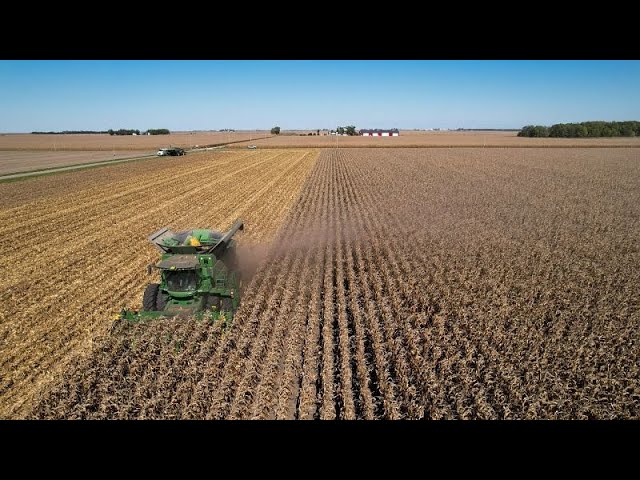
Climate change is no longer just a future threat, but a present reality that is already having a significant impact on agriculture worldwide. Rising temperatures, changing precipitation patterns and an increase in extreme weather events pose immense challenges for farmers and threaten
The global average temperature has increased by about 1.1 degrees Celsius since pre-industrial times. This warming is leading to changes in the growing conditions for many crops. Some plant species are sensitive to higher temperatures, which can lead to reduced yields and quality losses. For example, grain filling can be affected in
Changing precipitation patterns and water scarcity
Climate change also affects precipitation patterns, leading to droughts in some regions and flooding in others. Water scarcity is becoming an increasingly pressing problem, especially in areas of intensive agricultural use. Without sufficient irrigation, plants suffer from drought stress, which inhibits growth and reduces yields. On the other hand, heavy rainfall and flooding
Increase in extreme weather events
More frequent and intense extreme weather events such as heat waves, storms and frost periods are having a significant impact on agricultural production. Such events can destroy entire harvests, damage infrastructure and have long-term effects on soil fertility. Farmers have to adapt to unpredictable weather conditions, which makes
Spread of pests and diseases
With rising temperatures and changing climate conditions, pests and plant diseases are also spreading into new areas. Insects, fungi and viruses that were previously limited by climatic conditions can now infest larger areas. This increases the demand for pesticides and poses additional challenges for organic farming.
Impacts on animal husbandry
Livestock farming is also affected by climate change. Heat stresses farm animals and can lead to reduced growth, lower milk production and increased mortality rates. In addition, climate change affects the availability of forage crops and water, which makes animal husbandry even more difficult.
Adapting cultivation practices: Crop rotation, conservation tillage and the use of cover crops can maintain soil fertility and increase resilience to extreme weather.
Breeding climate-resistant varieties: Developing plants that can better cope with heat, drought or flooding is crucial for future food security.
Efficient irrigation systems: Technologies such as drip irrigation reduce water consumption and help to use water more efficiently.
Early warning systems: Weather forecasts and warning systems can help farmers to be better prepared for extreme weather events.
Diversification: Diversifying crops and income sources helps farmers to better cushion risks.
Policy support and global cooperation
Tackling the effects of climate change on agriculture requires policy support and international cooperation. Investments in research and development, education, and infrastructure are necessary to support farmers in their adaptation efforts. Furthermore, it is important to reduce global emissions to mitigate further climate change.
Conclusion
Climate change poses a serious threat to agriculture and global food security. However, the effects can be mitigated through proactive adaptation measures, innovation and political support. It is crucial to act now to safeguard agriculture for future generations and ensure the sustainable nutrition of the world's population.

Russia and the terrorism against Ukraine

Next Chancellor of Germany and Trump

Germany doesn't want any more migrants?

US Federal Reserve with “announcement”
EU: Greenpeace warns of dying farms

Terrorist state Iran: ‘We are ready to attack Israel again’

EU: Austrian elections shake Establishment

Ukraine: Recruiters searched Kyiv venues

Polish PM and the danger of asylum seekers

Germany: The fight against economic migrants

Putin's War Will Go Bankrupt if the Oil Prices Drop