Coin Press - Will US Forces Invade Iran?

NYSE - LSE
RBGPF -19.57% 69 $
JRI 0.71% 12.61 $
BCE -3.8% 24.45 $
BCC -2.57% 73.2 $
RELX 1.07% 33.59 $
VOD 0.53% 15.21 $
NGG 1.31% 87.99 $
RYCEF 5.63% 15.99 $
GSK 1.23% 56.69 $
CMSC 0.23% 22.04 $
RIO -0.38% 94.45 $
CMSD 0.49% 22.26 $
AZN 1.36% 203.49 $
BTI 0.67% 58.28 $
BP 2.02% 47.12 $

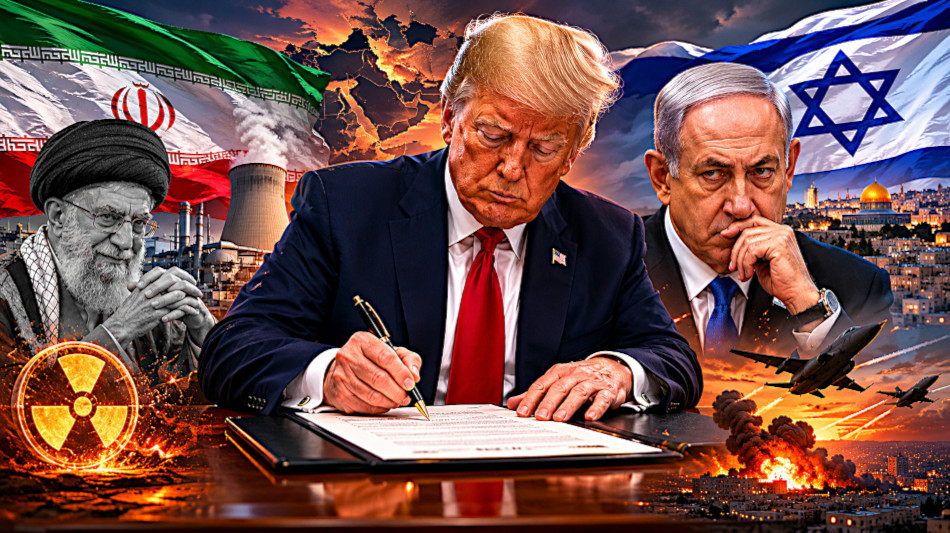
Will US Forces Invade Iran?


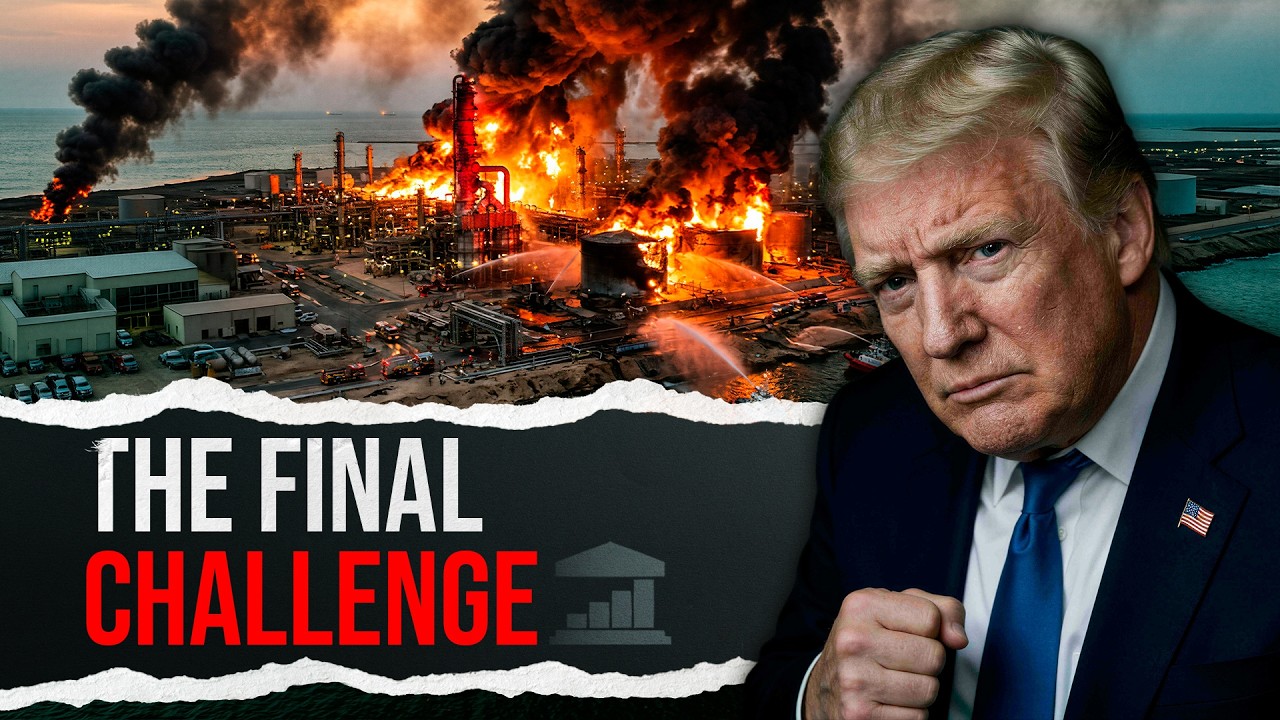
When the United States and Israel launched Operation Epic Fury on 28 February 2026, President Donald Trump said the campaign would be decisive. In speeches since then he has repeated four core objectives: destroy Iran’s ballistic missiles and the factories that build them; annihilate the Iranian navy; sever Tehran’s support for proxy militias; and ensure the Islamic Republic never acquires a nuclear weapon. Officials insist the mission is on course and that Iran’s navy and air force have been “eliminated,” with more than 12,000 Iranian targets struck and more than 155 vessels destroyed. The White House has described the war as a short, focused campaign.

Military records and independent reporting show a more complicated picture. Before the war Iran possessed an estimated 2,500 ballistic missiles. Although U.S. and Israeli strikes have degraded production lines and reduced Iran’s launch rate by about 90 %, intelligence sources say only about one‑third of the arsenal has been destroyed and that Tehran retains a modest capacity to hit Israel and the Gulf. The bombing has extended beyond military targets; Iranian officials say strikes have hit pharmaceutical plants, desalination facilities and other industrial sites, while the Iranian Red Crescent reports hundreds of civilian casualties. More than 2,000 Iranians have been killed, according to Al Jazeera, and U.S. Central Command acknowledges that thirteen American service members have died. Israel’s simultaneous campaign in Lebanon has displaced 1.2 million people, and Gaza’s humanitarian relief has been halted after Israel closed the Rafah crossing.

Shifting goals and international unease
The justifications for Operation Epic Fury have expanded. Trump’s initial pledge to aid Iranian protesters was followed by calls for regime change, then by claims of pre‑empting an imminent Iranian attack and of avenging alleged plots against the president. As the war unfolded, officials such as Secretary of State Marco Rubio and Secretary of War Pete Hegseth insisted the mission was narrowly focused on missile and naval destruction. Analysts note that the rhetoric has evolved to fit battlefield developments, creating confusion about the operation’s true purpose. Critics, including international legal scholars, argue that the campaign risks undermining the UN Charter and could normalise unilateral war. The UN High Commissioner for Human Rights has warned that the conflict’s spread “like wildfire” demands urgent de‑escalation.

Allies are divided. Israel and several Gulf states have provided logistical support, but Spain, France and Italy have restricted U.S. access to airspace and bases. Britain is hosting talks on reopening the Strait of Hormuz, while China and Pakistan have proposed a ceasefire plan. Meanwhile, Iran’s regional partners continue to launch rockets and drones at Israel and U.S. facilities, and Iranian officials say they have “zero trust” in Washington. The prolonged closure of the Strait has pushed global oil prices higher and caused what some economists describe as the worst trade rupture in eighty years. Australia’s prime minister warned his citizens to prepare for months of economic turbulence.

Ground operations: speculation and reality
Talk of an imminent U.S. invasion of Iran has intensified after the Pentagon disclosed preparations for limited ground operations. According to officials, plans under consideration involve raids by special operations forces and Marines on Kharg Island and coastal areas near the Strait of Hormuz. Additional forces from the 82nd Airborne Division and a Marine Expeditionary Unit have already arrived in the region. White House press secretary Karoline Leavitt stressed that preparing options does not mean a final decision has been made. Supporters argue that seizing small pieces of terrain could help reopen the waterway and destroy remaining missile batteries; critics counter that such raids would expose U.S. troops to drones, mines and a determined Iranian defence.

Military scholars caution that history offers little comfort for a land war in Iran. Iran is a vast country with rugged terrain and a large standing army and Revolutionary Guard corps. Control of the 200‑kilometre‑long Strait requires keeping the entire waterway open, while Iran only has to close a single chokepoint. Limited raids might not compel Tehran to surrender; they could instead harden Iranian resolve, invite Russian assistance and produce U.S. casualties that erode domestic support. Retired officers note that the last major amphibious operation conducted by U.S. forces was the Incheon landing in the Korean War, underscoring the logistical difficulty of large‑scale landings in hostile territory—a point echoed by commenters online.

Voices from the public sphere
Public reactions reveal both anxiety and bravado. Some commenters salute the “fire, boom” rhetoric Trump used to describe air strikes, while others lampoon it as reckless and unbecoming of a head of state. Many question the wisdom of seeking “undisputed victory” in a country as large and resilient as Iran, warning that prolonged fighting will leave the rest of the world to “suffer for no good reason.” References to historic amphibious operations hint at scepticism about a ground invasion’s feasibility, and several contributors object to the war proceeding without congressional approval. Others voice fear that seizing Iranian oil facilities would be seen globally as plunder. There are, however, voices that praise the campaign and suggest that critics are simply “haters.” Taken together, the comments reflect a divided public grappling with the tension between perceived national security imperatives and the moral, legal and economic costs of war.

An uncertain path forward
Despite confident pronouncements from Washington, the path to a decisive end appears uncertain. Iran’s ability to launch drones and missiles has been dented but not destroyed; its proxies remain active across the Middle East; and the Strait of Hormuz—a lifeline for global commerce—remains contested. The domestic mood in the United States is mixed, and international support is fragmenting. Limited ground raids could deliver symbolic victories but risk entangling U.S. forces in exactly the kind of drawn‑out conflict Trump vowed to avoid. As diplomats convene and militaries mobilise, the world watches to see whether the current campaign marks the prelude to a broader invasion or the crest of an offensive that will soon wind down.


Featured


Long live Ukraine - Хай живе Україна - Да здравствует Украина

Es lebe die Ukraine - Да здравствует Украина - Long live Ukraine - Хай живе Україна - Nech žije Ukrajina - Länge leve Ukraina - תחי אוקראינה - Lang leve Oekraïne - Да живее Украйна - Elagu Ukraina - Kauan eläköön Ukraina - Vive l'Ukraine - Ζήτω η Ουκρανία - 乌克兰万岁 - Viva Ucrania - Ať žije Ukrajina - Çok yaşa Ukrayna - Viva a Ucrânia - Trăiască Ucraina - ウクライナ万歳 - Tegyvuoja Ukraina - Lai dzīvo Ukraina - Viva l'Ucraina - Hidup Ukraina - تحيا أوكرانيا - Vivat Ucraina - ขอให้ยูเครนจงเจริญ - Ucraina muôn năm - ژوندی دی وی اوکراین - Yashasin Ukraina - Озак яшә Украина - Živjela Ukrajina - 우크라이나 만세 - Mabuhay ang Ukraine - Lenge leve Ukraina - Nyob ntev Ukraine - Да живее Украина - გაუმარჯოს უკრაინას - Hidup Ukraine - Vivu Ukrainio - Længe leve Ukraine - Živjela Ukrajina - Жыве Украіна - Yaşasın Ukrayna - Lengi lifi Úkraína - Lank lewe die Oekraïne

Stargate project, Trump and the AI war...

In a dramatic return to the global political stage, former President Donald J. Trump, as the current 47th President of the United States of America, has unveiled his latest initiative, the so-called ‘Stargate Project,’ in a bid to cement the United States’ dominance in artificial intelligence and outpace China’s meteoric rise in the field. The newly announced programme, cloaked in patriotic rhetoric and ambitious targets, is already stirring intense debate over the future of technological competition between the world’s two largest economies.According to preliminary statements from Trump’s team, the Stargate Project will consolidate the efforts of leading American tech conglomerates, defence contractors, and research universities under a centralised framework. The former president, who has long championed American exceptionalism, claims this approach will provide the United States with a decisive advantage, enabling rapid breakthroughs in cutting-edge AI applications ranging from military strategy to commercial innovation.“America must remain the global leader in technology—no ifs, no buts,” Trump declared at a recent press conference. “China has been trying to surpass us in AI, but with this new project, we will make sure the future remains ours.”Details regarding funding and governance remain scarce, but early indications suggest the initiative will rely heavily on public-private partnerships, tax incentives for research and development, and collaboration with high-profile venture capital firms. Skeptics, however, warn that the endeavour could fan the flames of an increasingly militarised AI race, raising ethical concerns about surveillance, automation of warfare, and data privacy. Critics also question whether the initiative can deliver on its lofty promises, especially in the face of existing economic and geopolitical pressures.Yet for its supporters, the Stargate Project serves as a rallying cry for renewed American leadership and an antidote to worries over China’s technological ascendancy. Proponents argue that accelerating AI research is paramount if the United States wishes to preserve not just military supremacy, but also the economic and cultural influence that has typified its global role for decades.Whether this bold project will succeed—or if it will devolve into a symbolic gesture—remains to be seen. What is certain, however, is that the Stargate Project has already reignited debate about how best to safeguard America’s strategic future and maintain the balance of power in the fast-evolving arena of artificial intelligence.

Iran war fuels terror risks

Terrorism fears, energy markets and geopolitical calculations have become deeply intertwined since the United States and Israel launched their assault on Iran. The assassination of Ayatollah Ali Khamenei and the sustained bombing campaign have unleashed ripple effects far beyond the Middle East. Officials across Europe and Asia warn that the conflict could trigger a wave of transnational terrorism and drive a spike in energy prices that would undermine economic stability.Across Europe, security services have been tracking a spate of attacks and foiled plots linked to Iranian networks. Recent analyses note that Iran has expanded its collaboration with criminal groups abroad, using them to intimidate dissidents and target journalists, politicians and Jewish communities in Western countries. Investigators in Germany found that a former motorcycle‑gang member was sponsored by Iran to plan an assault on a synagogue in Bochum, while U.S. prosecutors say members of a Russian organised crime network were paid to plot the killing of an Iranian‑American activist. Authorities warn that hiring criminals gives Tehran plausible deniability and allows it to contract violence without sustaining a permanent terrorist infrastructure. Security analysts caution that dissidents and activists who celebrated the Supreme Leader’s demise may become targets for Iran’s violence‑for‑hire networks, especially in countries that support the U.S. campaign. They also point out that Iranian agents embedded in embassies and other institutions could be activated to sabotage military bases or diplomatic facilities if the regime feels cornered.The immediate threat is not purely hypothetical. Since the war began on 28 February, at least eight incidents across Western and Eastern Europe have been linked to suspected Iranian sleeper cells. A network in Baku was dismantled after plotting to bomb the Israeli embassy, a synagogue and an oil pipeline; British police arrested four suspected operatives in London; improvised explosive devices detonated outside the U.S. embassy in Oslo and Jewish institutions in Liège, Rotterdam and Amsterdam; and a financial building in Amsterdam was bombed. Security services also arrested suspected spies surveilling a British nuclear submarine base. A new militant group calling itself Harakat Ashab al‑Yamin al‑Islamia claimed responsibility for some attacks and threatened more violence. Analysts warn that the group may be a front for Iran’s Revolutionary Guard or a disinformation campaign, but the attacks have already heightened anxiety across the continent. European governments say they have thwarted more than one hundred Iranian‑linked plots since 1979, and the current conflict has revived fears of reactivated sleeper cells.Beyond orchestrated networks, experts worry about individuals seeking revenge. The martyrdom narrative surrounding Khamenei’s death could motivate lone offenders who view violence as a sacred duty. U.S. investigators are treating the 1 March mass shooting at an Austin, Texas bar—where the perpetrator wore a hoodie emblazoned with an Iranian flag—as a terrorist attack potentially linked to the war. Similar shootings in Ontario and an attempted attack on a Michigan synagogue are under investigation for possible Iranian inspiration. National security officials caution that such events may be the tip of the spear and that other radicalised individuals could strike in Europe or North America. European Union intelligence services fear that Iranian militias or allied groups could exploit the chaos to free jihadist prisoners, amplifying the risk of an Islamic State resurgence.The conflict’s shockwaves are also threatening Europe’s energy security. The Strait of Hormuz, through which about one‑fifth of global oil and liquefied natural gas once transited, is effectively closed by Iranian attacks on tankers and infrastructure. European energy officials warn that kerosene shipments from Middle Eastern refineries will cease by early April and that regional stockpiles may be insufficient to prevent spot shortages and soaring prices. Natural‑gas prices in Europe have jumped more than seventy per cent since the war began as traders fear extended disruption. Analysts note that Europe depends on the Middle East for about fifteen per cent of its jet fuel and has not fully refilled depleted gas storage after cutting Russian pipeline supplies. They caution that Asia’s large economies—China, Japan, South Korea and Taiwan—could outbid Europe for scarce liquefied natural gas cargoes, driving prices even higher.Public frustration over Europe’s vulnerability is mounting. Commentary on social media reflects a perception that European leaders undermined their own security by shutting down nuclear reactors, blocking gas projects and relying on imports. Users lament the high cost of electricity and heating, argue that environmental policies left Europe unprepared for a supply shock and demand greater energy self‑sufficiency. Some accuse left‑wing governments of sacrificing economic resilience to ideological goals; others fear that Gulf producers could further restrict shipments and force rationing. These grievances, while anecdotal, illustrate how the war has become a lightning rod for broader discontent about energy policy.Similar tensions are developing in Asia. Southeast Asian governments have adopted a neutral stance toward the conflict, but analysts warn that Iran’s retaliatory measures could activate dormant networks across the region. With the world’s largest Muslim population concentrated in Indonesia and significant minorities across Malaysia, Brunei, Myanmar, the Philippines and Thailand, the region is watching for sectarian spillover. Experts note that Iran’s proxy Hezbollah staged operations in Thailand in the 1990s and caution that if the regime feels cornered it could call on sympathisers to mount attacks. Regional leaders worry that rising oil prices and travel risks will undermine tourism and that hundreds of thousands of migrant workers in the Middle East could be displaced, cutting remittance flows and dampening growth. The same sources emphasise that the war’s economic fallout complicates tariff negotiations with Washington and forces governments to balance diplomatic relations with domestic stability.Diplomats in Hanoi, Kuala Lumpur and Singapore are also recalibrating energy and trade strategies. Some neutral countries with high growth ambitions fear that prolonged instability will push inflation higher and disrupt supply chains. Thailand has formed a “war room” to manage the crisis after a commercial ship flying its flag was attacked by Iranian forces, while Vietnam and Indonesia are reconsidering trade pacts linked to U.S. policy. These debates underscore how the Iran conflict is reshaping economic planning across Asia.The broader geopolitical stakes are immense. Analysts warn that Iran’s collaboration with organised crime, the activation of sleeper cells, potential lone‑wolf attacks and the prospect of state‑led sabotage blur the line between war and terrorism. At the same time, the closure of strategic waterways has sparked fears of a prolonged energy crisis that could slow growth and stoke political unrest. Public dissatisfaction with energy policy and security concerns is intensifying across Europe and Asia. Unless the conflict de‑escalates and governments bolster counter‑terrorism cooperation and diversify energy supplies, the war in Iran could trigger a major crisis on two continents.