-
 Germany urges EU action against China to defend carmakers
-
Nepal floods among 'most challenging' disasters: WFP

-
 Japan eyes changing prostitution law to punish sex buyers
-
Kids and social media: what would change under new EU law

-
 Modi pitches India as global chipmaking hub
-
King Charles to call on tech giants for 'reassurances' over AI

-
 Ukraine plans record defence spending in 2027
-
STARPRIME Responds to Diverging Gold Market Demand with AM/PM Fixing and XAU24/7

-
 NASA scan discovers new, 'once in a century' Moon crater
-
Where the US-China tariff row stands ahead of White House summit

-
 Most stocks rise as Fed hikes and indicates drive to curb inflation
-
Indonesia cash-for-photos scheme turns animal hunters into protectors

-
 UK-Sudanese author pens book to give children 'African history of Africa'
-
Argentine judge orders suspension of Falklands oil project

-
 US Congress passes sweeping Russia sanctions bill
-
US Fed raises rates to tackle 'too high' inflation, irking Trump

-
 US stocks fall, dollar gains after Fed lifts interest rates
-
Turkey releases 106 protesters, jails more LGBTQ activists

-
 US Fed raises rates to tackle 'too high' inflation in move sure to rile Trump
-
Candidate for UN chief calls for AI regulation akin to nuclear weapons

-
 US Fed raises rates to battle inflation in move likely to rile Trump
-
'We're losing control,' AI pioneer Yoshua Bengio tells AFP

-
 US House faces test on sweeping Russia sanctions bill
-
IR-MED and Dice Technologies Announce collaboration to Evaluate and Advance Pressure-Injury Prevention Platform in Japan

-
 British PM says to make 'difficult decisions' as inflation rises
-
Watts, Pitt, Cruz to light up Spain's top film festival

-
 Global fuel price demos: a round-up
-
Toogood Gold's Table Mountain Sits in the Shadow of a Nevada Gold Rush

-
 Leverate Launches MCP for Traders to Connect AI Assistants With Trading Platforms
-
MEXC July–August Security Report: 38.66M USDT in Risk Funds Intercepted, Futures Insurance Fund Hits 792M USDT

-
 MEXC Launches $1M "Discover Your Wall Street DNA" Campaign to Help Traders Find Their Market Fit
-
Emporio Armani names Dario Vitale new creative director

-
 Stocks edge higher ahead of US Fed rate call
-
EU to ban social media for under 13s, curb access until 15

-
 BASIS.pro Expands On-Chain Infrastructure with XDC Network Partnership and Zypher DAO as Auto Earn Goes Live
-
Wildfires push endangered Sumatran elephants to brink: Indonesian NGO

-
 Pickle-flavoured tart? AI inspires Japan's convenience stores
-
Bank of Japan set to raise rates under pressure from inflation, US

-
 EU chief hosts Canada's Carney in push to 'deepen' alliance
-
EU chief to unveil social media, gaming curbs for under-15s

-
 Meta chief pushes back on AI slowdown calls
-
'Resident Evil' film brings video game's ethos to the big screen

-
 US Fed to deliver rate decision with markets betting on hike
-
GA-ASI Mojave First UAS To Complete Battlefield Short Field Ops

-
 i-payout Expands U.S. Money Transmitter Licensing Footprint and Advances European EMI Strategy
-
Sanders, Bannon warn of AI dangers in rare US left-right alignment

-
 US Senate crypto bill collapses amid partisan deadlock
-
Empty benches as schools reopen in Venezuela's quake-hit Guaira

-
 OpenAI, Anthropic and Google are working to create an AI standards body
-
Tiny English village holds 'independence' vote over asylum seeker housing

Al-Qaida’s growing ambitions
In recent years, Al‑Qaida has quietly restructured and expanded key elements of its network — from training camps and regional affiliates in Afghanistan and beyond, to renewed focus on propaganda and recruitment through modern communications. This resurgence, though still fragmented, increasingly suggests that Al-Qaida is laying groundwork not only for sporadic terror attacks, but for establishing durable footholds which could evolve into de facto zones of control — a development that should alarm European security institutions.
Once seen as largely diminished with the removal of high-profile leadership, Al-Qaida has demonstrated remarkable resilience. Its decentralized “network of networks” model enables local affiliates and loosely connected cells to operate with considerable autonomy, while still drawing ideological coherence and logistical support from the core. This model lowers entry barriers for local militant groups inspired by its ideology — a subtle but potent evolution from the classic “top-down” terror organization.
Moreover, Al-Qaida’s adoption of new technologies complicates detection. Terrorist actors increasingly rely on encrypted platforms, the dark web, and even generative-AI tools to recruit, radicalize and coordinate operations. This digital shift enables remote radicalization and planning, reducing the need for physical sanctuaries — but also masking activities from traditional intelligence and law-enforcement scrutiny.
Regions of instability — such as parts of the Middle East, North Africa, and the Sahel — have become fertile ground for Al-Qaida’s expansion. These zones, often neglected in public discourse, now serve as incubators for networks that may aim to export influence, operatives, or refugees toward Europe. Historical experience shows that even small cells — when radicalized, organized, and motivated — can inflict damage beyond their geographical origins.
For Europe, the threat lies not only in headline-grabbing terror attacks, but in the gradual erosion of security through infiltration, radicalization, sleeper-cells, and covert networks. Should Al-Qaida succeed in consolidating territories or safe havens, the challenge would shift from reactive counterterrorism to a strategic struggle over long-term stability.
Now more than ever, European governments and institutions must treat Al-Qaida as a dynamic, evolving network — not a relic of the past. Proactive, coordinated efforts in intelligence-sharing, deradicalization, monitoring of migration flows, and disruption of online propaganda are crucial. Ignoring the signs of Al-Qaida’s silent reorganization would be a dangerous gamble: the consequences could redefine Europe’s security landscape for decades.
Taiwan: Is the "Silicon Shield" collapsing?
Iran lifts Dollar, sinks Euro

Germany doesn't want any more migrants?
Russia's "Alliance" in the Balkans is sinking
Ukraine: Problem with the ceasefire?
Nuclear weapons for Poland against Russia?
Canada challenges Trump on Tariffs
Trump, Putin and the question: What now?
Israel escalates War to crush Hamas
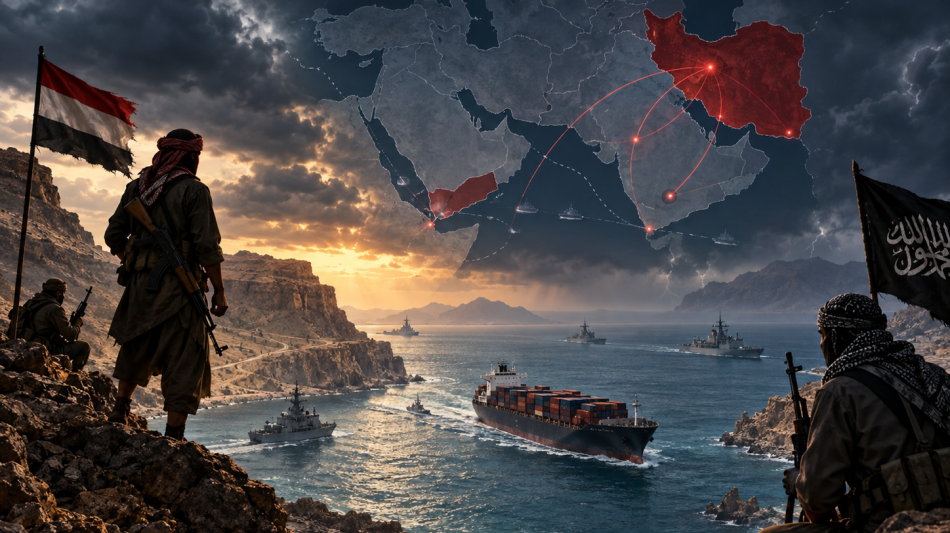
Houthis and al-Qaeda
EU: Greenpeace warns of dying farms