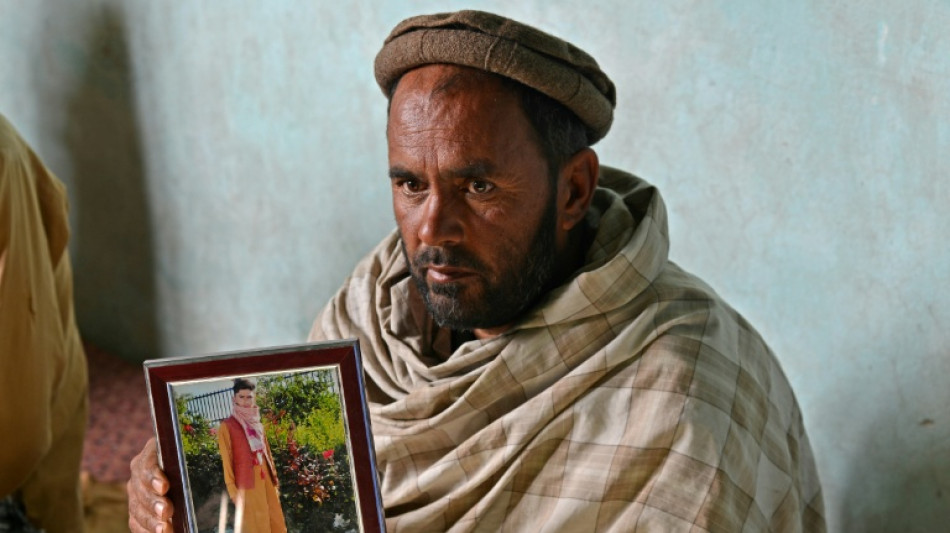
Families forever scarred 4 years on from Kabul plane deaths / Photo: Ahmad SAHEL ARMAN - AFP

 Markets mixed as China's Xi arrives for US talks
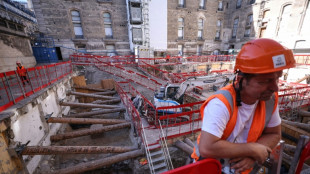 Archaeological 'breakthrough' could confirm origins of Paris

 Australian PM says OpenAI hacked government health website

 Rio breaks record for rainiest September amid powerful El Nino
 Mandela Digital Extends Early Access Programme to 11 February 2027 Following Strong Response

 McDonald's to boost franchisees as inflation weighs on consumers
 Archaelogical 'breakthrough' could confirm origins of Paris
 Fendi brings disco bling, Italian style, to Milan Fashion Week
 アレックス・ボディ氏とシュテファン・ハウプト教授、ルーマニアの伝説的な美術コレクションをめぐり提携に合意
 Stocks dip, oil rises as traders eye chances of Iran deal

 Oil falls, stocks steady as Trump hails 'good' Iran talks
 Canada judge to decide prison term for suicide poison seller

 Meta leans into AI, smart glasses amid privacy pushback
 Oil prices fall after Trump hails 'good' talks with Iran

 AI political ads warp reality ahead of US midterms

 Oil prices retreat as markets welcome US-Iran talks
 French prosecutors probe secret filming of women with smart glasses

 Trump renames AI "super intelligence," rejects international oversight
 How is the EU approaching record fuel prices?

 11 hurt as teen opens fire outside school in western Turkey

 UN chief says 'Big Oil' treats atmosphere as open sewer
 Memoir by Diana's brother goes on sale after rocking UK monarchy
 Stocks climb as oil slides, AI buzz returns

 MEXC Launches “Real Stocks, Real Friends” with Rewards for Bringing Friends to Wall Street

 Stocks rise on AI buzz, oil prices cool
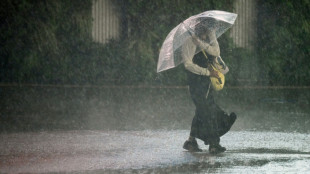
The day after the Taliban stormed into the Afghan capital in August 2021, Afghans desperate to evacuate clung to the fuselage of a departing American plane at Kabul airport -- only to fall to their deaths.
Four years later, their families still relive those desperate acts and endure wounds they say will never heal.
The images sped around the world: hundreds of people running alongside a military plane about to take off, with some clinging to it.
Other videos show figures falling from the C-17, plummeting through the air.
One of them was Shafiullah Hotak.
Aged 18, he dreamt of becoming a doctor, but lacking the money for his studies, was forced to work doing odd jobs.
On August 16, 2021, the day after the Taliban seized Kabul, Hotak was swept up by rumours that the departing Americans, after 20 years of war, were taking with them Afghans eager to flee.
"I'm leaving for the United States!" he told his parents at dawn that day, with only 50 Afghanis (less than a dollar today) in his pocket.
The airport was swarmed with families clutching any scrap of paper they thought might help them leave with the swiftly departing foreigners.
"Shafiullah had hope. He said that if he made it to the United States, I could stop working, that he would repay us for everything we had done for him," recalled his mother, Zar Bibi Hotak.
"I gave him his ID card and he left. Then we heard he was dead."
- Fell to their deaths -
More than 120,000 people were evacuated in August 2021 by NATO countries, including 2,000 who had directly worked with the organisation against the Taliban.
Thousands of others left the country in the following months.
"We were told stories about the previous Taliban regime, how even flour was hard to find," said Intizar Hotak, Shafiullah's 29-year-old brother, referring to the Taliban's first rule in 1996-2001.
"With those stories in mind, we were worried. We thought there would be no more work."
In the eastern Kabul neighbourhood where they live, crisscrossed by foul-smelling drainage channels, the only people who managed to get by were those with family sending money from abroad.
"Shafiullah said the situation wouldn't improve, that it was better to leave," his mother said, clinging to a portrait of the young man with neatly combed hair and piercing eyes, posing next to a rose bush.
His body landed on the roof of a house in northern Kabul, a few kilometres (miles) from the airport.
So did that of 24-year-old Fida Mohammad Amir, who according to his father Payanda Mohammad Ibrahimi, hated the Taliban.
On August 16, he pretended to have an appointment at his dental clinic and left the family home in Paghman, a quiet village west of Kabul.
Later that morning his family tried to reach him.
When the phone finally rang early in the afternoon, a stranger claiming to be at the airport asked, "Do you know Fida? He fell from a plane."
The young dentist had slipped his father's number into his pocket -- just in case.
- 'I didn't understand anything' -
Zar Bibi Hotak was alerted by relatives who saw a photo of Shafiullah shared on Facebook by witnesses at the airport.
"I screamed, I ran like a madwoman. Some neighbours were embarrassed, unsure how to react. Another grabbed me and brought me back home," she said.
To this day, the number of those who died during the evacuation remains unknown.
In 2022, the US military cleared the plane's crew of wrongdoing.
The crew had "decided to depart the airfield as quickly as possible" due to a deteriorating security situation as "the aircraft was surrounded by hundreds of Afghan civilians who had breached the airport perimeter", according to a spokesperson.
It's not enough, said all the families interviewed by AFP, who said their grief was only made worse by the lack of accountability.
"No one has called us -- not the previous government, not the Taliban, not the Americans," said Zar Bibi Hotak.
"The planes have cameras... the pilot knew what he was doing, that it was dangerous, he could have stopped," said Zakir Anwari, whose brother Zaki was crushed by the plane on the tarmac.
A promising football player at 17 years old, Zaki went to the airport out of curiosity with another of his brothers.
But in seeing the crowd, he decided to take his chances, Anwari believes.
"Everyone wondered how Zaki, so smart, took such a risk. But he wasn't the only one: I met at the airport a father of six who proudly said he had tried three times to climb onto a plane," Anwari said.
At the airport, where he rushed to try to find his brother, he recalled bodies piled into a pickup, blood on the ground, and being struck by a Taliban fighter.
"I had nightmares for a year. Impossible to forget," he said.
P.Schmidt--CPN