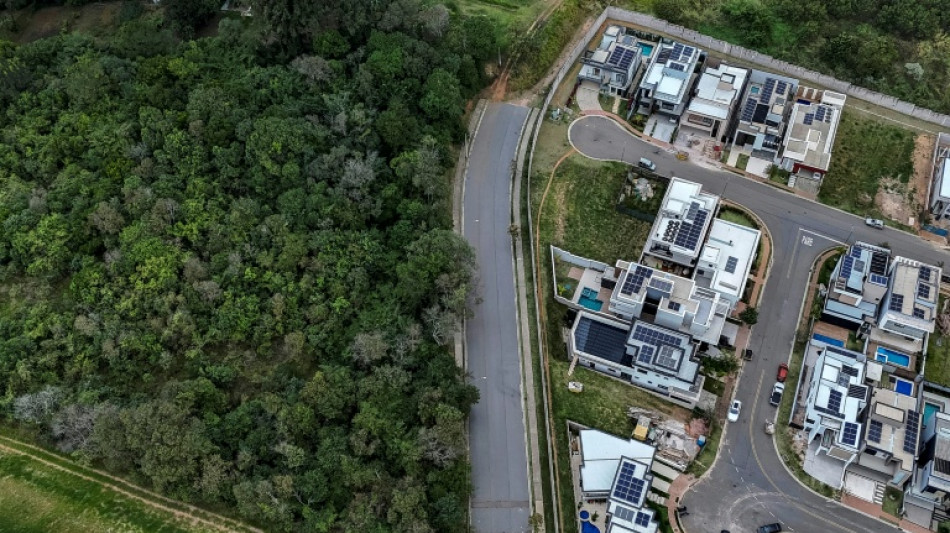
Sao Paulo's pumas under attack as 'stone jungle' threatens rainforest / Photo: Carlos FABAL - AFP

 Jay-Z rape accuser says she made 'false accusations'

 Trump's photo of Xi greeting carries signs of AI

 First US trial against TikTok to open Monday

 French literary prize removes novel from longlist after AI claims

 Trump accuser E. Jean Carroll finally has her damages

 Heavy fighting, internet disruption as Ethiopia conflict rages

 Asian markets mixed after oil gains

 UN approves resolution on dealing with rising sea levels

 Global stocks mostly fall as oil prices and bond yields rise

 Starbucks to close 250 more cafes in North America

 Stocks fall as oil prices rise and bonds back under pressure

 Top ECB official to resign to take up IMF role

 Eviction of pensioner puts Spain housing crisis in spotlight

 Average EU diesel price hits record 2.23 euros a litre: AFP analysis

 Whitetip Investments Marks 10 Years of Regulation, Transparency & Responsible Trading

 Stocks fall, oil prices rise as global bonds under pressure

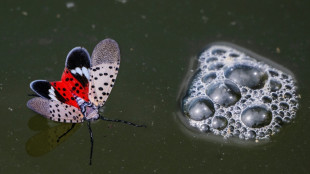 Hungary detects invasive spotted lanternfly for first time in EU

 Forex Expo Dubai 2026 Breaks Guinness World Record Again With 23,816 Attendees

 Asian markets fall on US-China jitters as leaders meet

 As Moscow steps up attacks, Kyiv residents brace for harsh winter

 Markets mixed as China's Xi arrives for US talks

 Archaeological 'breakthrough' could confirm origins of Paris

 Australian PM says OpenAI hacked government health website

 Rio breaks record for rainiest September amid powerful El Nino

 Mandela Digital Extends Early Access Programme to 11 February 2027 Following Strong Response

Apartment blocks and shopping centers sprout like mushrooms around a wild cat sanctuary that shelters pumas recovering from injuries suffered at the hands of mankind in Brazil's Sao Paolo state.
The Mata Ciliar refuge stretches over the equivalent of 40 football fields just 90 kilometers (56 miles) from the state capital Sao Paulo -- Latin America's biggest metropolis.
Twenty-five pumas and 10 jaguars are receiving treatment at the center -- including Barreiro, a five-year-old puma named after the semi-rural neighborhood where he was found caught in a trap made with a steel cable.
Barreiro is being treated for a deep cut to the hip.
"Due to the advancement of urbanization into its natural habitat, when the puma moves, it gets lost between roads, gated communities and other human interventions," Mata Ciliar president Jorge Bellix told AFP.
As its habitat shrinks in step with human expansion, the puma is forced to move closer to settlements to find food -- which may include pets and livestock, as its natural diet of deer and smaller wild animals gets diminished.
The big cats risk being run over by cars, electrocuted by security fences or trapped in snares set by either hunters trying to catch wild boar or residents warding off predators.
Some are poached for their skins or as trophies.
"If this continues, we will unfortunately witness the extinction of several (animal) species within a few years," said Bellix, whose refuge has treated some 32,000 creatures since it was founded nearly 30 years ago.
- 'Stone jungle' -
Mata Ciliar also houses monkeys and maned wolves, and is located within the vast Mata Atlantica forest in a country with some of the highest wild cat diversity in the world.
But just a few kilometers away looms the grey expanse of Sao Paulo, a metropolis of 21 million people nicknamed the "stone jungle."
"The situation is critical: the animals of Sao Paulo are losing the war against urbanization," said veterinarian Cristina Harumi, who helped save Barreiro and hopes he can be returned to the wild soon.
The puma, sitting as it does at the top of the food chain, is considered a bioindicator: its disappearance would be an alarming sign of the extent of environmental degradation, she added.
The puma, also known as mountain lions, is listed as "near threatened" in Brazil by the International Union for Conservation of Nature (IUCN), which maintains the "Red List of Threatened Species," while mountain lion sub-species outside the Amazon basin are considered "vulnerable."
D.Goldberg--CPN