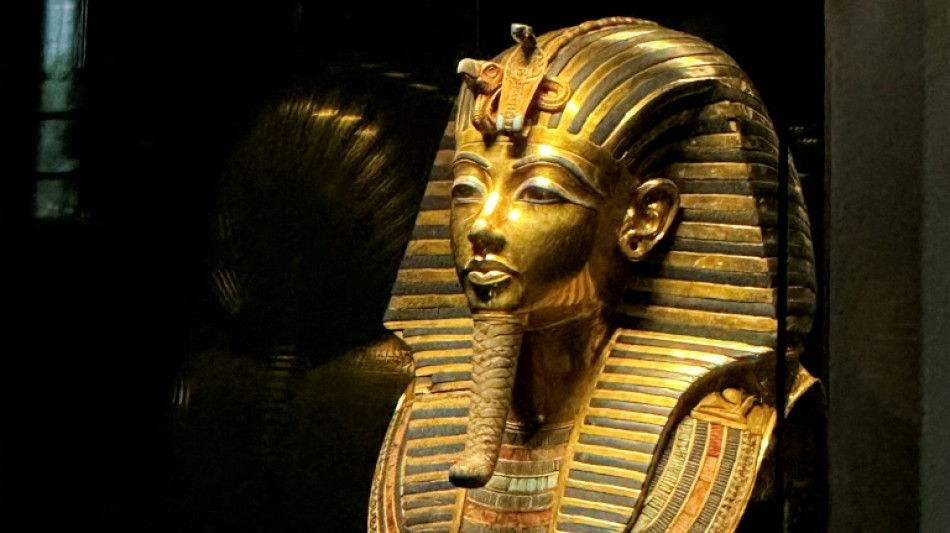
King Tut gold mask to leave Cairo museum after nearly 100 years / Photo: Khaled DESOUKI - AFP

 Iran proposes Hormuz plan, Trump reportedly refuses
 El Nino rewrites the menu in the world's top restaurants

 Jay-Z rape accuser says she made 'false accusations'
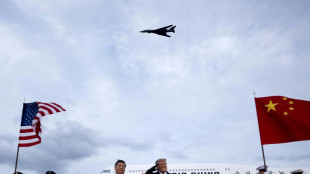 Trump's photo of Xi greeting carries signs of AI

 First US trial against TikTok to open Monday

 French literary prize removes novel from longlist after AI claims
 Trump accuser E. Jean Carroll finally has her damages
 Heavy fighting, internet disruption as Ethiopia conflict rages

 Asian markets mixed after oil gains

 UN approves resolution on dealing with rising sea levels
 Global stocks mostly fall as oil prices and bond yields rise

 Starbucks to close 250 more cafes in North America

 Stocks fall as oil prices rise and bonds back under pressure
 Top ECB official to resign to take up IMF role

 Eviction of pensioner puts Spain housing crisis in spotlight
 Average EU diesel price hits record 2.23 euros a litre: AFP analysis

 Whitetip Investments Marks 10 Years of Regulation, Transparency & Responsible Trading

 Stocks fall, oil prices rise as global bonds under pressure
 Hungary detects invasive spotted lanternfly for first time in EU

 Forex Expo Dubai 2026 Breaks Guinness World Record Again With 23,816 Attendees

 Asian markets fall on US-China jitters as leaders meet

 As Moscow steps up attacks, Kyiv residents brace for harsh winter

 Markets mixed as China's Xi arrives for US talks

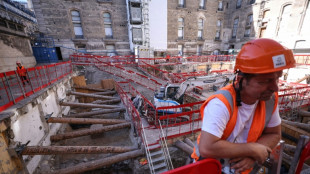 Archaeological 'breakthrough' could confirm origins of Paris

 Australian PM says OpenAI hacked government health website

After nearly a century in the Egyptian Museum in Cairo, King Tutankhamun's iconic gold mask and remaining treasures are set to move to the new Grand Egyptian Museum near the Giza Pyramids.
Visitors have just days left to see the boy king's world-famous gold funerary mask before it joins more than 5,000 artefacts from his tomb at the GEM, a $1-billion megaproject opening on July 3.
"Only 26 objects from the Tutankhamun collection, including the golden mask and two coffins, remain here in Tahrir," said museum director Ali Abdel Halim.
"All are set to be moved soon," he told AFP, without confirming a specific date for the transfer.
The government has yet to officially announce when or how the last artefacts will be relocated.
Still on display are the innermost gold coffin, a gilded coffin, a gold dagger, cosmetic box, miniature coffins, royal diadem and pectorals.
Tutankhamun's treasures, registered at the Egyptian Museum on Cairo's Tahrir square in 1934, have long been its crown jewels.
But the neoclassical building -- with faded cases, no climate control and ageing infrastructure -- now contrasts with the high-tech GEM.
Once open, the GEM is believed to be the largest in the world devoted to a single civilisation, housing more than 100,000 artefacts -- with over half on public display.
In a dedicated wing, most of King Tut's treasures will be exhibited together for the first time in history since British archeologist Howard Carter discovered the young pharaoh's intact tomb in 1922.
His mummy will remain in its original resting place in Luxor's Valley of the Kings as it is "a vital part of the archeological site", Egyptian officials have said.
A virtual replica, however, will be displayed at the GEM using virtual reality technology.
The Egyptian Museum in Tahrir, long the historic heart of Egyptology, has lost in 2021 other star exhibits: 22 royal mummies including Ramses II and Queen Hatshepsut that were relocated in a widely watched state procession to the National Museum of Egyptian Civilization in Old Cairo.
Still, it is home to around 170,000 artefacts, according to the museum director, including treasures from Yuya and Thuya - Tutankhamun's ancestors -- and items from ancient Tanis, such as the golden funerary mask of King Amenemope.
A total of 32,000 artefacts have already been relocated from storage and display halls at the Tahrir museum to the GEM.
The museum's director said the space left behind by Tutankhamun's collection will eventually be filled by a new exhibition "on par with the significance of Tut’s treasures".
M.Anderson--CPN