
Leaders warn race for minerals could turn seabed into 'wild west' / Photo: Valery HACHE - AFP

 TikTok agrees to teen limits in US settlement following Meta
 Venezuela's oil cradle pins hopes on US energy deals

 Lula bans sports betting days ahead of Brazil's election
 Spotting AI writing: how reliable are the detectors?
 US court refuses to overturn Pentagon ban on Anthropic

 South Lebanon children return to school destroyed by Israel strike
 European stock markets climb as oil prices drop

 Asian markets mixed after recent oil surge

 Cash for nature protection: hotelier's offer to Principe islanders
 India rape cases turn focus back onto women's safety
 Rich nations should foot climate bill, says Nepal minister
 Italy bans burqas in schools, caps numbers of foreign students per class

 Napoli hoping to build new stadium, says owner
 What happens if the US bans diesel exports
 Oscar-winner Cotillard fears being moved by AI actor

 Stocks fall, oil prices rise as global bonds back under pressure
 Streamex Converts Interest Into Capital as GLDY Investment Strategy Secures $1M+ Institutional Allocation

 STARTRADER Named Best Fintech Forex Broker at Forex Expo Dubai 2026
 German think tanks urge Merz to stick with reforms after election defeats
 France's top-selling newspaper to slash jobs

 BaazEX Enters the Asian Trading Market With a New Approach to Online Forex Trading.
 Sao Tome voters want to stop exodus of 'neglected' youth
 Mexican cartels target Australia with their African meth
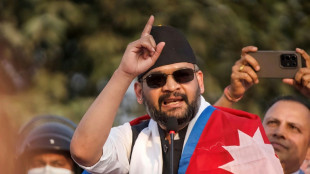 Rapper-turned-PM faces first big test after Nepal disaster

 Meta launches camera-free AI glasses amid privacy pushback
World leaders on Monday called for global rules to govern the seabed and warned against racing to exploit the ocean floor in a thinly-veiled rebuke of US President Donald Trump.
Growing anxiety over Trump's unilateral push to fast-track deep-sea mining in international waters shot to the surface at the opening of the UN Ocean Conference in France.
"I think it's madness to launch predatory economic action that will disrupt the deep seabed, disrupt biodiversity, destroy it and release irrecoverable carbon sinks -- when we know nothing about it," said French President Emmanuel Macron.
Imposing a moratorium on seabed mining was "an international necessity", said Macron.
The number of countries opposed to seabed mining rose to 36 on Monday, according to a tally kept by the Deep Sea Conservation Coalition, an umbrella group of non-governmental organisations.
Trump was not among the roughly 60 heads of state and government in Nice but his spectre loomed large as leaders defended the global multilateralism he has spurned.
Of particular concern, his move to sidestep the International Seabed Authority (ISA) and issue permits directly to companies wanting to extract nickel and other metals from waters beyond US jurisdiction.
Brazilian President Luiz Inacio Lula da Silva called for "clear action" from the seabed authority to end a "predatory race" to exploit the ocean floor.
"We now see the threat of unilateralism looming over the ocean. We cannot allow what happened to international trade to happen to the sea," he said.
The deep sea, Greenland and Antarctica were "not for sale", Macron said in further remarks directed clearly at Trump's expansionist claims.
The ISA, which has jurisdiction over the ocean floor outside national waters, is meeting in July to discuss a global mining code to regulate mining in the ocean depths.
UN Secretary-General Antonio Guterres said he supported these negotiations and urged caution as countries navigate these "new waters on seabed mining".
"The deep sea cannot become the wild west," he said, to applause from the plenary floor.
- 'Wave of hope' -
Island nations also spoke out against seabed mining, which scientists warn could result in untold damage to ecosystems largely unexplored by humanity.
"Here in Nice, we can feel that the looming threat of deep sea mining, and the recent reckless behaviour of the industry is seen by many states as unacceptable," said Megan Randles from Greenpeace.
Macron said a global pact to protect marine life in international waters beyond national jurisdictions had received enough support to become law and was "a done deal".
The high seas treaty struck in 2023 requires ratifications from 60 signatory countries to enter into force, something France hoped to achieve before Nice.
Macron said the treaty "would be implemented" after roughly 50 nations ratified and 15 others formally committed to joining them. His office said this would happen by the end of the year, but did not name the countries.
"Today's surge of ratifications for the High Seas Treaty is a tidal wave of hope and a huge cause for celebration," Rebecca Hubbard, director of the High Seas Alliance, told AFP.
- 'Prove you're serious' -
On Monday, the United Kingdom announced plans to extend a partial ban on bottom trawling in some of its protected marine areas.
Macron said on Saturday that France would also restrict the destructive fishing method in some of its marine protected areas but was criticised for not going far enough.
Greece and French Polynesia announced Monday the creation of new protected marine parks, following similar action from Samoa this week.
Just eight percent of global oceans are designated for marine conservation, despite a globally agreed target to achieve 30 percent coverage by 2030.
But even fewer are considered truly protected, as some countries impose next to no rules on what is forbidden in marine zones or lack the finance to enforce any regulations.
The summit will not produce a legally binding agreement at its close, but wealthy nations faced calls to cough up the missing finance to make ocean protection a reality.
Small island states turned out in numbers to demand money and political support to combat rising seas, marine trash and the plunder of fish stocks that hurt their economies.
"We say to you, if you are serious about protecting the ocean, prove it," said President Surangel Whipps Jr of Palau, a low-lying Pacific nation.
np-aag-fcc-fff/phz
C.Peyronnet--CPN