
New rare wild orchid seen in UK for first time in 100 years / Photo: BEN STANSALL - AFP

 TikTok agrees to teen limits in US settlement following Meta

 Venezuela's oil cradle pins hopes on US energy deals

 Lula bans sports betting days ahead of Brazil's election

 Spotting AI writing: how reliable are the detectors?

 US court refuses to overturn Pentagon ban on Anthropic

 South Lebanon children return to school destroyed by Israel strike

 European stock markets climb as oil prices drop

 Asian markets mixed after recent oil surge

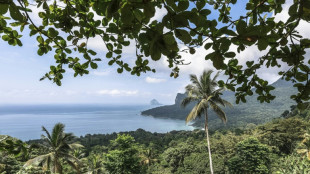 Cash for nature protection: hotelier's offer to Principe islanders

 India rape cases turn focus back onto women's safety

 Rich nations should foot climate bill, says Nepal minister

 Italy bans burqas in schools, caps numbers of foreign students per class

 Napoli hoping to build new stadium, says owner

 What happens if the US bans diesel exports

 Oscar-winner Cotillard fears being moved by AI actor

 Stocks fall, oil prices rise as global bonds back under pressure

 Streamex Converts Interest Into Capital as GLDY Investment Strategy Secures $1M+ Institutional Allocation

 STARTRADER Named Best Fintech Forex Broker at Forex Expo Dubai 2026

 German think tanks urge Merz to stick with reforms after election defeats
 France's top-selling newspaper to slash jobs

 BaazEX Enters the Asian Trading Market With a New Approach to Online Forex Trading.

 Sao Tome voters want to stop exodus of 'neglected' youth

 Mexican cartels target Australia with their African meth

 Rapper-turned-PM faces first big test after Nepal disaster

 Meta launches camera-free AI glasses amid privacy pushback

A new lady's-slipper orchid, once believed to be extinct in the UK, has been spotted in the wild for the first time in 100 years following a decades-long conservation drive, experts said Tuesday.
Over-picking by Victorian collectors, gripped by the orchid craze of the time, was thought to have made the yellow cup-shaped and purple-petalled plant extinct by the early 1900s.
But a single plant was discovered in a remote location in the Yorkshire Dales in northern England in 1930. Its location was kept secret and volunteers have since provided round-the-clock monitoring to prevent it from being stolen.
Last summer, Yorkshire Wildlife Trust -- supported by various conservation groups -- discovered the first new lady's-slipper orchid to appear in the wild since then, it said Tuesday.
It is the culmination of a decades-long bid to bring back the flower, and has sparked hopes that it could one day be restored across its former range in northern England.
Yorkshire Wildlife Trust secured a grant from Natural England's species recovery programme two years ago to protect the habitat, rearing many new orchids and reintroducing plants into suitable terrains.
The new plant was spotted at one of the reintroduction sites, meaning planted-out orchids had produced seeds that had germinated into new plants.
Jono Leadley, managing the project on behalf of Yorkshire Wildlife Trust, called it a "truly thrilling moment".
"To see a healthy population of lady's-slipper orchids back in their native area that are now reproducing themselves gives us real hope for the future," he said.
The orchids were propagated by London's Royal Botanical Gardens in Kew, after a call for help was issued in the 1990s.
That led to a small number of privately-owned, wild-sourced orchids being offered as part of a breeding programme.
"Trying to save the lady's slipper orchid in England has been one of RBG Kew's flagship conservation projects for many years," said RBG Kew's senior research leader Mike Fay.
"It is a long-lived species, with seedlings taking many years to grow to the stage where they can flower and produce the seeds that will give rise to the next generation," he added.
O.Ignatyev--CPN