
At 50, West African bloc teeters amid shifting alliances, security woes / Photo: OLYMPIA DE MAISMONT - AFP

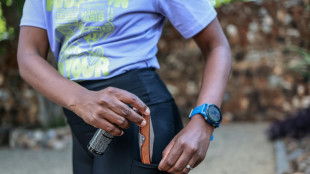 S.African women runners arm themselves after string of killings
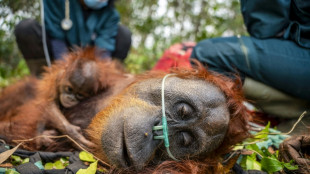 Indonesia fires threatens critically-endangered orangutan: IUCN

 Iran proposes Hormuz plan, Trump reportedly refuses
 El Nino rewrites the menu in the world's top restaurants

 Jay-Z rape accuser says she made 'false accusations'

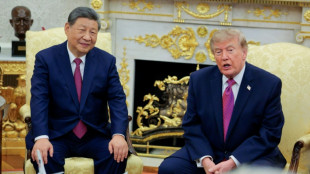
 Trump's photo of Xi greeting carries signs of AI

 First US trial against TikTok to open Monday
 French literary prize removes novel from longlist after AI claims
 Trump accuser E. Jean Carroll finally has her damages
 Heavy fighting, internet disruption as Ethiopia conflict rages

 Asian markets mixed after oil gains

 UN approves resolution on dealing with rising sea levels

 Global stocks mostly fall as oil prices and bond yields rise

 Starbucks to close 250 more cafes in North America

 Stocks fall as oil prices rise and bonds back under pressure

 Top ECB official to resign to take up IMF role

 Eviction of pensioner puts Spain housing crisis in spotlight
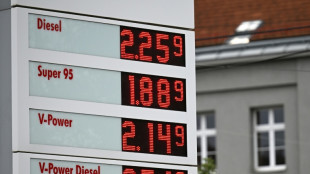 Average EU diesel price hits record 2.23 euros a litre: AFP analysis

 Whitetip Investments Marks 10 Years of Regulation, Transparency & Responsible Trading

 Stocks fall, oil prices rise as global bonds under pressure
 Hungary detects invasive spotted lanternfly for first time in EU

 Forex Expo Dubai 2026 Breaks Guinness World Record Again With 23,816 Attendees

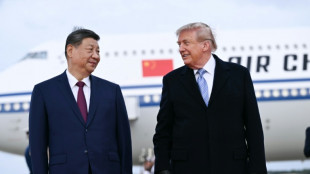
 Asian markets fall on US-China jitters as leaders meet

 As Moscow steps up attacks, Kyiv residents brace for harsh winter

 Markets mixed as China's Xi arrives for US talks

Leaders of ECOWAS are gathering on Wednesday to celebrate 50 years since its formation and are expected to address regional security challenges as the continent also seeks answers in the face of US trade tariffs and aid cuts.
The anniversary could not have come at the worst of moments for the Economic Community of West African States -- once internationally respected as a force for stability.
ECOWAS is now fractured following the departure of junta-led countries Mali, Burkina Faso and Niger earlier this year.
It is also grappling with its security challenges with jihadists exploiting strained relationships between members and gaining ground in the Sahel and Lake Chad region. Benin and Nigeria have experienced a wave of attacks in recent months.
And the Sahel region was in 2024 ranked the epicentre of global "terrorism" for the second straight year, accounting for more than half of deaths put down to terror attacks worldwide, according to the Global Terrorism Index published in March.
Coups and attempted putsches - driven by widespread public discontent and distrust in political elites - have rocked nearly half of original ECOWAS countries in the last decade, putting democracy on the ropes and straining relations among neighbours.
The departure of the three countries from ECOWAS dealt a blow to the bloc's credibility and regional influence, experts say.
The exit "is a major dent on this organisation's capacity to harness the optimism and hopes of its birth", said Kwesi Aning, an expert in international cooperation at the Accra-based Kofi Annan International Peacekeeping Training Centre.
"It reflects a disastrous level of leadership amongst ECOWAS leaders," he added.
- Turmoil and trade -
Nigeria's President Bola Ahmed Tinubu, the current head of the rotating ECOWAS presidency, and the 89-year-old ECOWAS co-founder and former Nigerian military leader, General Yakubu Gowon, are due to address the gathering at a hotel in Lagos.
As the region's largest economy and most populous nation, Nigeria was expected to be ECOWAS's "stabilising force", but it is "faltering", said SBM Intelligence in a report released Wednesday.
"Its internal crises — including economic mismanagement, political instability, the Boko Haram insurgency, and governance failures — have significantly diminished its ability to lead", said the report.
Overall, ECOWAS "finds itself at a critical juncture between its foundational aspirations of economic integration and peace and the stark realities of regional insecurity, democratic backsliding, and internal fragmentation," said SBM Intelligence.
The impact of the turmoil on trade among countries is stark.
Before relations between neighbours Nigeria and Niger soured following a coup in Niamey in July 2023, Nigerian traders shipped out several truckloads of edible grains from the bustling Dawanau market in the northwestern state of Kano daily.
While the volume of grains supplied from the Kano market into Niger has not changed much, it is the cost of doing so that is now biting.
Multiple traders and truckers told AFP in Kano that taxes paid on Nigerian goods imported into Niger have increased fivefold, fuelling a spike in smuggling activities across porous borders.
"We were paying an equivalent of 100,000 naira (about $64) as import duty on each truck before they left ECOWAS, but we now pay around 500,000 naira," said 40-year-old trucker Aliyu Abubakar.
"Smuggling is thriving," said Mustapha Buhari, 47, a resident of Nigeria's Mai-Adua, a border town.
A.Mykhailo--CPN