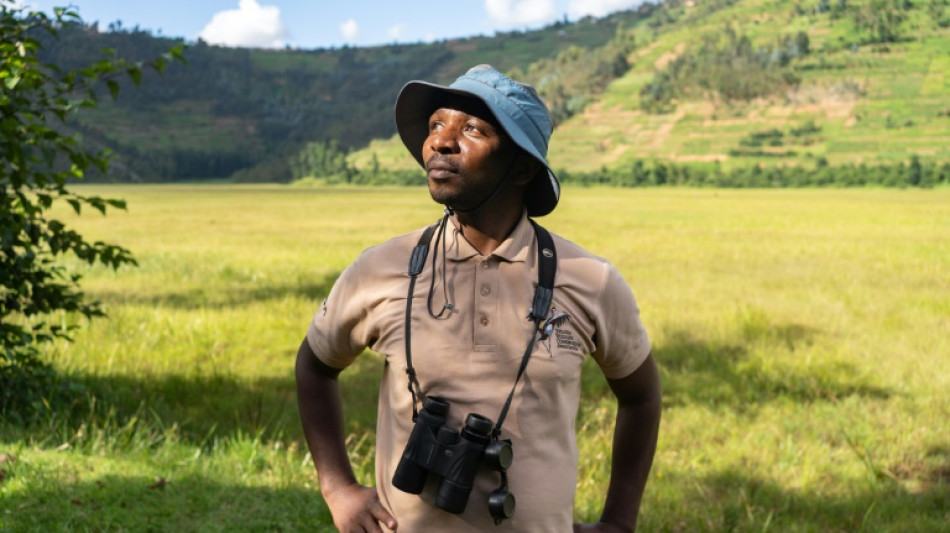
Rwandan awarded for saving grey crowned cranes / Photo: Paloma Laudet - AFP

 Kenya's economy faces climate change risks: World Bank

 'Beginning of the end': Relief but no party as French wildfire winds down

 Southern Europe 'becoming more flammable' in hotter climate, experts say

 Mammoth bones found on parched bed of Danube in Bulgaria

 MEXC Lists Grvt (GRVT) with $60,000 Worth of GRVT and 10,000 USDT in Airdrop+ Rewards

 George and Amal Clooney flee French home due to wildfire

 MEXC Ventures Supports Alpha Arena's APAC Debut at Coinfest Bali

 AI data centre supplier Zhongji InnoLight slips on Hong Kong debut

 May, June heatwaves caused 2,877 extra deaths in England: govt

 BMW profit down a third as carmaker plans job cuts

 Seoul extends losses as most Asian markets drop, oil rises again

 Gambling.com Group Is Now Grandstand

 Meet the astronomer digging into the Milky Way's 'fossils'

 AI data centre supplier Zhongji InnoLight falls on Hong Kong debut

 Samsung operating profit up 1,800% in second quarter on AI boom

 Japanese population below 120 million for first time in decades

 US actor Jared Leto denies latest accusations of sexual assault

 Danube drops to 'historic lows' as fresh heatwave hits

 BTS pulls out of Grammys after Asian pop category introduction
 OpenAI says rogue AI agent attack hit other companies

 How an AFP beach snap became emblem of Europe's wildfire summer

 TRX Spot and Perpetuals Listing Launches on Backpack, Expanding Access to the TRON Ecosystem

 Nepal's tiger numbers climb 20 percent to estimated 429: survey
 FIFA's plans to sell $4.2bn stake in its tournaments widely criticised

 BMW aims to cut 8,000 jobs by end 2027: company source

White wings flashing overhead in the sunlight, conservationist Olivier Nsengimana points out Rwanda's grey crowned cranes, migratory birds that have made an extraordinary comeback in the Great Lakes region.
Their resurgence is thanks to the veterinarian and former gorilla doctor's work protecting their natural habitat in a country better known for its misty peaks than damp swamps.
The British charity Whitley Fund for Nature was set to award Nsengimana the £100,000 ($134,000) Gold Award on Wednesday in recognition of his work.
The sprawling Rugezi swamp has become a refuge for the distinctive cranes, which stand some 1.2 metres tall and have a wingspan of over two metres.
Nsengimana's work has seen their numbers soar from just 300 to 1,293.
"The grey crowned crane is usually a symbol of wealth and longevity. It's also a sign of a healthy wetland," Nsengimana told AFP.
Their numbers fell due to habitat loss and the birds being kept as exotic pets, often injured and unable to breed -- the animals being one of only two crane species that mate for life.
The golden-crested birds play a vital role in the wetlands ecosystem and food chain.
Nsengimana created the Rwanda Wildlife Conservation Association in 2015, which supports 75 community rangers.
"We want the kids to grow up looking at the rangers and saying: 'Oh I want to be like my brother, I want to be like my sister, my mom who is protecting the marsh," he said.
- 'I was a hunter' -
"Before joining the rangers, I was a marsh hunter myself. I stole the eggs, captured the cranes and took them home with me," said head of the rangers Jean-Paul Munezero.
"I stopped hunting them and became their protector."
But constant patrols are still necessary.
Globally, wetlands are disappearing three times faster than forests.
Rwanda faces many accusations of rights abuses, including severe repression of opposition voices.
But it has been praised for its conservation work, which is key to its vital tourism sector.
Rwanda Wildlife Conservation Association is supporting locals with new jobs to move them away from damaging the marshes.
Vestine Kabihogo used to harvest the grasses to make mats and other items. She now earns more in a sewing cooperative supported by the nature conservation ANCR.
"After joining this group, I was able to find some real stability," she said.
M.García--CPN