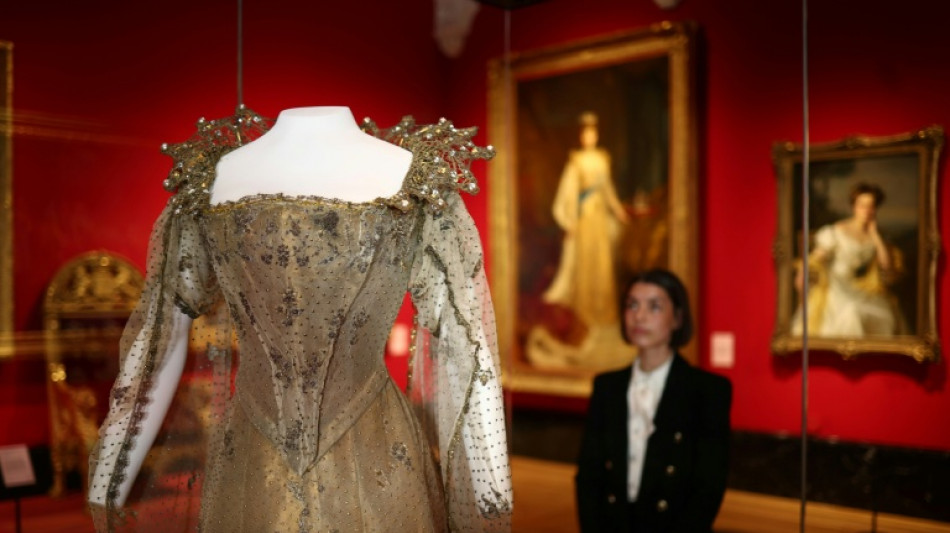
Elegance of the Edwardians on display at Buckingham Palace / Photo: HENRY NICHOLLS - AFP

 Kenya's economy faces climate change risks: World Bank

 'Beginning of the end': Relief but no party as French wildfire winds down

 Southern Europe 'becoming more flammable' in hotter climate, experts say

 Mammoth bones found on parched bed of Danube in Bulgaria

 MEXC Lists Grvt (GRVT) with $60,000 Worth of GRVT and 10,000 USDT in Airdrop+ Rewards

 George and Amal Clooney flee French home due to wildfire

 MEXC Ventures Supports Alpha Arena's APAC Debut at Coinfest Bali

 AI data centre supplier Zhongji InnoLight slips on Hong Kong debut

 May, June heatwaves caused 2,877 extra deaths in England: govt

 BMW profit down a third as carmaker plans job cuts

 Seoul extends losses as most Asian markets drop, oil rises again

 Gambling.com Group Is Now Grandstand

 Meet the astronomer digging into the Milky Way's 'fossils'

 AI data centre supplier Zhongji InnoLight falls on Hong Kong debut

 Samsung operating profit up 1,800% in second quarter on AI boom

 Japanese population below 120 million for first time in decades

 US actor Jared Leto denies latest accusations of sexual assault

 Danube drops to 'historic lows' as fresh heatwave hits

 BTS pulls out of Grammys after Asian pop category introduction

 OpenAI says rogue AI agent attack hit other companies

 How an AFP beach snap became emblem of Europe's wildfire summer

 TRX Spot and Perpetuals Listing Launches on Backpack, Expanding Access to the TRON Ecosystem

 Nepal's tiger numbers climb 20 percent to estimated 429: survey

 FIFA's plans to sell $4.2bn stake in its tournaments widely criticised

 BMW aims to cut 8,000 jobs by end 2027: company source

A rare exhibition is exploring the glamorous lives and fashions of two royal couples who reigned over Britain during the Edwardian period as the country tipped ever closer to World War I.
"The Edwardians: Age of Elegance", which opened on Friday at the King's Gallery in Buckingham Palace, brings together more than 300 works from the Royal Collection that will be on display until November 23.
The centrepiece is the coronation gown Queen Alexandra wore on August 9, 1902, made of silk embroidered with thousands of gold sequins and designed by the French house Morin Blossier.
Alexandra, daughter of King Christian IX of Denmark and sister of King George I of Greece, married Edward, then Prince of Wales, on March 10, 1863, in the chapel of Windsor Castle.
She was 18 years old. He was 22.
Alexandra was to remain the princess of Wales for almost 40 years until Edward succeeded to the throne on the death of his mother, Queen Victoria, in 1901.
Under Edward VII began the Edwardian period.
The royal couple ushered in a new generation after the austere last years of Victoria's long reign, when she largely withdrew from public life, mourning the death of her beloved husband, Albert.
- 'Pure drama' -
For her coronation as the new queen, Alexandra decided against wearing the traditional white or cream robes, which had an ecclesiastical feel.
"She wanted that moment to be a moment of pure drama," said curator Kathryn Jones.
Realising that electric light was to be "used for the first time in Westminster Abbey ... she chooses a gold fabric so that she shimmers with thousands of tiny spangles", Jones told AFP.
The dress is fragile and has not been on public display for some 30 years.
Conservators have spent more than 100 hours preparing it for the exhibition.
"It's a powerful example of Edward and Alexandra's attempts to balance tradition and modernity as they stood on the cusp of the 20th century -- a shining moment of glamour before the world was at war," Jones says on the exhibition's website.
Edward's gold coronation mantle is also on display, along with two thrones commissioned for the event.
Photography was still in its infancy but it allowed thousands of pictures of the new queen to be seen around the world, turning her into fashion icon and symbol of elegance of the times.
Alexandra was a keen amateur photographer herself and some of her snapshots taken with a portable Kodak camera are on display.
Two massive portraits of the couple greet visitors arriving at the King's Gallery.
One room depicts their lavish lifestyle through paintings of opulent receptions, concerts, regattas on the Isle of Wight, lavish costume balls, garden parties and their residences at Marlborough House in London and Sandringham in Norfolk.
As collectors, they amassed textiles, artworks, tableware, paintings, furniture, sculptures, plants, and rare books.
There is a copy of Oscar Wilde's "Poems" with a rare handwritten note by the author.
Edward also discovered a passion for Faberge and ordered several miniature figures of his favourite animals.
Visitors can admire paintings and water colours by such artists as Frederic Leighton, Lawrence Alma-Tadema and John Singer Sargent, as well as bronze sculptures by Alfred Gilbert.
Several rooms are dedicated to the royal couple's travels across five continents.
The exhibition also includes works collected by Alexandra and Edward's son, who became George V and was crowned in June 1911, with his wife Mary.
By then, times were changing, and instability and political turmoil roiled Europe and the British Empire.
The Age of the Edwardians was fast coming to an end.
T.Morelli--CPN