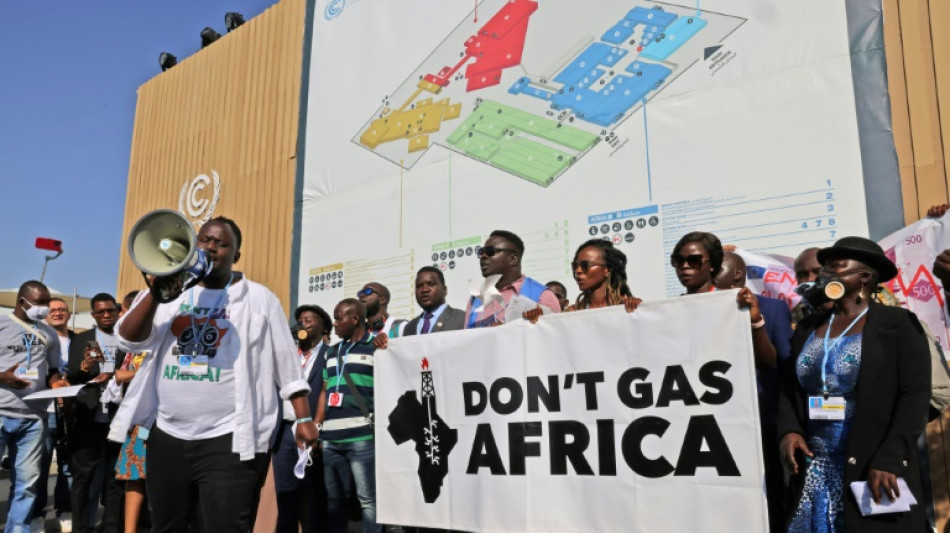
Pressed by climate vulnerable nations, EU tweaks emissions goal / Photo: Joseph EID - AFP

 Candidate for UN chief calls for AI regulation akin to nuclear weapons

 'We're losing control,' AI pioneer Yoshua Bengio tells AFP

 IR-MED and Dice Technologies Announce collaboration to Evaluate and Advance Pressure-Injury Prevention Platform in Japan

 Watts, Pitt, Cruz to light up Spain's top film festival

 Toogood Gold's Table Mountain Sits in the Shadow of a Nevada Gold Rush

 MEXC July–August Security Report: 38.66M USDT in Risk Funds Intercepted, Futures Insurance Fund Hits 792M USDT

 Emporio Armani names Dario Vitale new creative director

 EU to ban social media for under 13s, curb access until 15

 Wildfires push endangered Sumatran elephants to brink: Indonesian NGO

 Bank of Japan set to raise rates under pressure from inflation, US

 EU chief to unveil social media, gaming curbs for under-15s

 'Resident Evil' film brings video game's ethos to the big screen

 GA-ASI Mojave First UAS To Complete Battlefield Short Field Ops

 Sanders, Bannon warn of AI dangers in rare US left-right alignment

 Empty benches as schools reopen in Venezuela's quake-hit Guaira

 Tiny English village holds 'independence' vote over asylum seeker housing

 US Treasury chief says to meet Chinese counterpart at weekend

 BingX Evolves into a Multi-Asset Trading Platform, Connecting Users to Global Opportunities

 International Trading Institute Expands Professional Trader Development Beyond the Master’s in Trading

 Lake Energy Secures $80 Million for U.S. Renewable Energy Expansion

 Stocks drop, oil climbs and Treasury yields hit 19-year high

 SkySail Strategies Outperforms Wall Street's 30-Year Risk Standard With Proprietary AI Inference Model

 Just add fish: Scientists pursue more rice, less disease in Senegal paddies

 Belgium completes outer structure of offshore energy island

 China retail sales growth weakens further in August

Developing nations admonished rich polluters for falling short on efforts to help them cope with global warming at UN climate talks Tuesday, as the EU vowed to speed its emissions reductions.
The COP27 conference in Egypt has been dominated by calls for wealthy nations to fulfil pledges to fund the green transitions of poorer countries least responsible for global emissions, help build their resilience, and compensate them for climate-linked losses.
At a wrap-up meeting for Tuesday's negotiations, Egypt's Foreign Minister Sameh Shoukry, the COP27 president, said technical sticking points were hampering progress towards higher-level political negotiations on a range of issues.
"Progress has been made, but certainly more remains to be done if we are to achieve the robust outcomes that will drive ambitious, and inclusive climate action," he told delegates.
The meeting comes as global CO2 emissions are poised to reach an all-time high this year, making the aspirational goal of limiting warming to 1.5 degrees Celsius compared to preindustrial levels ever more elusive.
European Commission Vice President Frans Timmermans told delegates that the European Union would outperform its original plan to reduce its greenhouse gas emissions by 55 percent by 2030.
The 27-nation bloc will now be able to cut those emissions by 57 percent from 1990 levels, he said, pointing to agreements on phasing out fossil fuel-powered cars and protecting forests that serve as "carbon sinks".
"The European Union is here to move forwards, not backwards," Timmermans told COP27 delegates.
The invasion of Ukraine by energy exporter Russia has cast a shadow over the talks in Egypt, with activists accusing Europeans of seeking to tap Africa for natural gas following Russian supply cuts.
But Timmermans denied the bloc was in a "dash for gas" amid the Ukraine conflict.
"Don't let anybody tell you, here or outside, that the EU is backtracking," he said.
Watchdog groups were unimpressed.
"This small increase announced today at COP27 doesn't do justice to the calls from the most vulnerable countries at the front lines," said Chiara Martinelli, of Climate Action Network Europe.
"If the EU, with a heavy history of emitting greenhouse gases, doesn't lead on mitigating climate change, who will?"
- 'Hypocrisy' -
Addressing a high-level session, ministers from developing nations took turns criticising wealthy nations.
Shawn Edward, sustainable development minister in the Caribbean island of Saint Lucia, said major emitters were "backpedalling" by making "small gains" in clean energy initiatives while increasing fossil fuel investments and profits at the same time.
"We the people of Saint Lucia suffer the consequences of this hypocrisy," he said, describing millions of dollars in damage caused by a recent tropical storm that wracked his island nation.
Wealthy and developing nations are sharply divided over money.
Developing countries say this year's floods in Pakistan, which have cost the country up to $40 billion, have highlighted the pressing need to create a "loss and damage" compensation fund.
The United States and the European Union, fearful of open-ended liability, have previously slow-walked such calls.
But as impacts grow they have softened their stance somewhat, agreeing to allow the issue to be discussed at COP27.
The influential G77+China negotiating bloc issued a document outlining their vision for a specific fund, which the group hoped would be created at the COP27 meeting under the UN.
Wealthy countries favour using existing financial channels, however, and the first draft of the final declaration -- which must be approved by all parties -- echoes language previously deployed by the US and Europeans to describe "funding arrangements" for loss and damage.
Timmermans told reporters that the EU has "demonstrated openness to discuss moving forward on loss and damage", but he said "he was not quite sure we would be able this week to find consensus on the new financial mechanism".
Conrod Hunte of Antigua and Barbuda, lead negotiator for the Alliance of Small Island States, said it would be a "devastating blow" if talks stalled.
"Antigua and Barbuda will not leave here without a loss and damage fund," he said.
UN climate negotiations often go into overtime and COP27, scheduled to end on Friday, might be no different.
A.Samuel--CPN